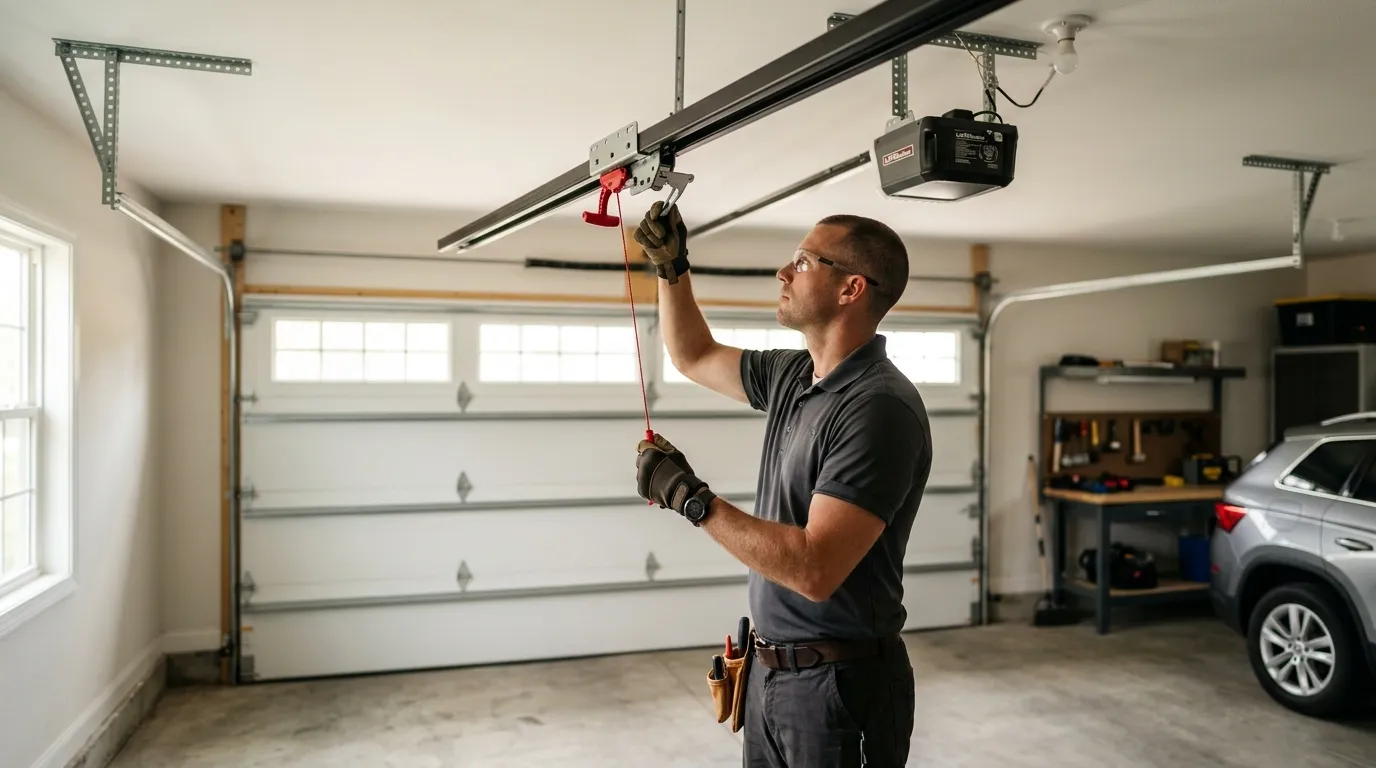
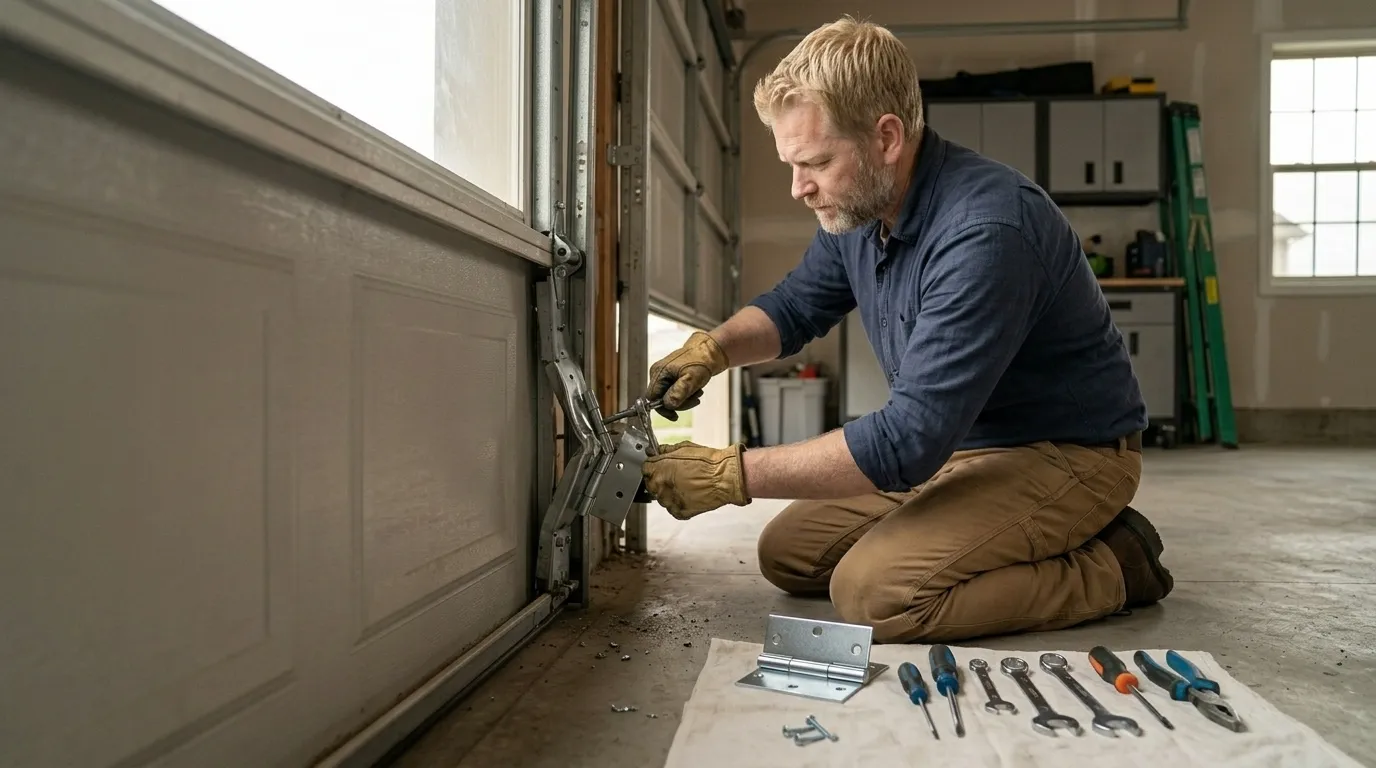
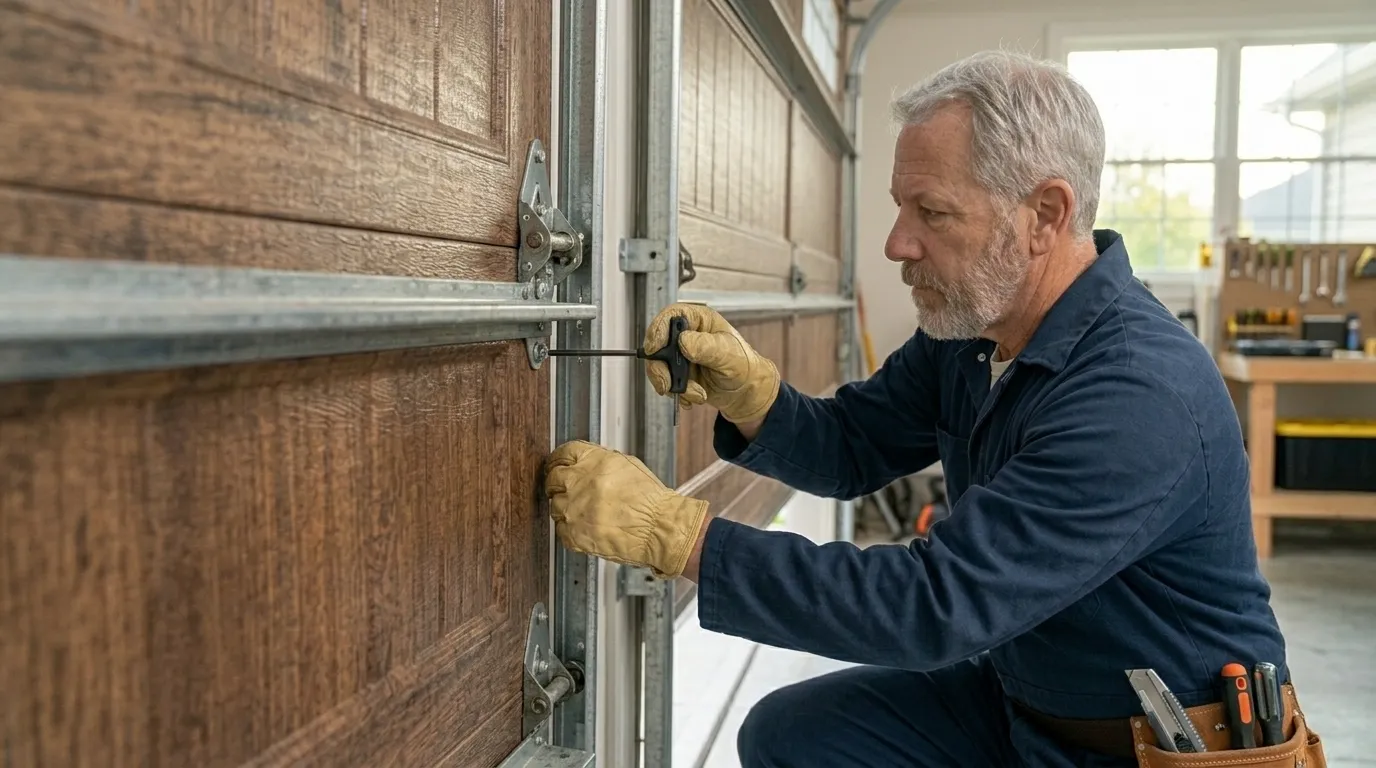
Commercial garage door repair and service for Arvada, CO businesses, built for a service area with cold winters, older buildings, and springs that fail fast.
Most of the commercial and light-industrial buildings in this service area went up alongside the housing around them, and that housing stock runs from 1938 to 2010 with a median build year of 1977. A lot of the overhead doors on warehouses, strip-mall bays, and shop fronts date from that same 1960s-70s wave that covers 38 named areas across the territory. Doors installed then weren't spec'd for the cycle counts a modern delivery bay or fleet garage runs through in a week.
Layer the climate on top of that. This is a cold, severe-winter zone, and steel doesn't behave the same at 15 degrees as it does at 70. Torsion springs lose wind tension faster in sustained cold, galvanized track shrinks slightly and throws rollers out of alignment, and old weatherstrip that was fine in October turns brittle and cracks by January. On a commercial door - heavier, wider, often running two or four springs instead of one - that fatigue shows up as a hard stop mid-cycle, not a slow squeak you can ignore for a season.
Put the two together and you get the pattern we see: original-era hardware, decades of temperature swings, and a door that's cycled far more than a garage door on a house ever would.
The Complications
A commercial bay door that won't open isn't a weekend inconvenience - it's a business that can't load a truck, open for customers, or keep a secure building secure. That raises the stakes on every decision: patch it today and risk a repeat call next week, or replace the section that's actually failing.
The service area carries a median household income of $110,968, which tends to translate into an owner or manager who wants the fix done right the first time rather than a string of band-aids - a rational call when a door failure means a closed bay and lost hours. But that same area has 230,048 households and 99,082 owner-occupied houses packed in around these commercial corridors, so parts and labor availability for a torsion spring or a bent track section aren't unlimited on a cold Tuesday when half the calls in the territory are for the same reason.
Insurance is the other complication owners don't think about until it matters. A door that fails open, or fails shut with a truck idling in the bay, is a liability question as much as a mechanical one. We won't quote a warranty term or a response time here that isn't something we've confirmed for your specific job - that's a conversation for the call, not this page.
The DIY Question
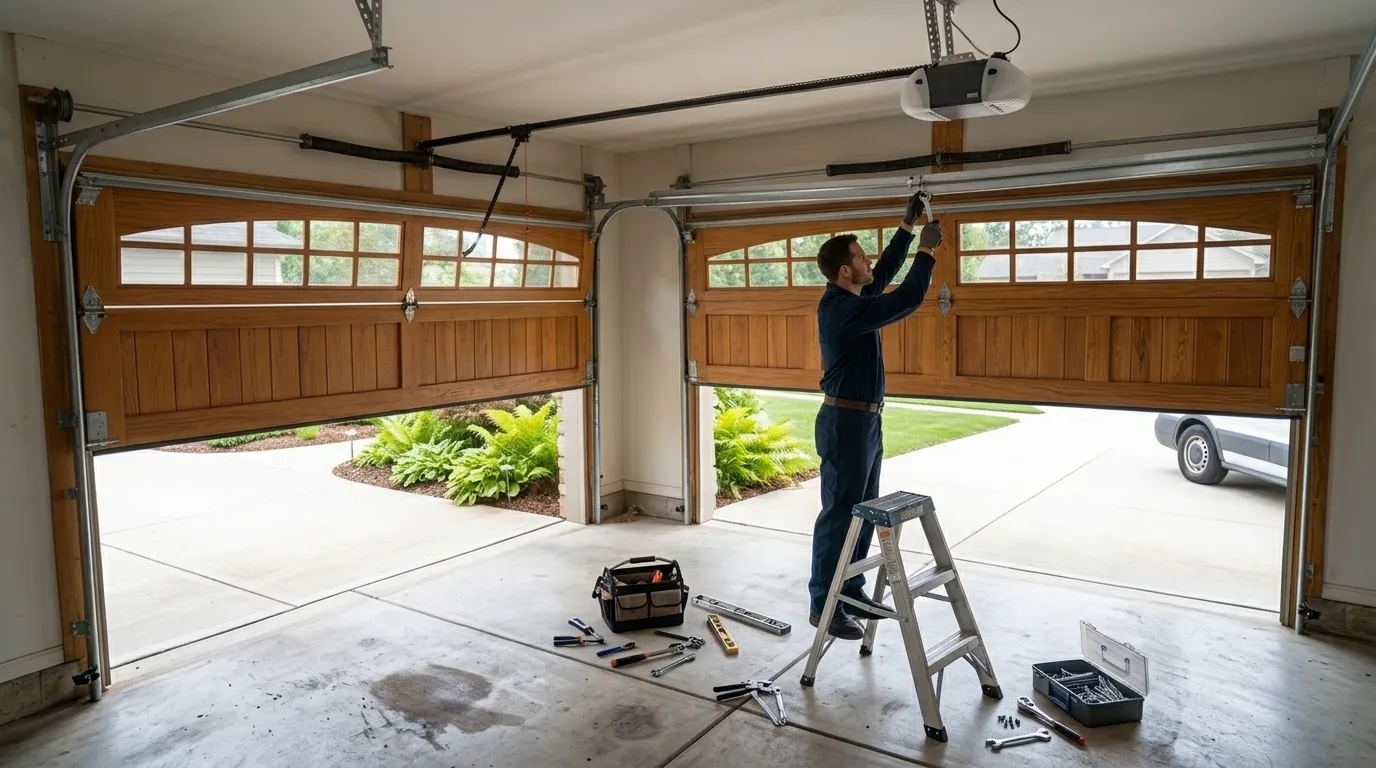
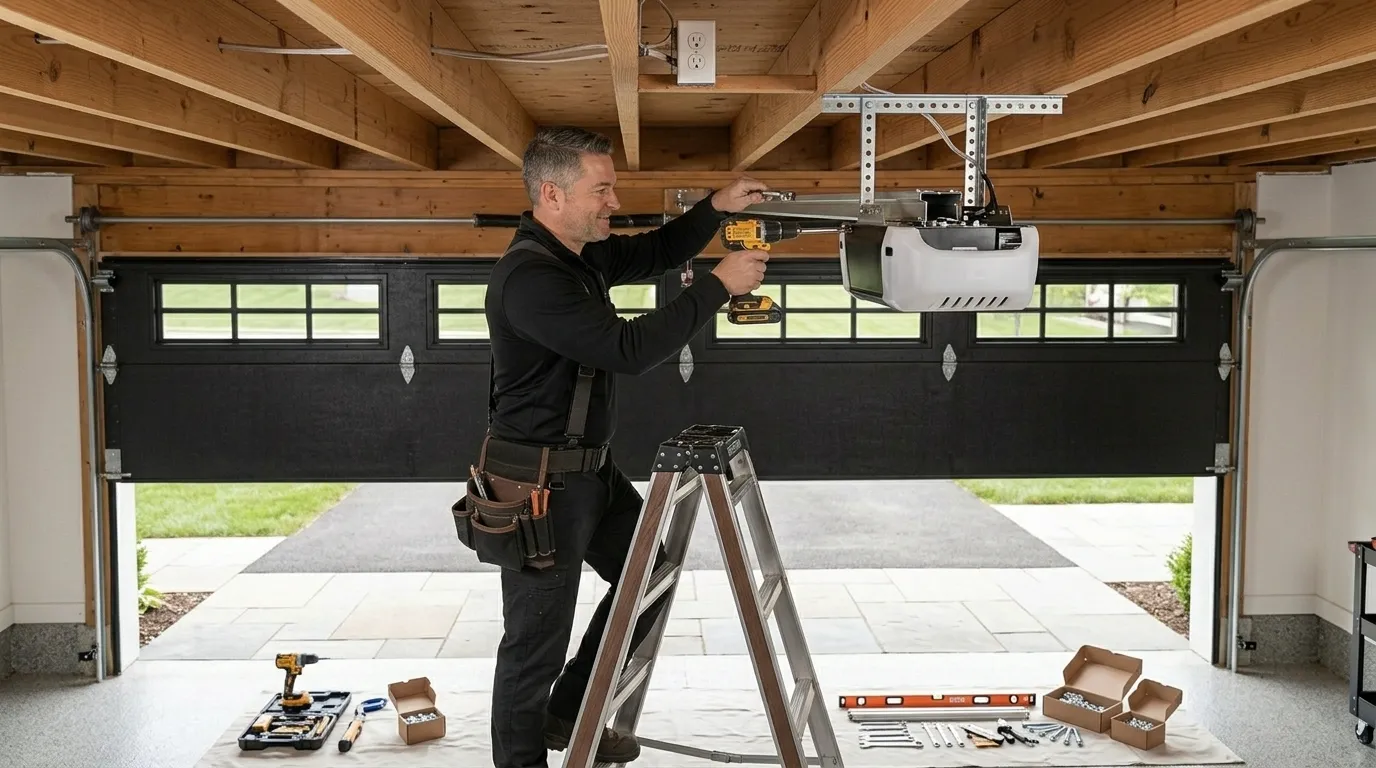
Commercial doors are not scaled-up residential doors. A double-wide bay door often runs on two torsion springs instead of one, under far more wind-up tension, and the failure mode when a spring lets go on a commercial unit is not a pinched finger - it's a few hundred pounds of steel and coiled wire moving fast. We're not going to talk anyone through doing that in a bay on a Saturday.
Where a homeowner might reasonably tighten a loose bracket or swap weatherstrip on a single-car door, a commercial unit's track alignment, cable tension, and opener load calculations aren't a one-person, one-afternoon job, especially once cold has already thrown the hardware out of spec. The honest limit here: if the door is original to a building from that 1960s-70s wave and it's binding in cold weather, that's a hardware fatigue problem, not a lubrication problem, and no amount of WD-40 fixes fatigued steel.
What you can safely do yourself is watch for the early signs - listen for the spring, watch the track for daylight where there shouldn't be any, and call before the door fails all the way rather than after.
The Symptom
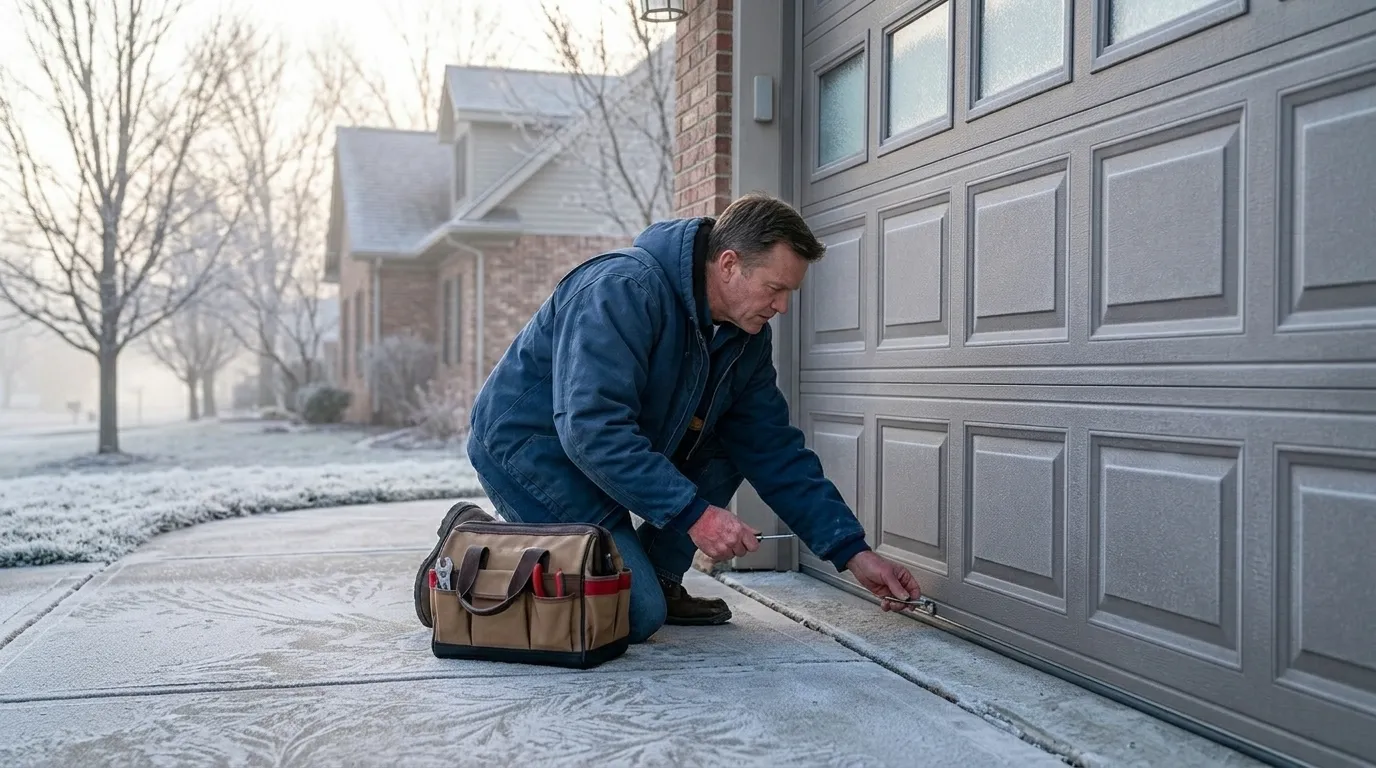
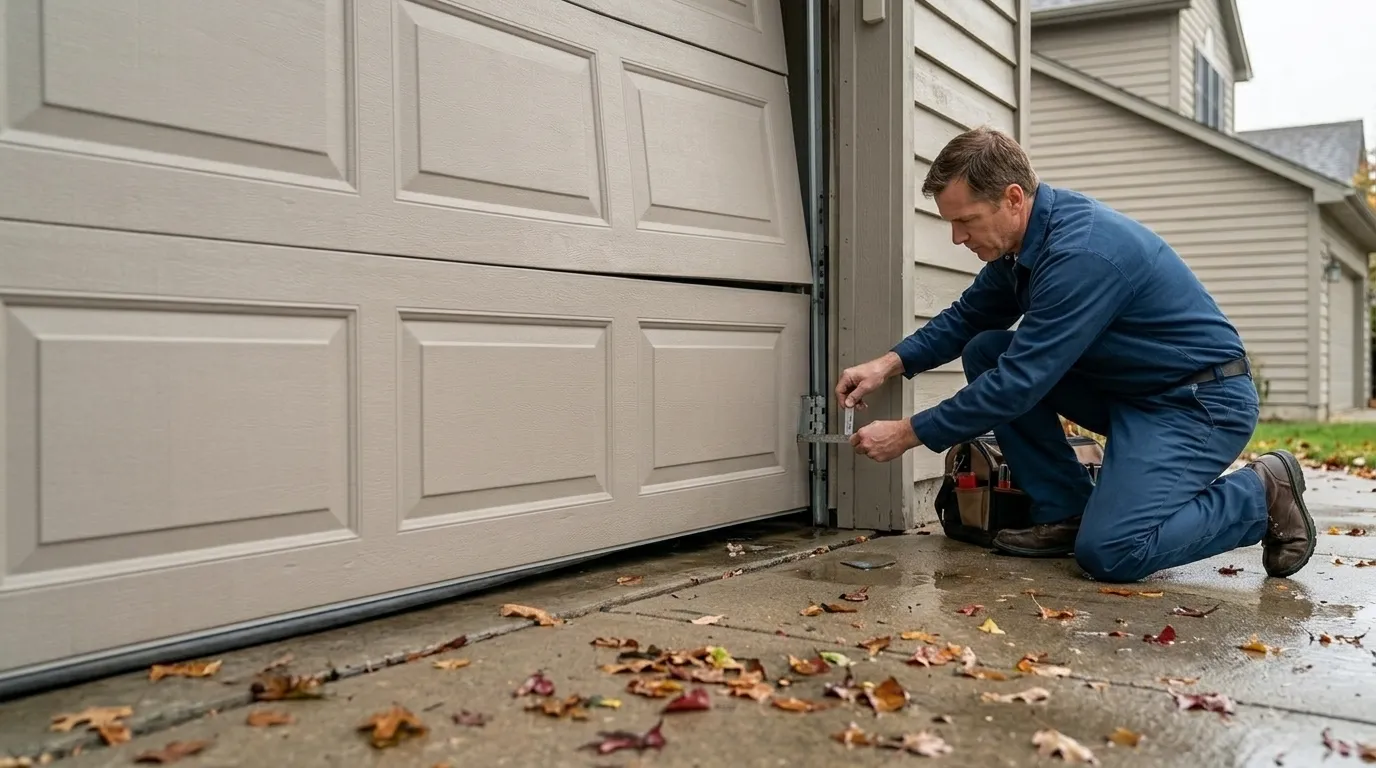
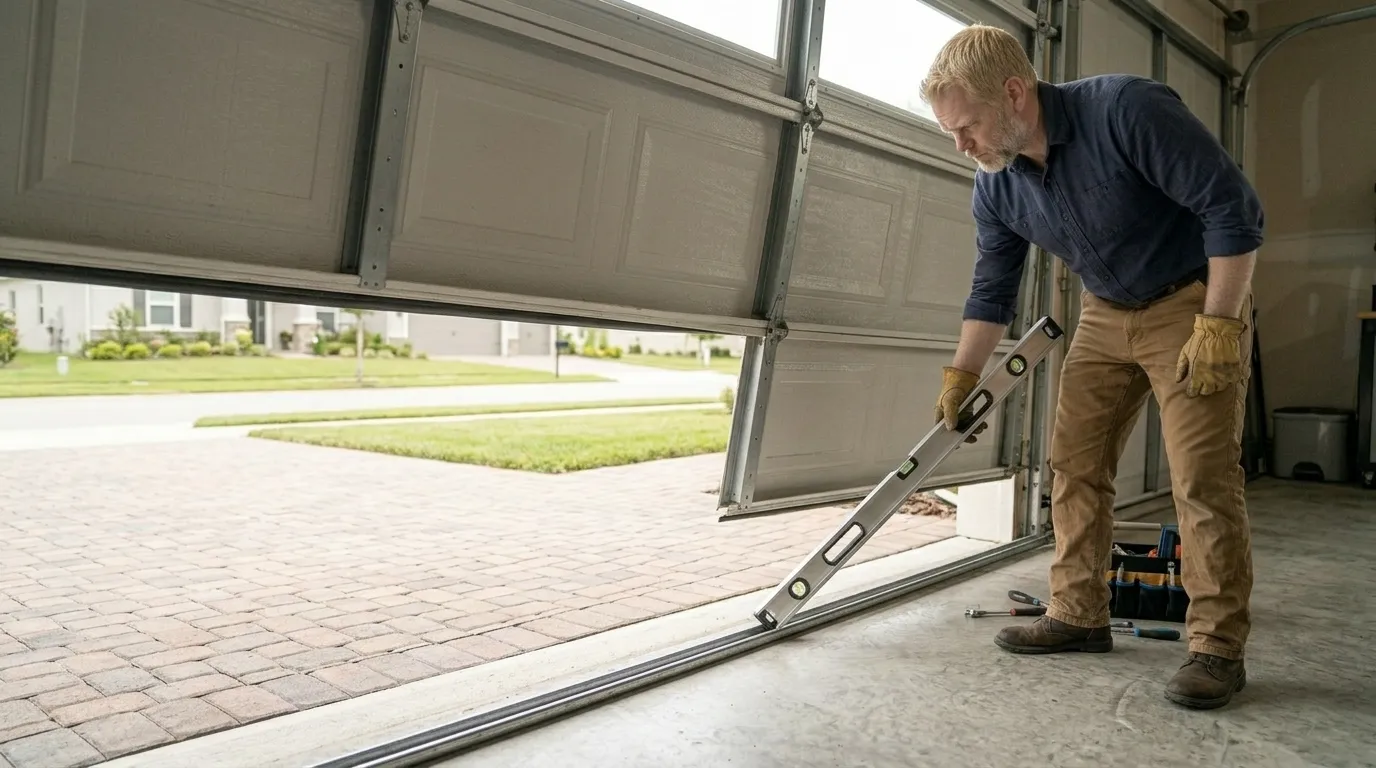
The pattern that shows up most in this cold-climate service area is a door that runs fine most of the year and then starts hesitating or binding specifically on cold mornings - a hard catch a few feet up, or an opener that strains audibly before the door clears the point where the track has contracted tight against an old roller.
A second version of the same underlying problem: a loud pop or bang from the spring assembly, usually first thing in the morning, followed by a door that either won't lift at all or lifts unevenly, one side dragging. On older commercial units from that 1960s-70s building stock, this is often the torsion spring finally letting go after a winter of losing tension in the cold rather than snapping outright.
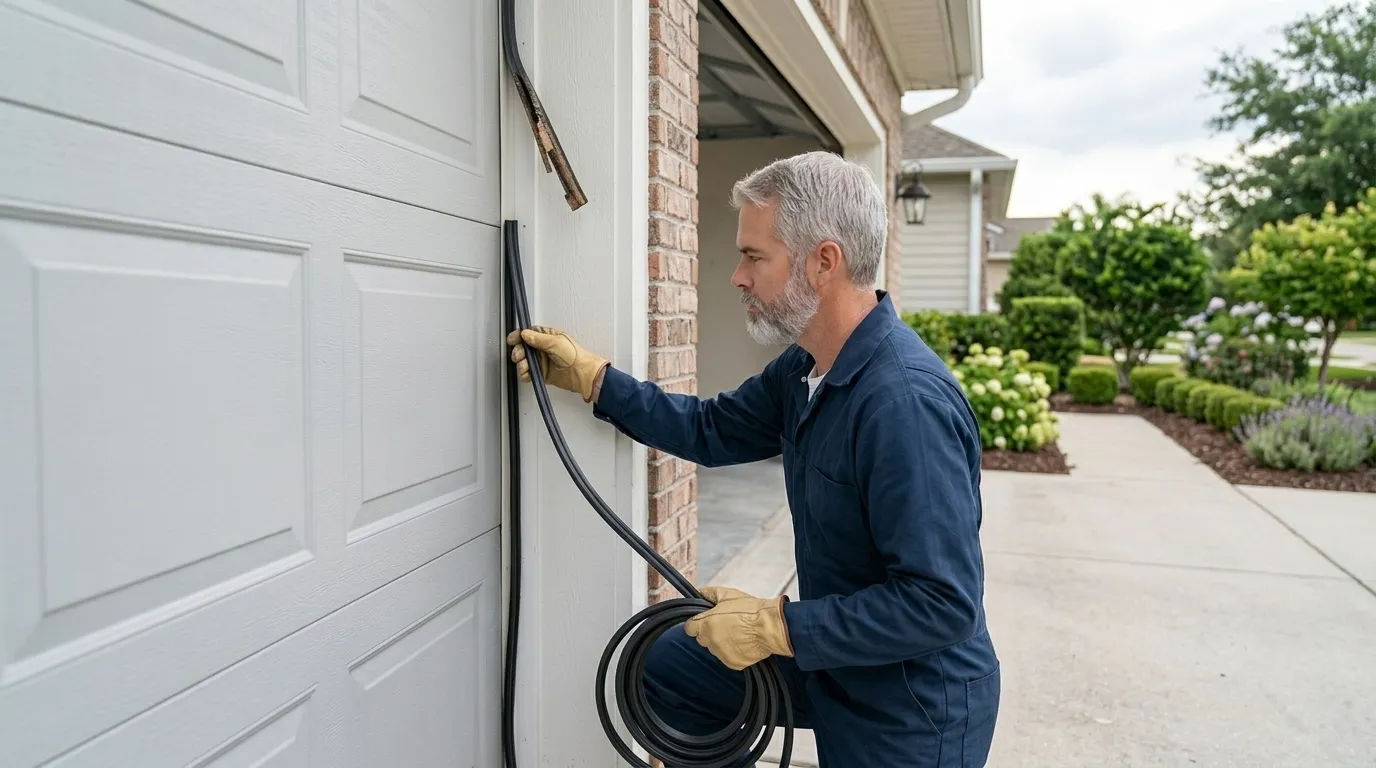
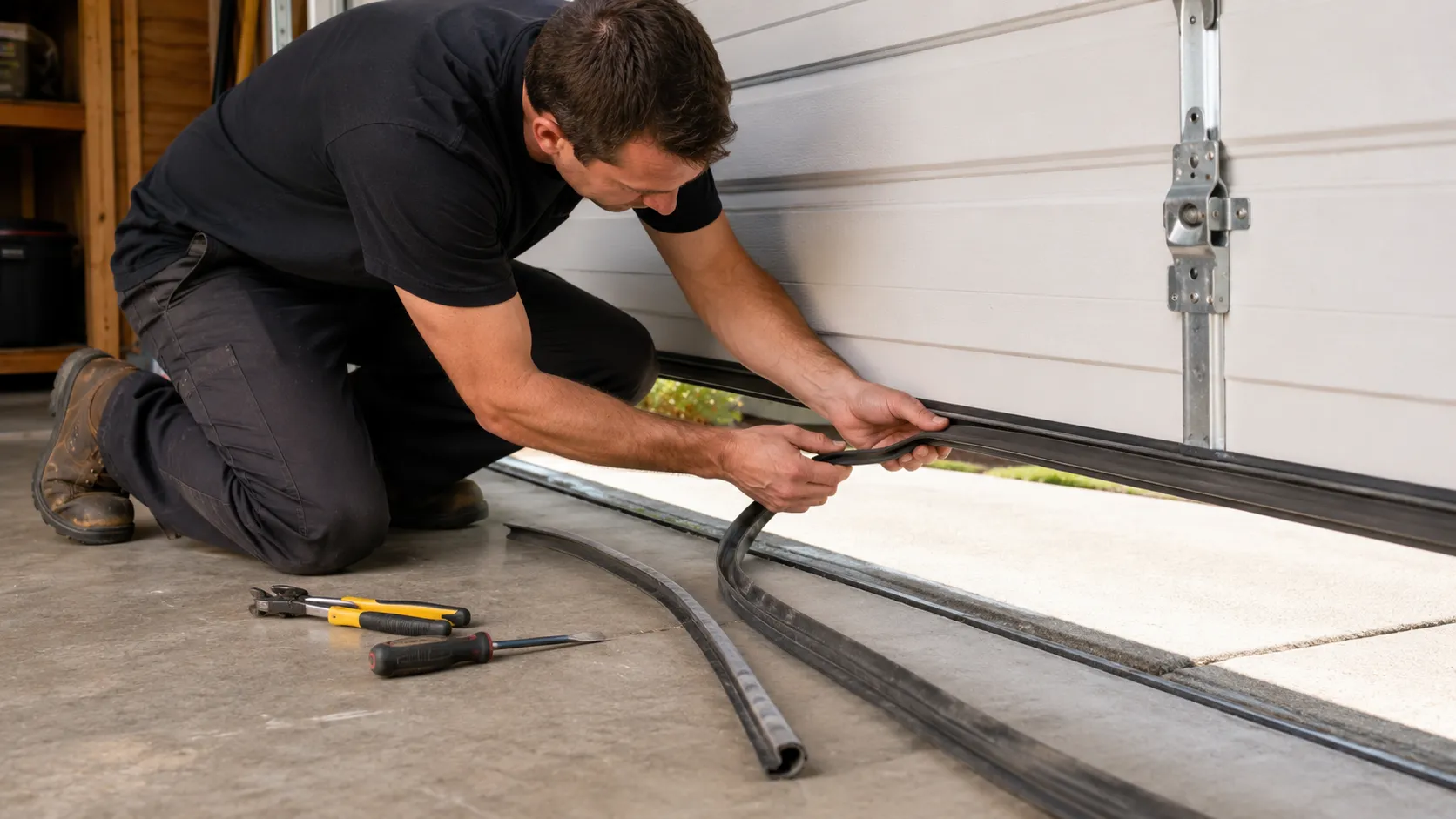
A third: weatherstrip and seal failure along the bottom or sides, worse in the cold-severe months, that lets a business feel every degree the climate throws at it and drives heating costs up in a bay that's supposed to be sealed. None of these are cosmetic. Each one points at a specific worn part, and each one gets more expensive to fix the longer a door keeps cycling on hardware that's already failing.
How it works
From “it’s stuck” to “it’s fixed”
01
Tell us what’s wrong
Describe the symptom - won’t open, loud bang, opener runs but the door won’t move.
02
On-site diagnosis
A technician tests the door under power and by hand and finds what actually failed.
03
Clear, up-front plan
You get the fix that’s needed and what drives the cost - before any work starts.
04
Repaired & tested
The repair is done, the door is set true and tested, and the work area left clean.
Serving Arvada, CO - tell us what your door’s doing and we’ll take it from there.
Straight answers about garage door repair in Arvada. Still unsure? Ask us directly.
Why does our bay door only act up in cold weather?
Steel contracts in cold, and on an older commercial door that means track clearances tighten and torsion springs lose wind tension faster than they would in a mild climate. This service area sits in a cold, severe-winter zone, so that seasonal tightening and loosening cycle is a real mechanical stress, not just an inconvenience - it's the single biggest driver of winter service calls here.
Is it worth repairing an old commercial door or replacing it?
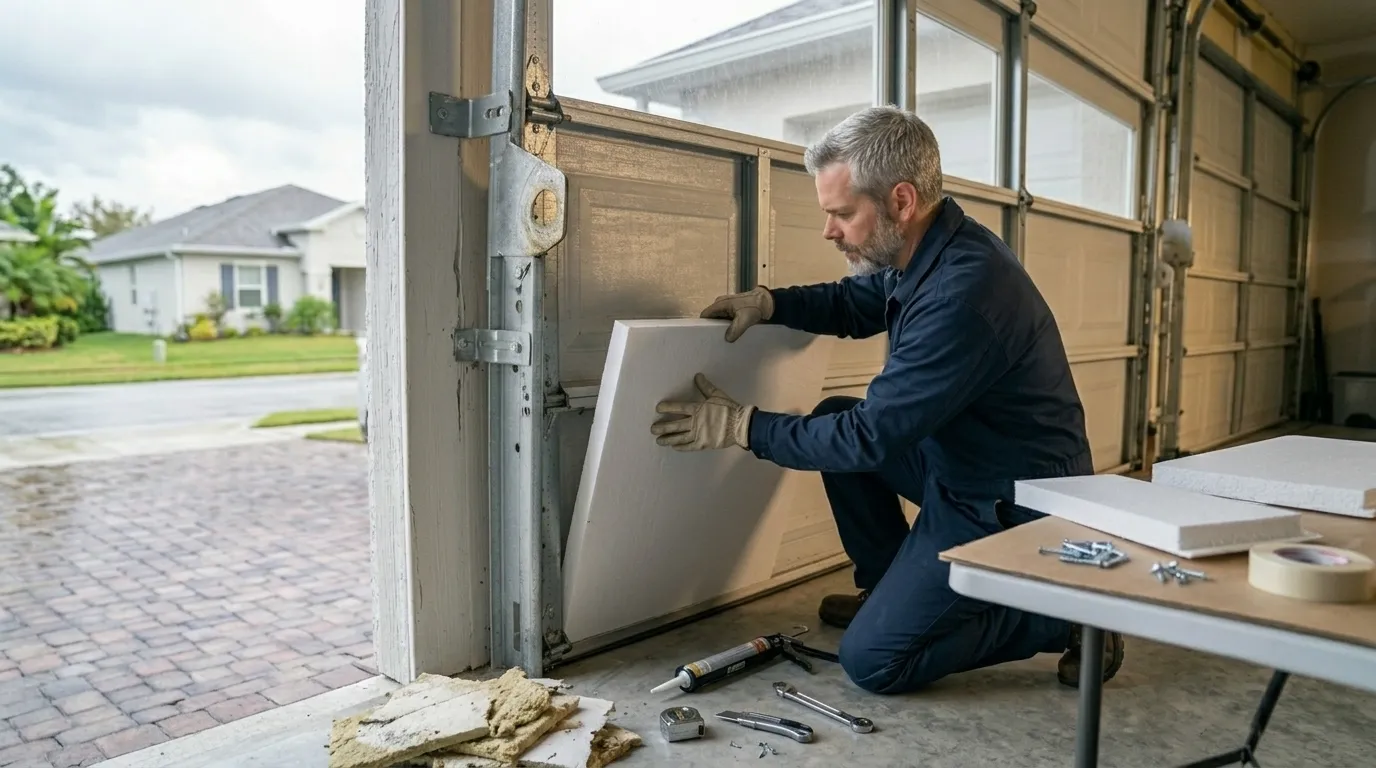
It depends on what's actually failing. A worn spring or a bent section of track on an otherwise sound door is usually a repair. A door that's original to a building from the area's 1960s-70s construction wave, with fatigued steel and outdated hardware throughout, often costs more to keep patching than to replace outright. We look at the specific door before recommending either.
Can I replace a commercial torsion spring myself?
No. Commercial doors typically run multiple springs under far more tension than a residential door, and a spring failure under that much wind-up can cause serious injury. This is one of the clearest lines in the trade: spring replacement on a commercial bay door is not a do-it-yourself repair, regardless of how simple the job looks from outside.
How fast can parts for an older commercial door be sourced?
That depends entirely on the door, the hardware era, and what's actually failing, so we're not going to put a number on it here. What we can say is that a door original to the area's older building stock sometimes needs a part that isn't sitting on a shelf, which is worth knowing before you count on a same-day fix.