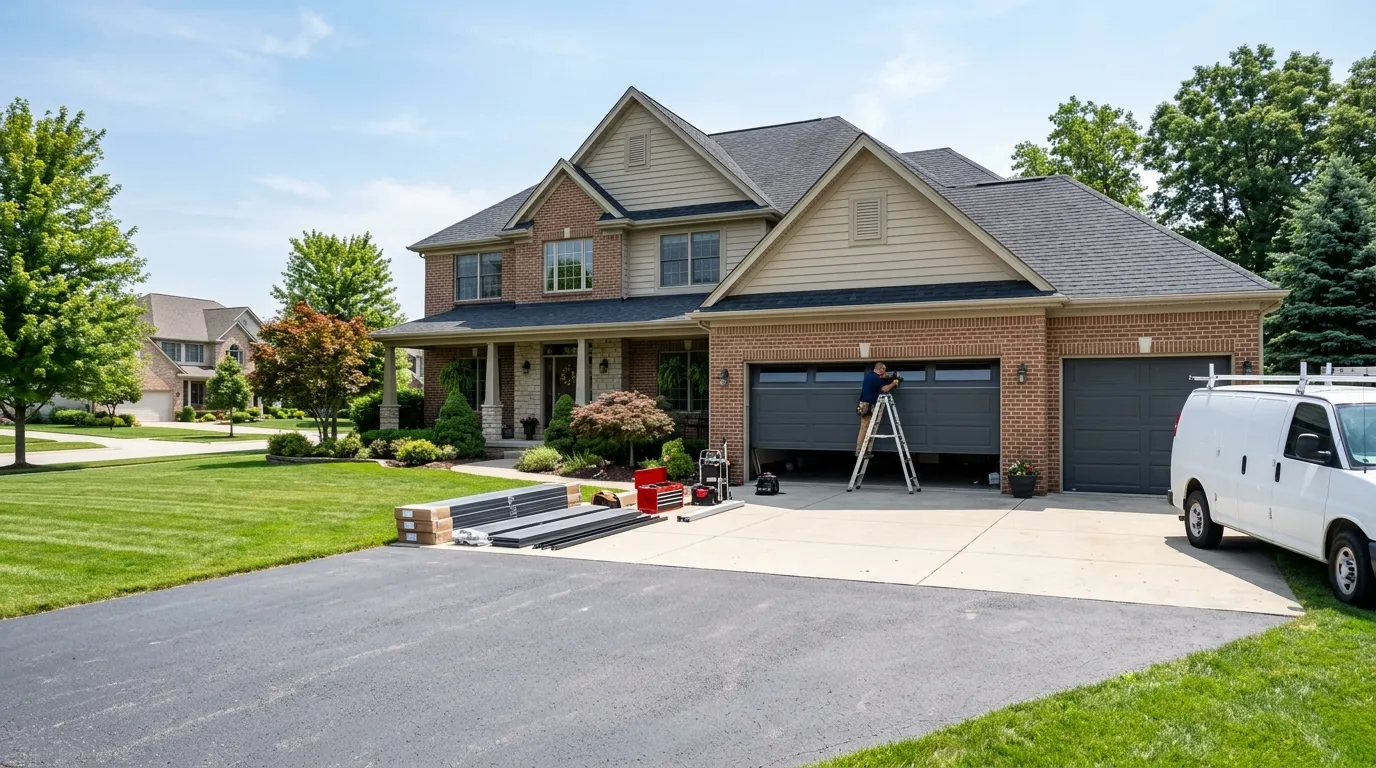
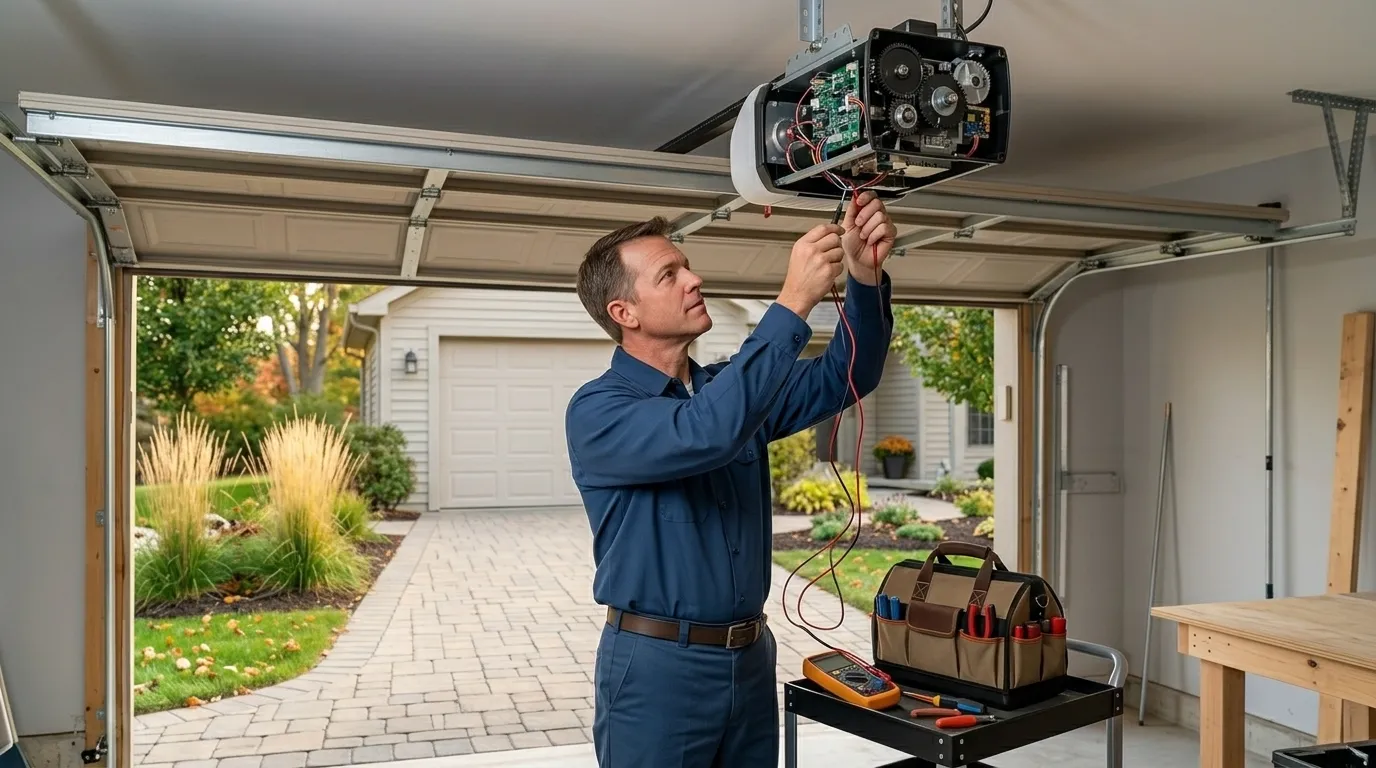
Garage door maintenance built for Arvada's 1938-2010 housing stock and cold winters. Spring, track, and opener checks that catch what the freeze-thaw cycle wears down.
Most of the housing across this service area went up between 1938 and 2010, with the bulk of it dating to the 1960s and 70s across the 38 named areas we work in. That matters for maintenance because a torsion spring or a set of rollers installed during that build-out is now decades past its rated cycle count, and a lot of it was never touched again after the original install.
The other half of the story is the climate. This is a severe cold band, and that means real freeze-thaw cycles on the slab and the track hardware every winter. Steel track brackets that were fine in October start to shift once the concrete underneath them contracts and expands a few times. Nylon rollers get brittle in the cold and start chipping at the edges. Lubricant that worked fine at 60 degrees turns gummy at 10, which is why openers strain harder on cold mornings and springs carry more load than they're built for on the first cycle of the day.
Put those two things together - older hardware plus a real winter - and you get the failure pattern we see over and over: fine all summer, then a bad week in January when everything that was marginal finally gives out at once.
The Complications
A door that's been neglected for years doesn't fail one part at a time. By the time a homeowner calls, we're usually looking at a spring that's lost tension, cables that have started to fray from riding on worn drums, and rollers that are grinding in tracks that are slightly out of plumb - all at once, because none of it was checked in between.
On the older end of that 1938-2010 range, we also run into hardware that isn't stocked anymore. A side-mounted torsion setup or an odd-width track from a house built in the 60s or 70s doesn't always take a modern replacement part off the shelf. That can mean a short wait on a part, which is the honest limitation here: we can diagnose most of this on the first visit, but if your door needs a part that isn't common anymore, we're not going to pretend we can have it in a truck by tomorrow.
Cold makes diagnosis harder too. A spring that's cracking under strain sounds different in January than it does in July, and a door that binds because a bracket shifted with the frost can mimic three other problems. That's why a maintenance visit that actually checks tension, alignment, and hardware wear matters more here than in a place that doesn't get a real winter.
The DIY Question
There's a real line between what a homeowner should do and what needs a call. Wiping down tracks, checking that the door reverses when it hits an object, and listening for new noises - that's fine to do yourself, and you should.
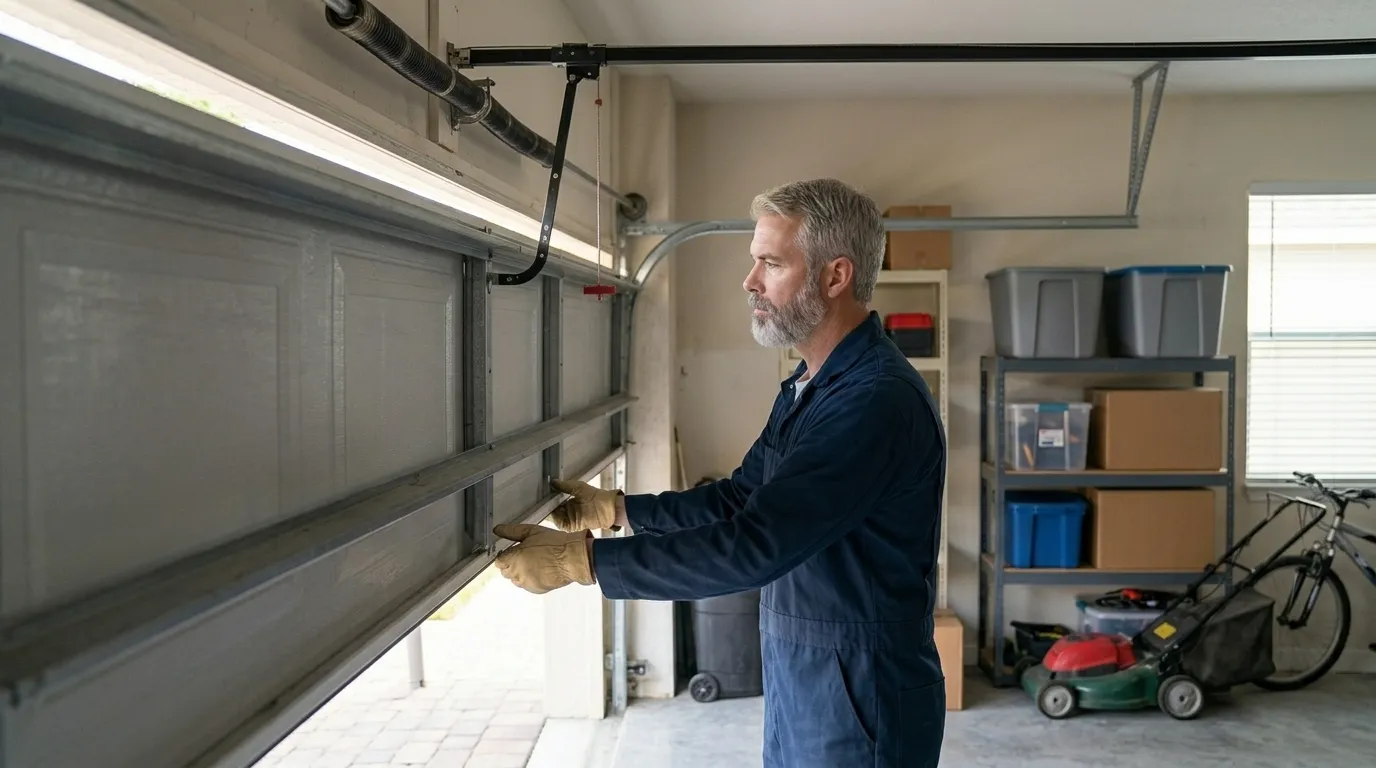
What you shouldn't touch is the spring. A torsion spring under load has enough stored energy to cause a serious injury, and on a door built during the era common across this area, that spring has likely never been replaced or even inspected since installation. Same goes for the cables and the drums they wind onto - if one looks frayed, that's a call, not a project.
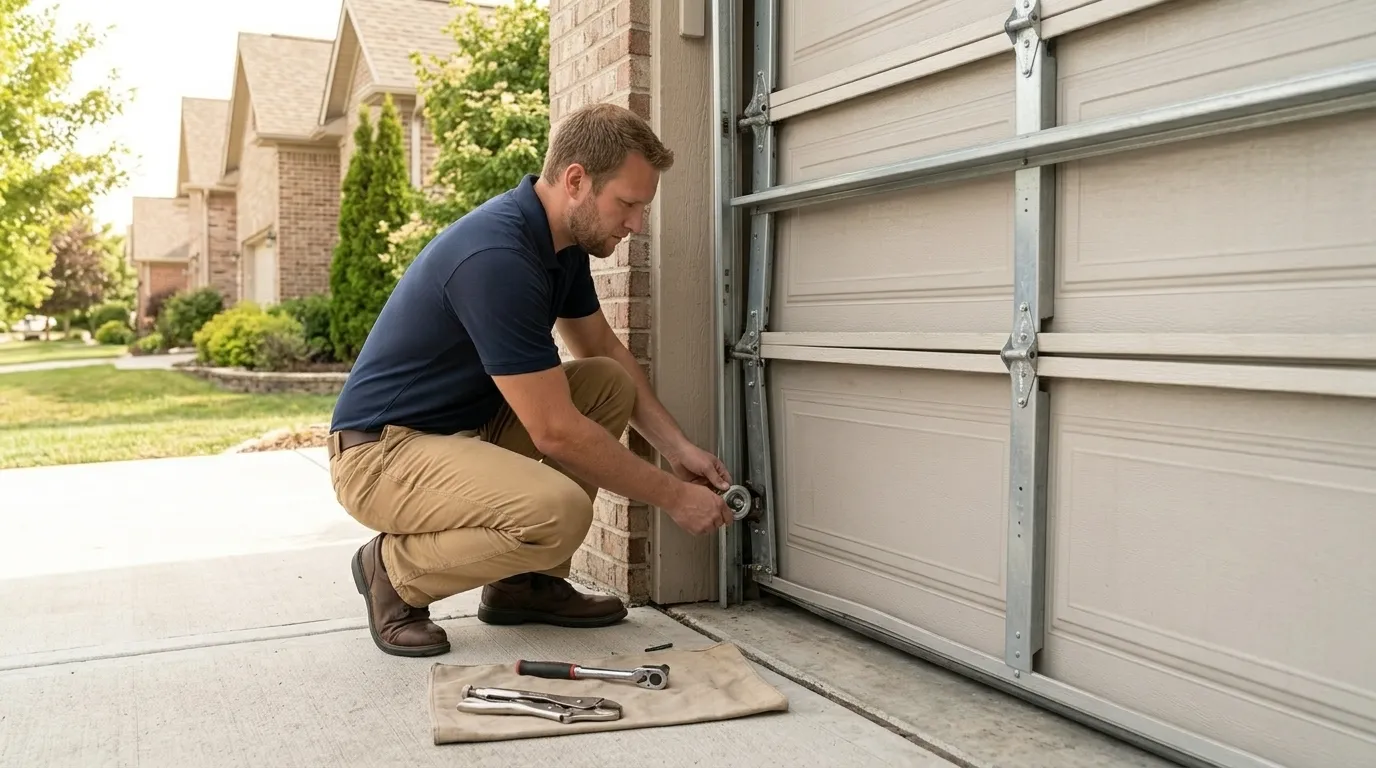
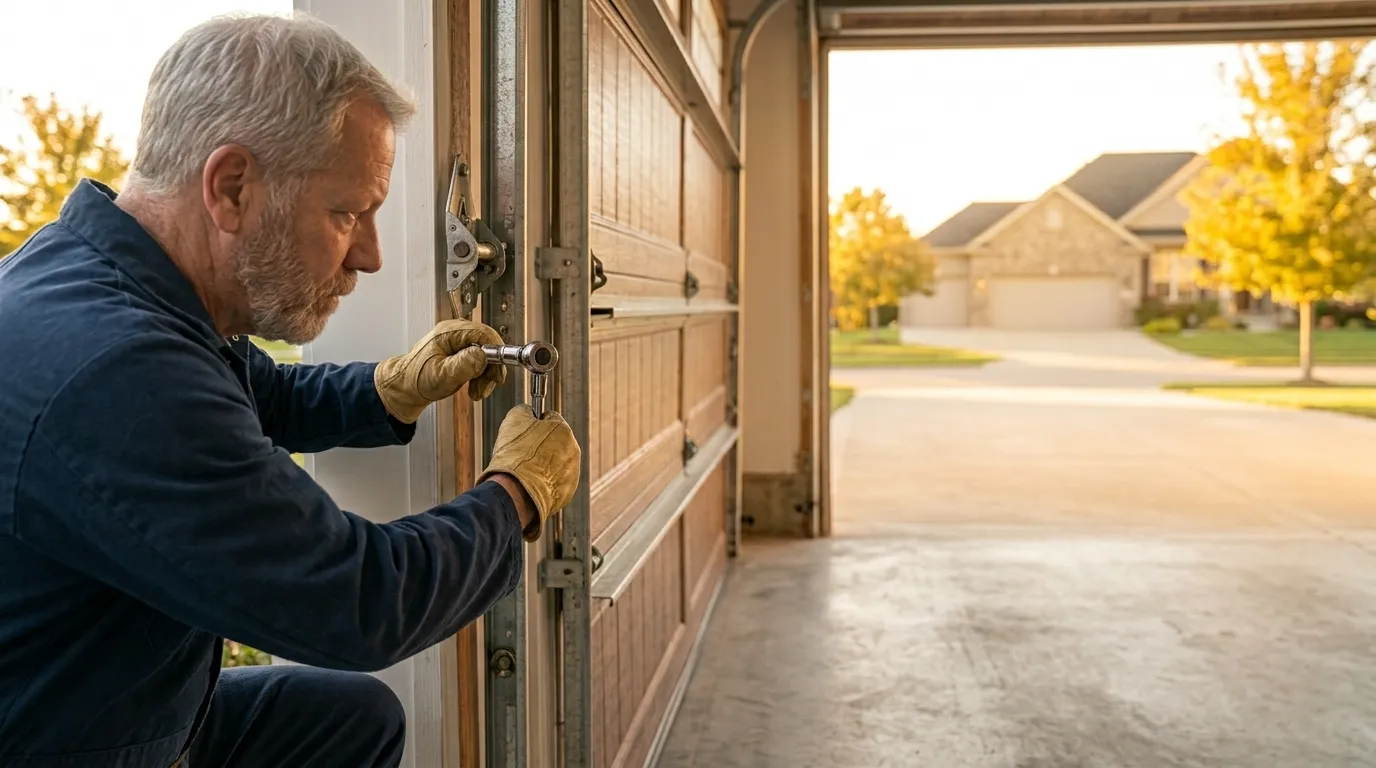
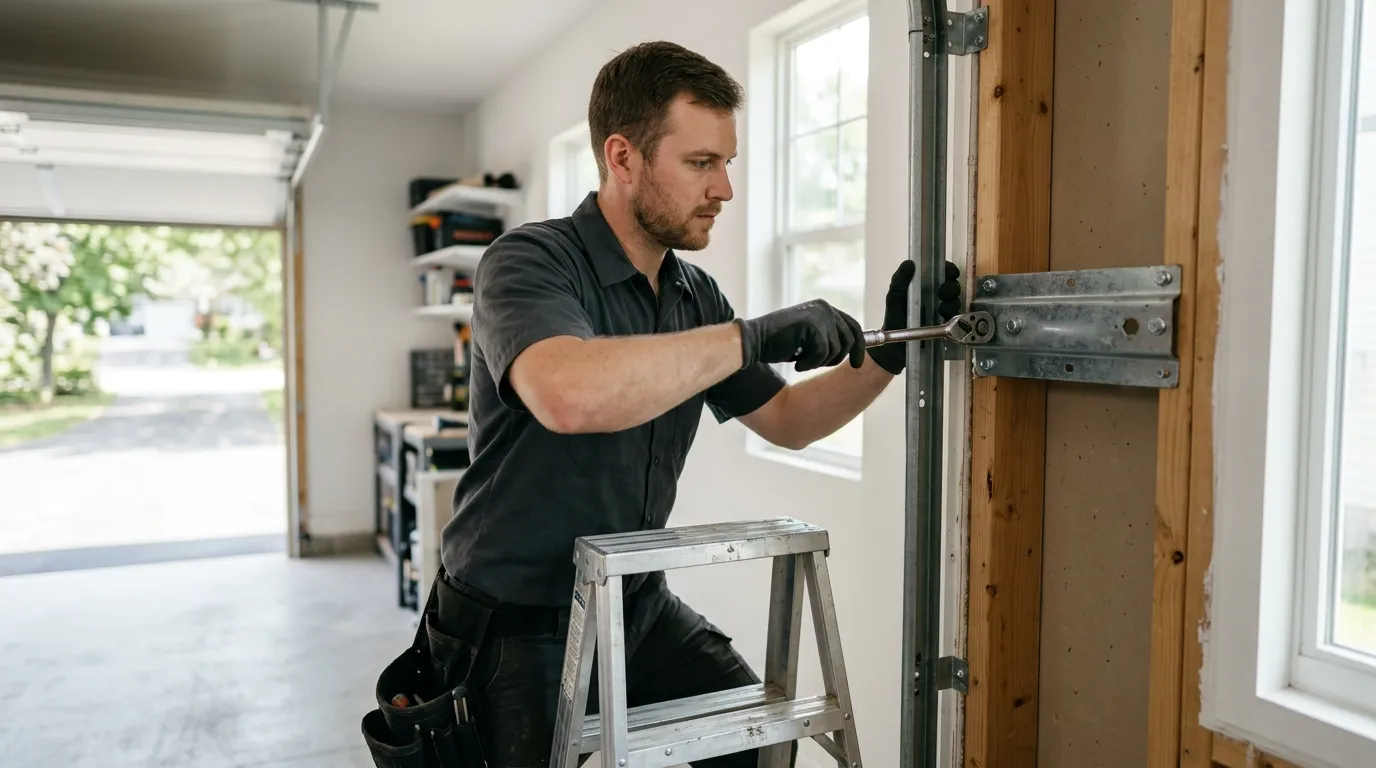
The other thing DIY tends to miss is exactly the kind of wear that a severe winter climate causes: hairline cracks in springs, brackets that have loosened a quarter-inch from freeze-thaw movement, rollers going brittle from the cold. None of that is obvious from the driveway. A trained eye during a maintenance visit catches it before it turns into a Saturday morning with the car stuck inside.
The Symptom
The tell you're looking for is a door that's noticeably harder to lift, or an opener that strains and clicks before it finally gets moving, especially on the first cold morning after a cold snap. That's the spring losing tension faster than it should, and on hardware from the 1960s-70s stock common across this area, it's usually not an isolated event - it's the spring finally reaching the end of a cycle count nobody's tracked.
A second symptom to watch for is a door that shudders or hangs up partway through its travel, then finishes. That's usually a roller or bracket that's shifted with the freeze-thaw cycle, not the spring, and it's a cheaper fix if it's caught before it wears a groove into the track.
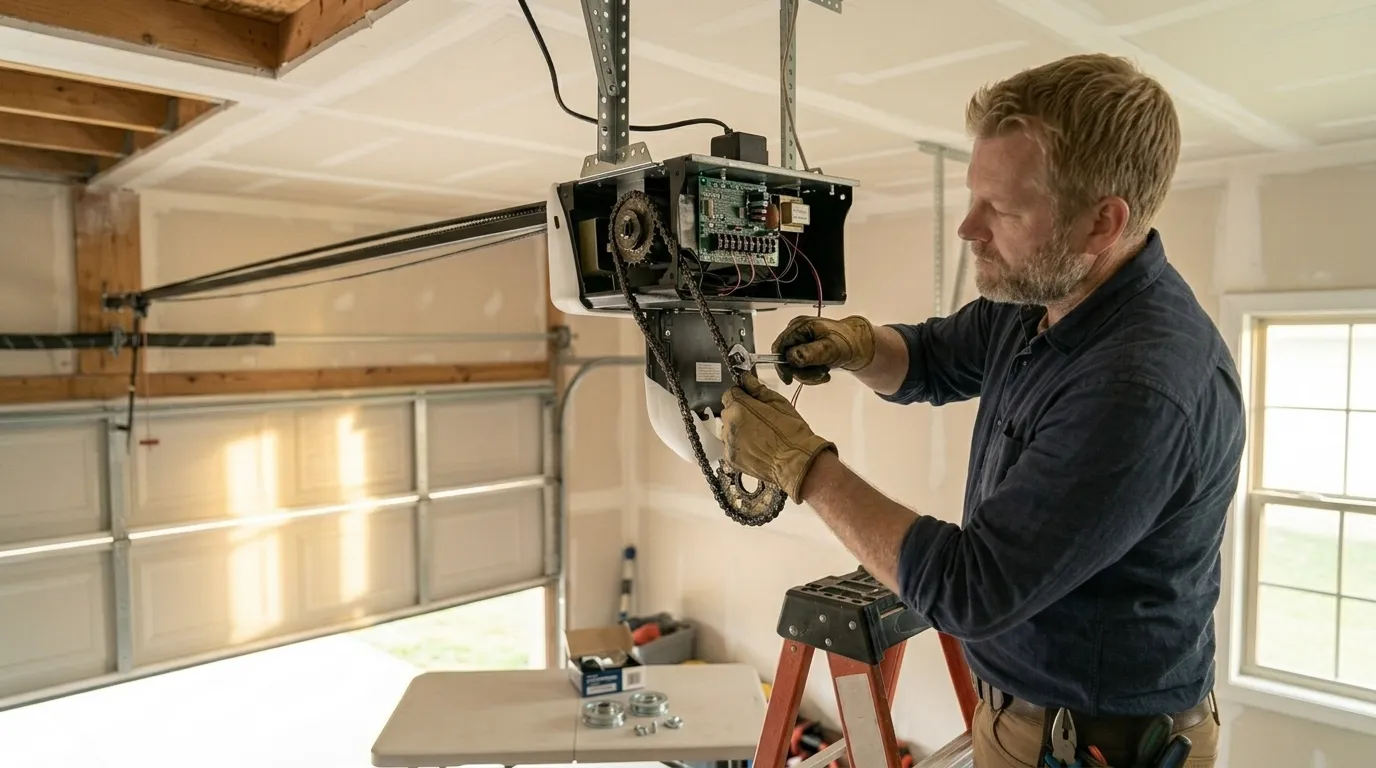
Either symptom is worth a maintenance call before it becomes an emergency call. A scheduled check costs less than a spring failing at 6 a.m. with the car trapped inside, and given the age of a lot of the housing stock here, catching it early is usually the difference between a tune-up and a full spring replacement.
How it works
From “it’s stuck” to “it’s fixed”
01
Tell us what’s wrong
Describe the symptom - won’t open, loud bang, opener runs but the door won’t move.
02
On-site diagnosis
A technician tests the door under power and by hand and finds what actually failed.
03
Clear, up-front plan
You get the fix that’s needed and what drives the cost - before any work starts.
04
Repaired & tested
The repair is done, the door is set true and tested, and the work area left clean.
Serving Arvada, CO - tell us what your door’s doing and we’ll take it from there.
Straight answers about garage door repair in Arvada. Still unsure? Ask us directly.
How often should I get my garage door serviced in Arvada?
Given the cold winters here and the age of a lot of the local housing stock - much of it built in the 1960s and 70s - an annual check before winter catches most of the wear that freeze-thaw cycles cause on springs, brackets, and rollers before it turns into a failure.
Why does my door feel harder to open in winter?
Cold makes lubricant thicker and springs stiffer, and on older hardware common across this area, a spring that's already lost some tension will struggle more in the cold than it does in summer. That extra strain on a cold morning is often the first sign it needs attention.
Can you always get parts for an older door?
Not always right away. Some homes here have side-mounted torsion hardware or track widths from decades ago that aren't on every parts truck. We'll tell you straight if a part needs to be ordered rather than promise a same-day fix we can't back up.
Is maintenance worth it if the door still works fine?
Yes, especially here. A door that works fine in August can fail in January once the freeze-thaw cycle finishes off a bracket or spring that was already marginal. A maintenance visit catches that wear while it's still a cheap fix instead of an emergency one.