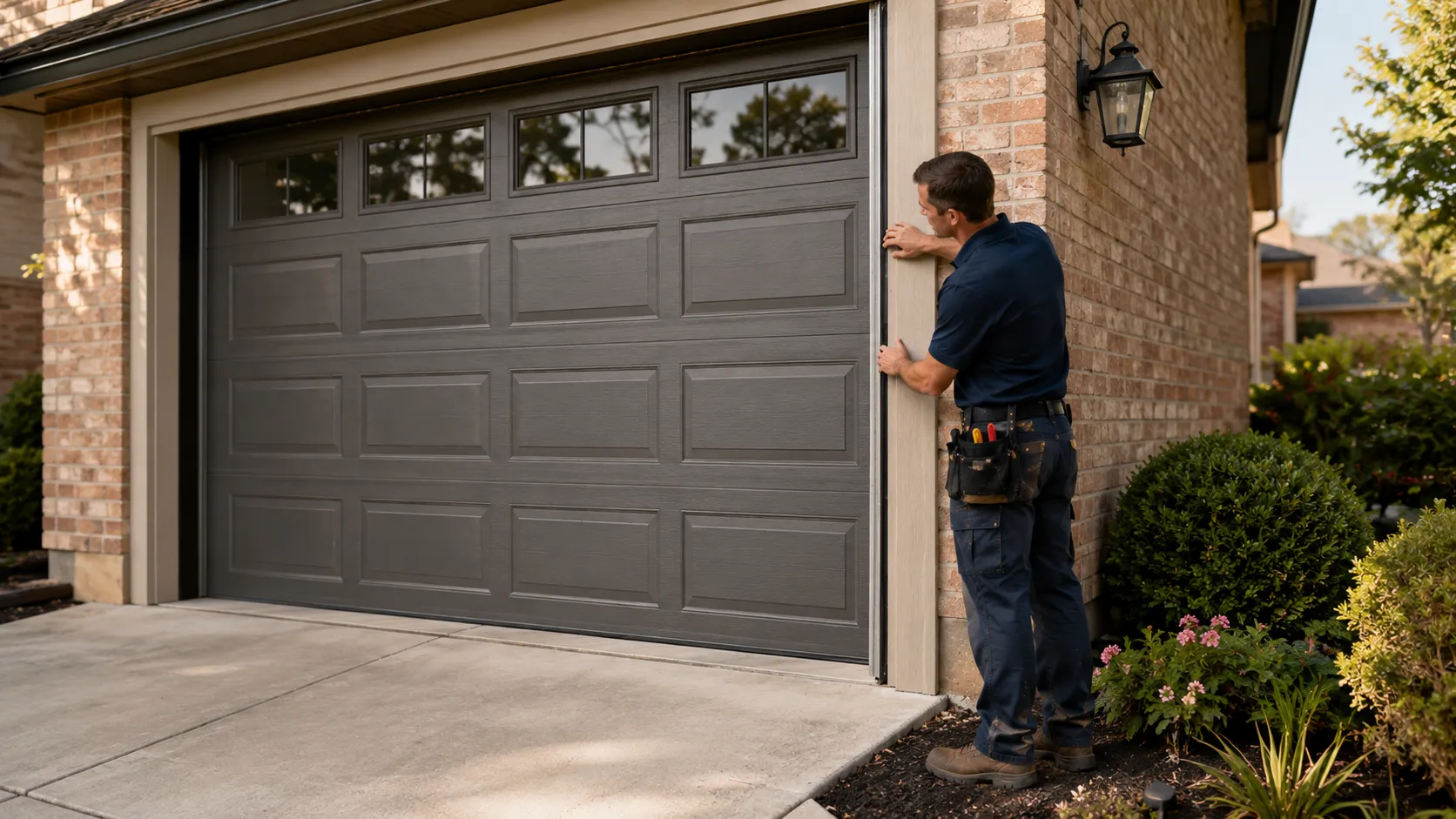
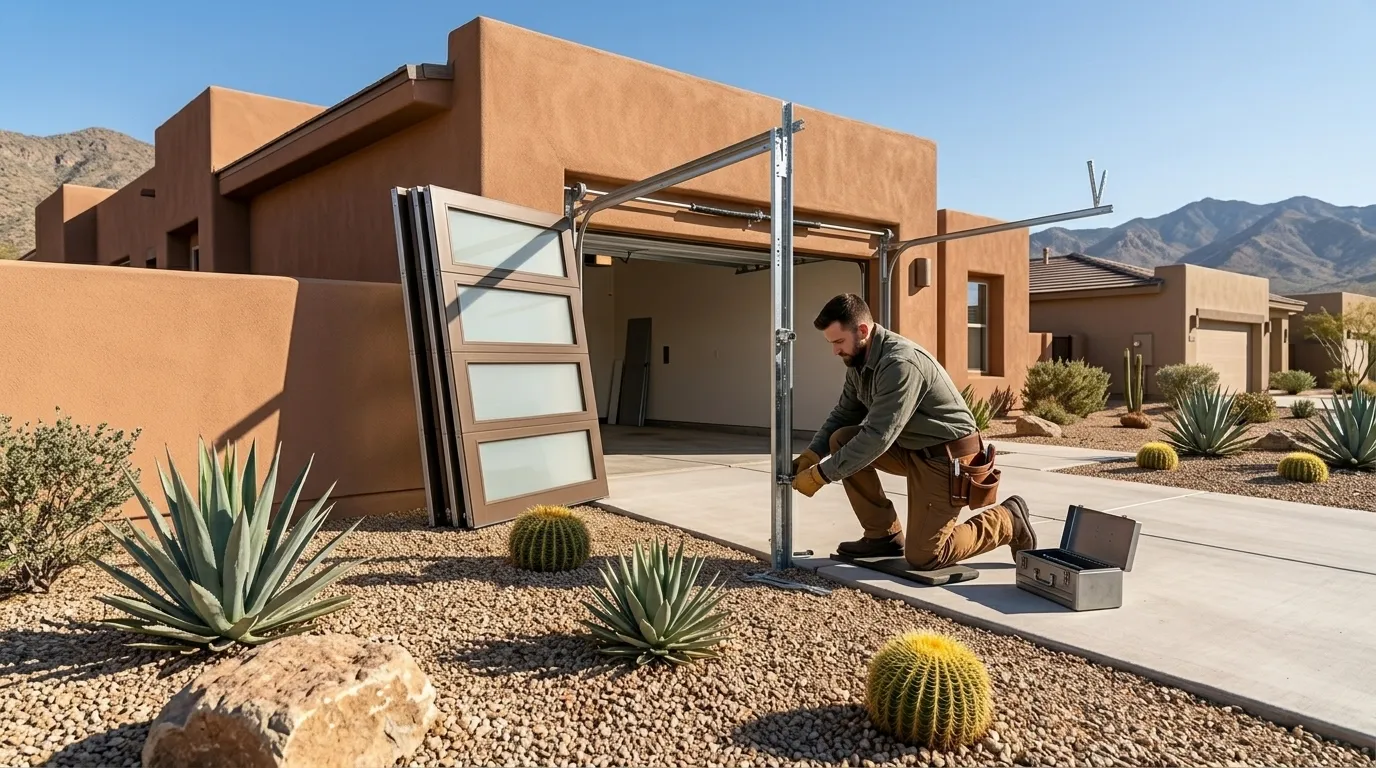
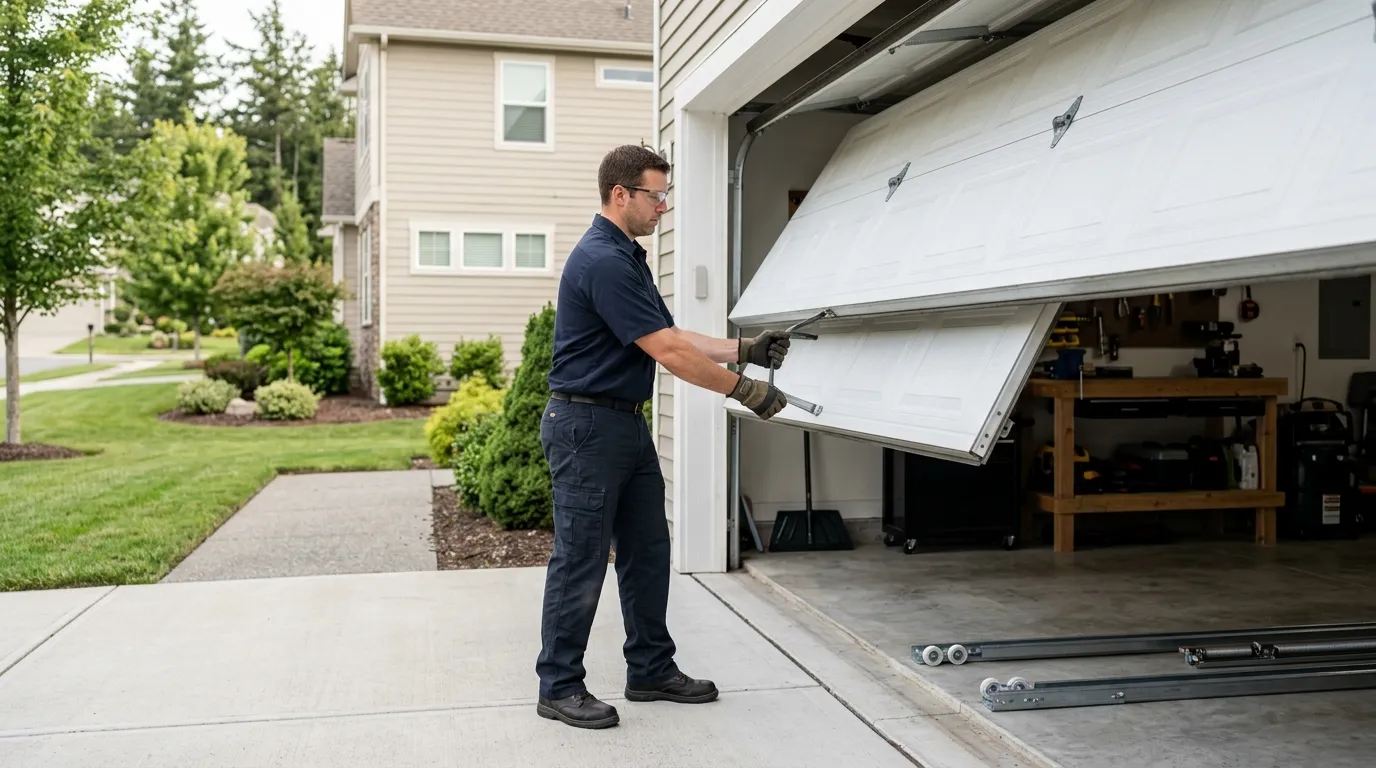
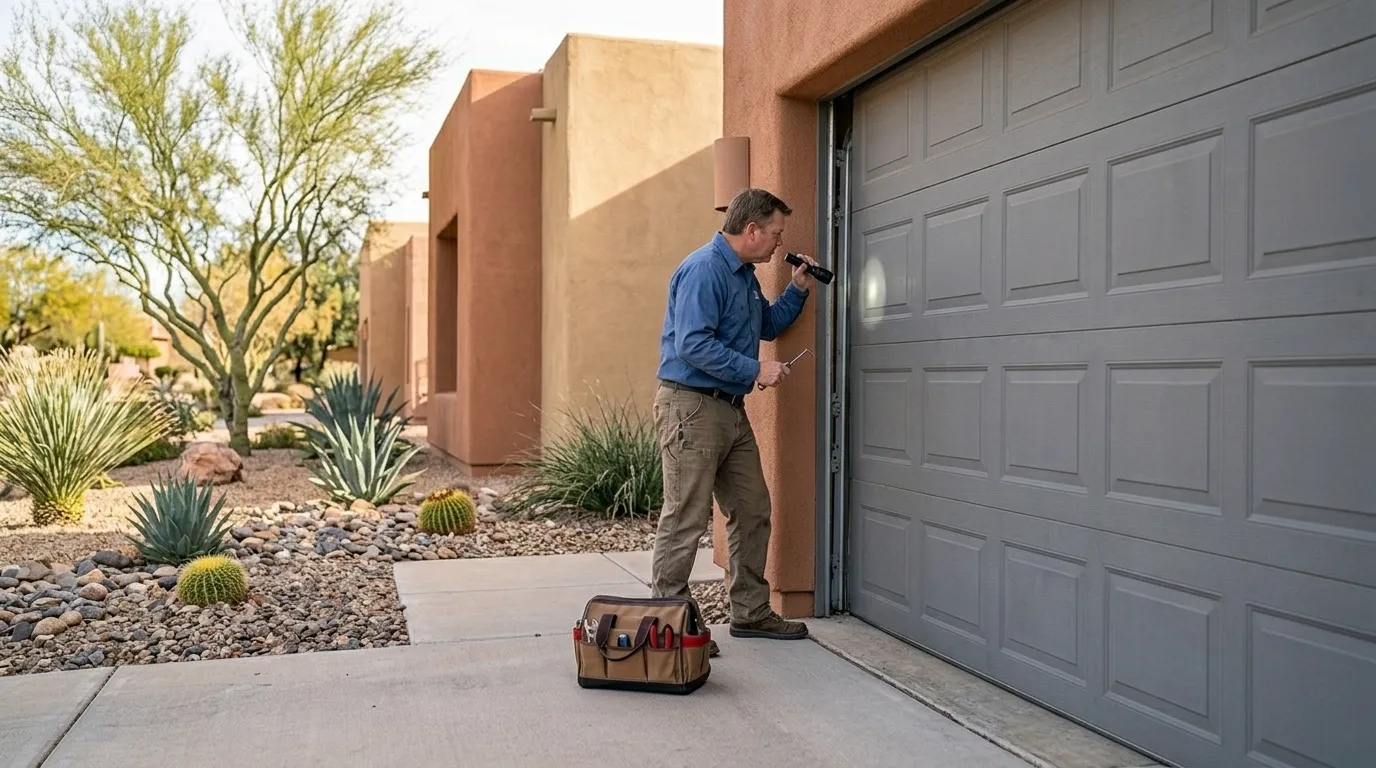
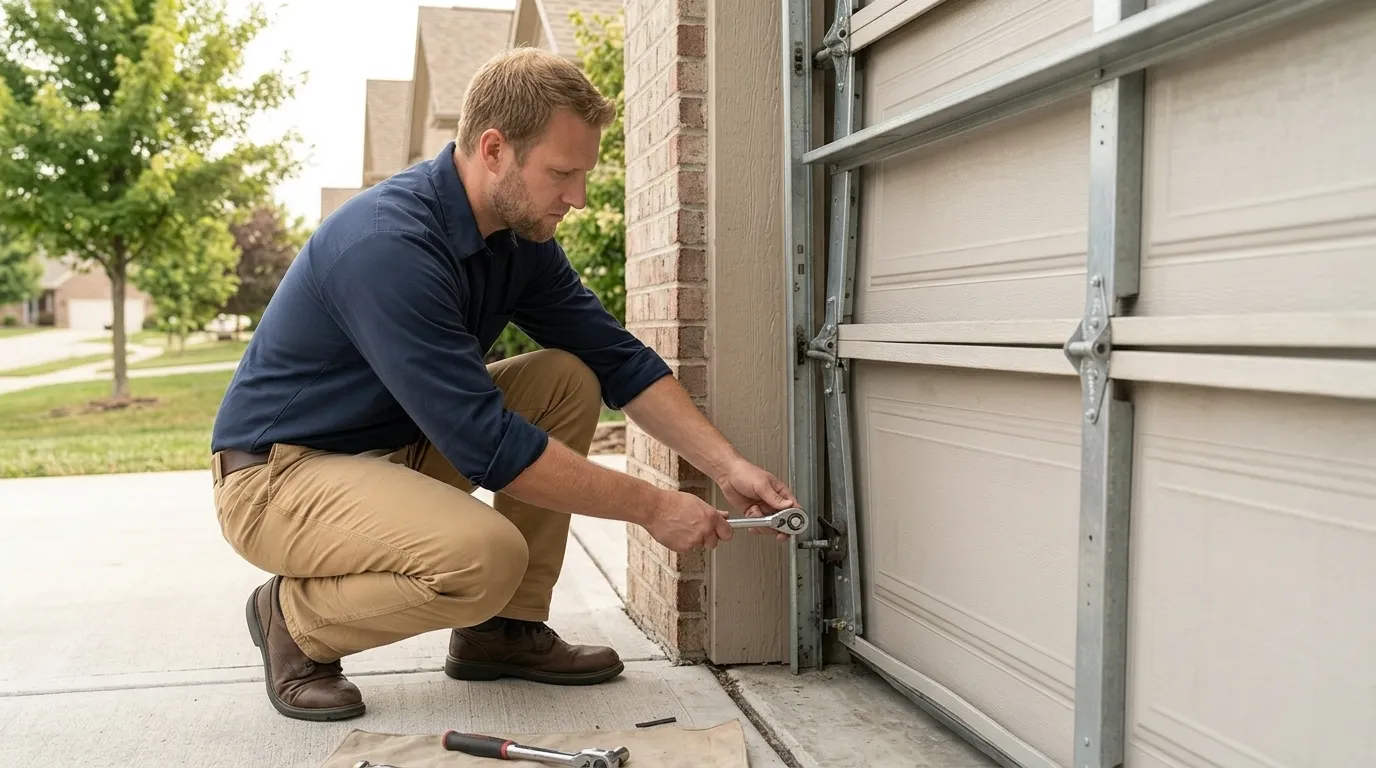
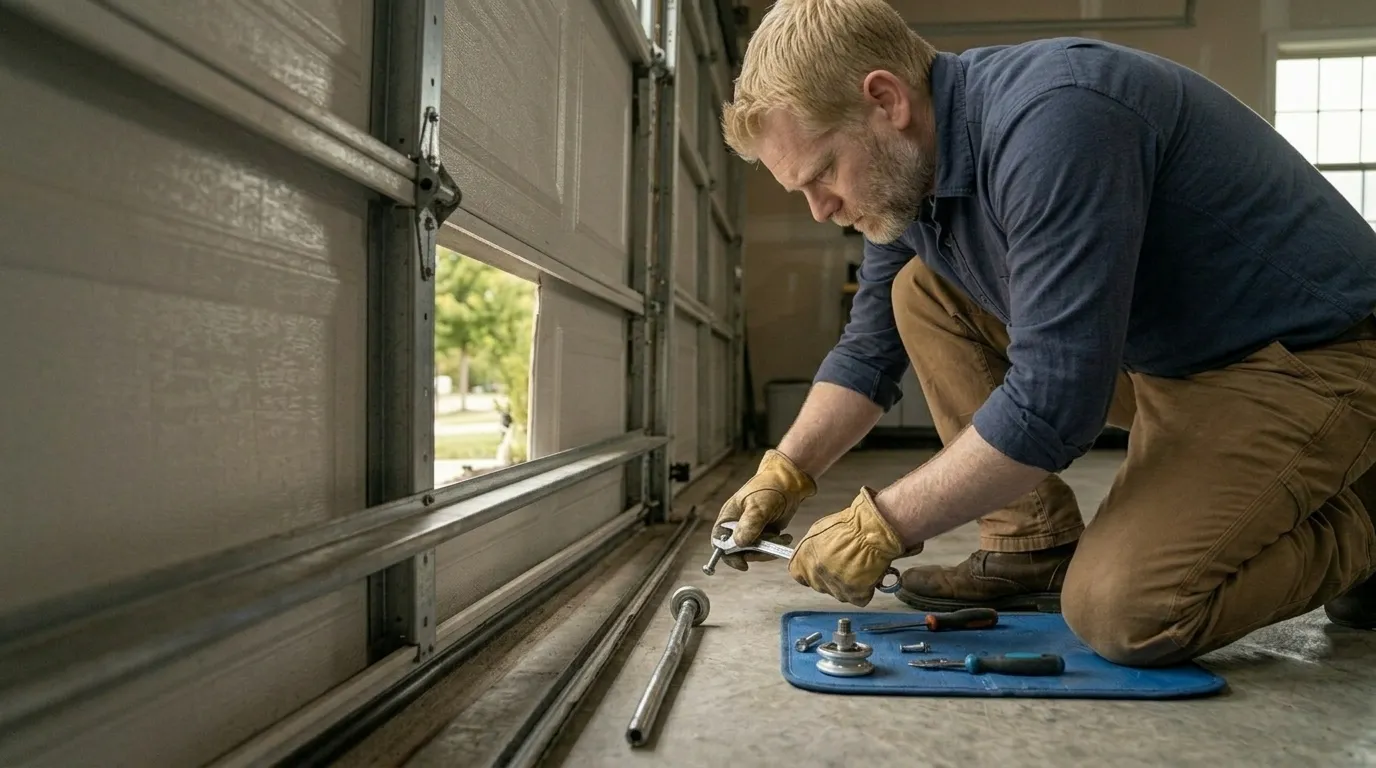
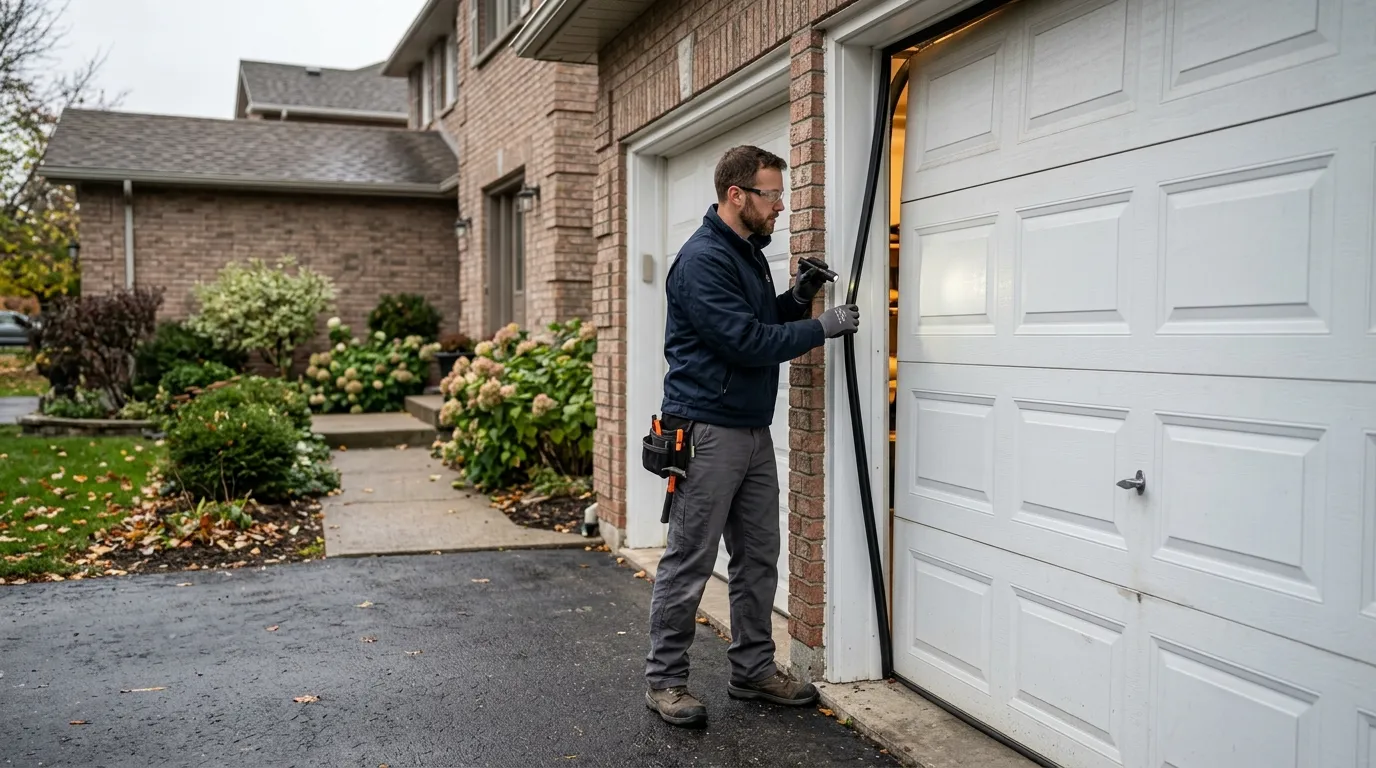
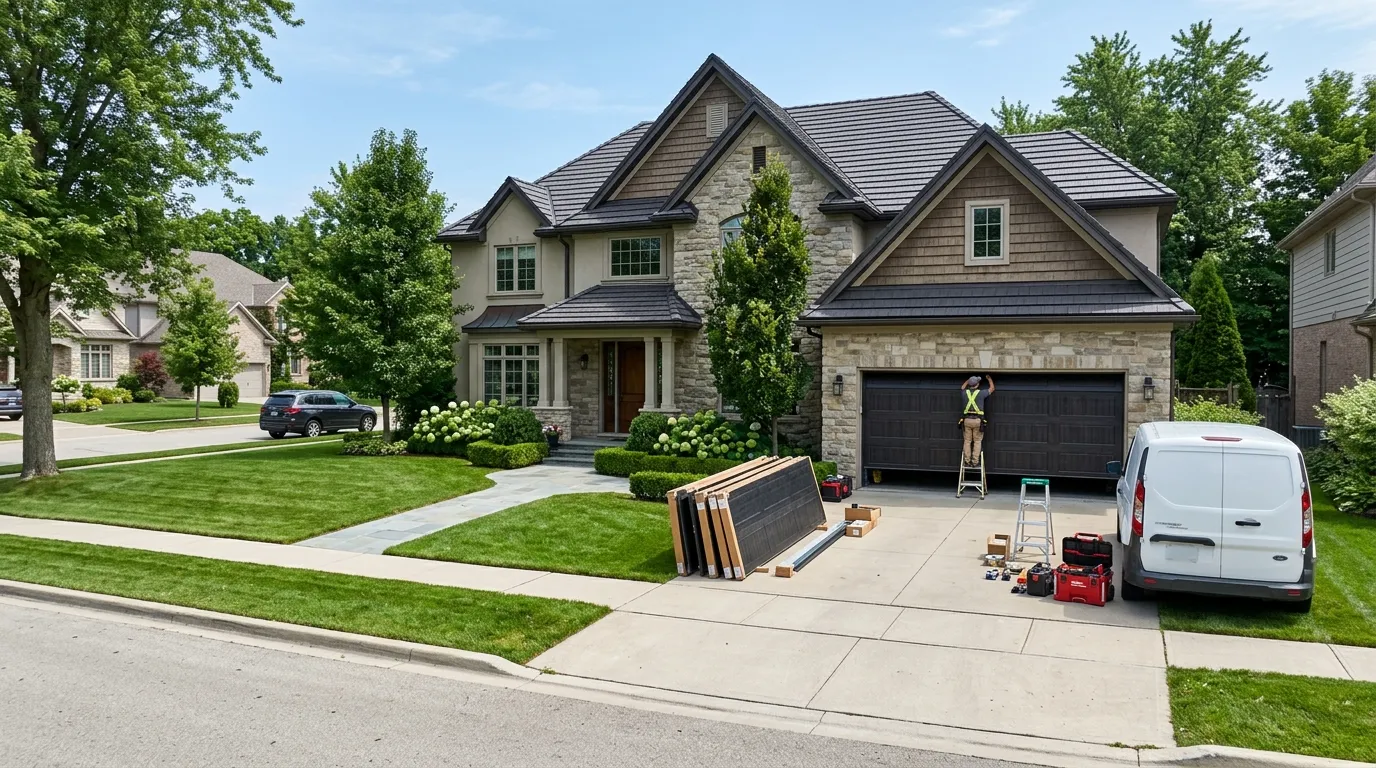
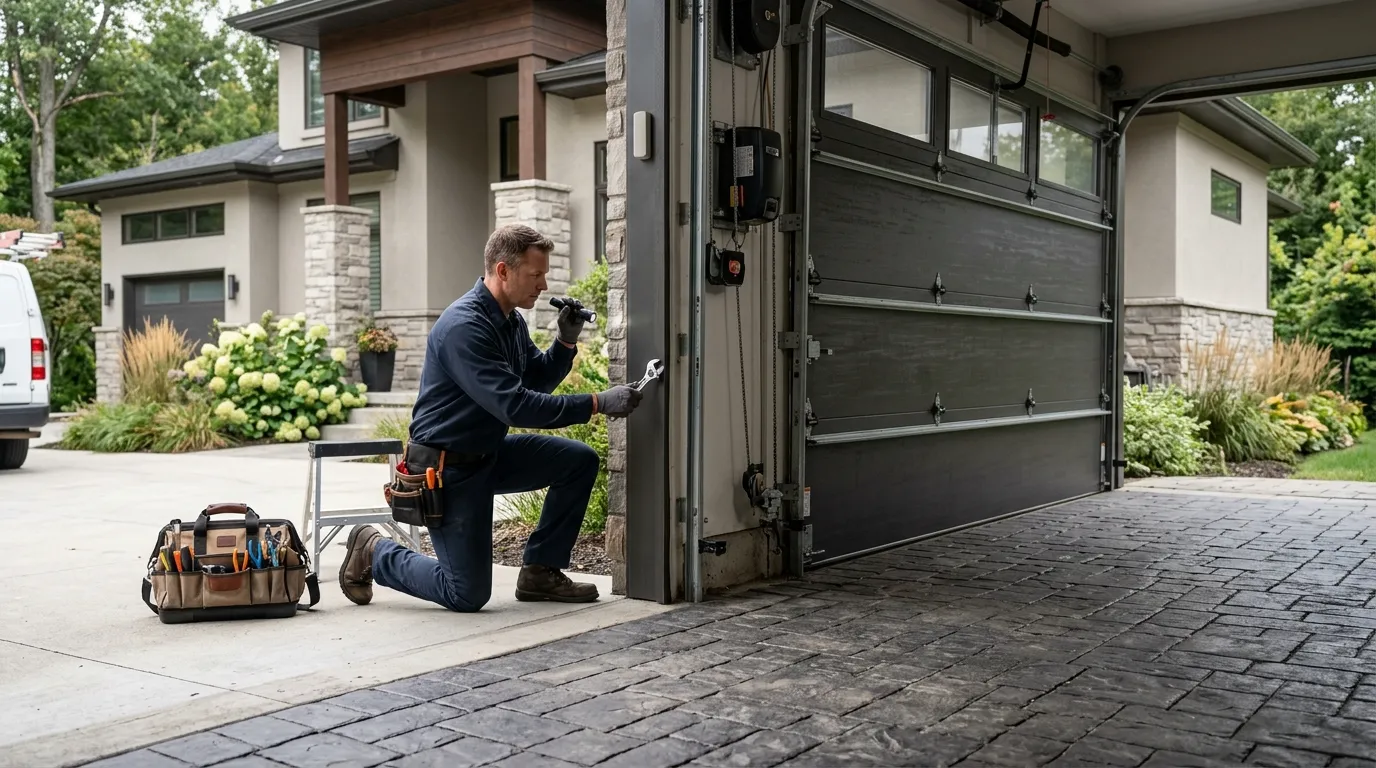
Arvada Garage Door Pros replaces cracked, dented, and rusted garage door panels across Arvada's 1960s-70s housing stock, matching original steel and wood sections built for cold-climate garages.
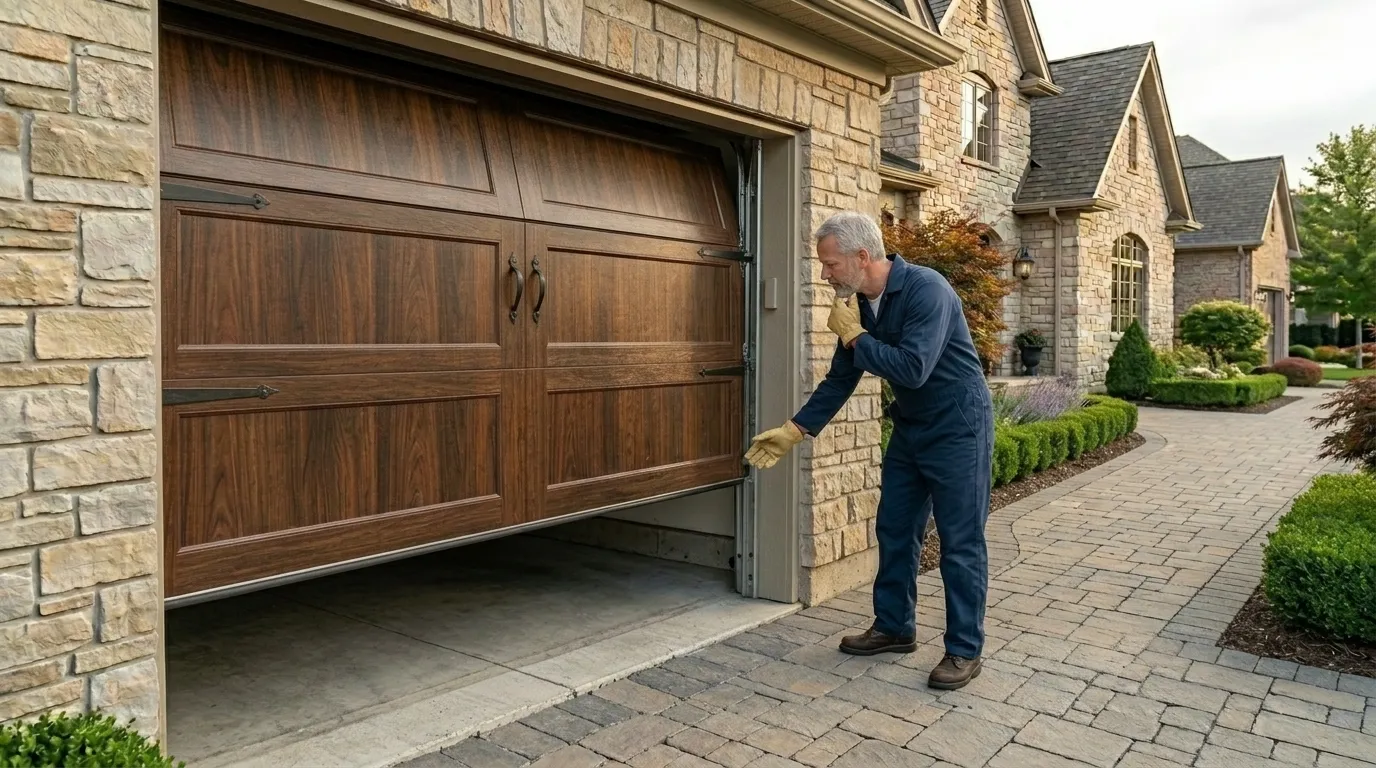
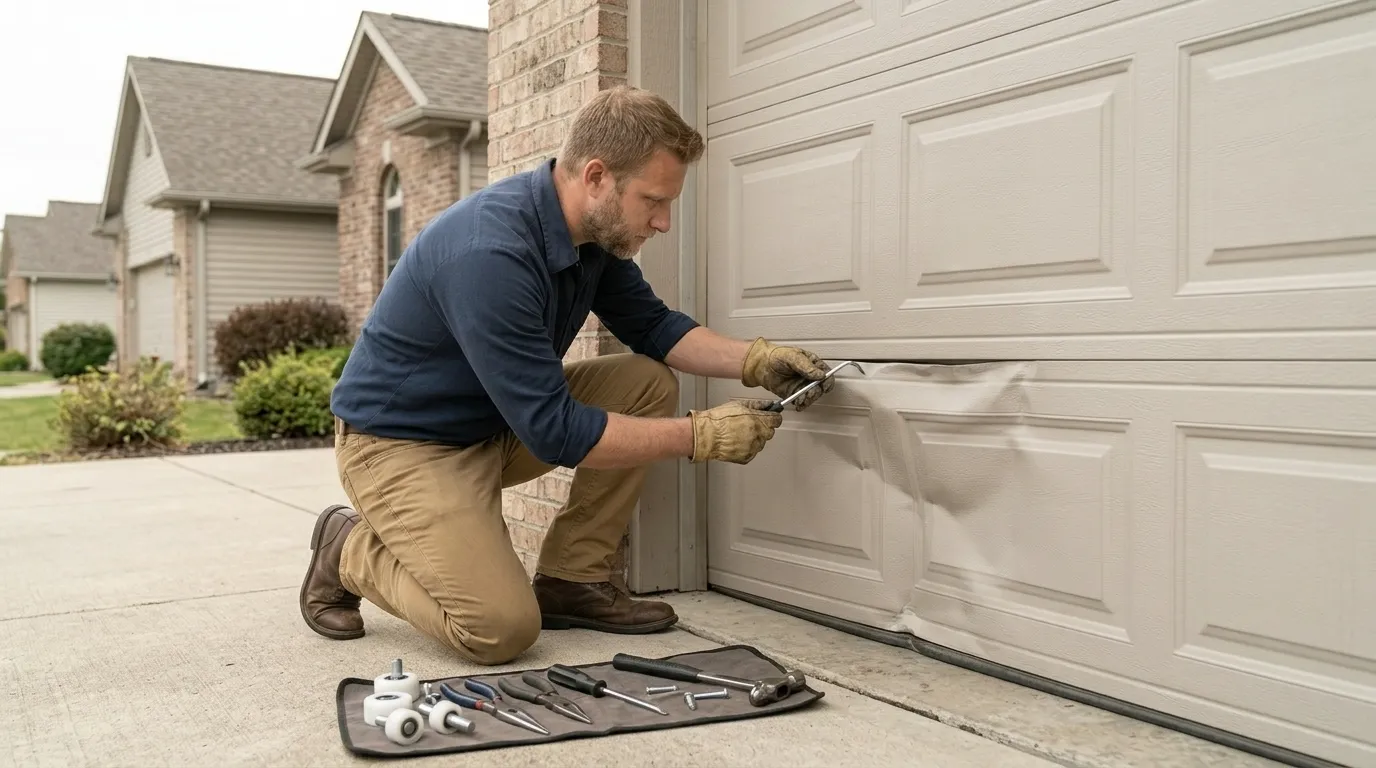
Most of the garage doors we get called out on in Arvada went up somewhere between 1938 and 2010, but the bulk of the stock across the area's 38 named neighborhoods dates to the 1960s and 70s. That matters for panels specifically. Doors from that era are steel or hollow-core wood sections riveted or bolted into a track system that was never designed to flex the way modern insulated doors do. Add a severe cold climate and you get a specific failure pattern: steel panels that took a hit from a bumper or a basketball develop a crease, and that crease turns brittle in freeze-thaw cycles instead of just denting and staying put. Wood panels from the same era absorb moisture at the bottom rail, swell, then crack once the temperature drops hard overnight. We see this on both sides of town - the older stock nearer the original core and the slightly newer builds further out. A cracked or bowed panel on a double door usually means the section next to it took stress it wasn't built for, because the whole door is only as straight as its worst panel. Once one section is out of true, the rollers bind in the track and you start hearing it before you see it.
The Complications
Panel replacement on a door this old runs into one problem fast: matching stock. A single-section swap only works cleanly if the manufacturer still makes that profile, and a lot of the doors from the 1960s-70s era in this area were built by companies that have since changed their panel dimensions, their groove spacing, or gone out of business entirely. When we can't match, the honest options are a custom-fabricated panel, which costs more and takes longer, or replacing the full door. We'll tell you which one makes sense before we quote it, not after. There's also a structural piece: if the damage came from an impact hard enough to bow one panel, check the track and the hinges on either side, because a bent panel often means a bent hinge or a track pulled off its bracket, and none of that shows up until the door is cycled a few times. Cold-climate installs add another wrinkle - panels installed in winter need to be handled and sealed differently so the foam-backed sections (on the newer replacements) don't trap moisture at the seams. We won't swap a single panel and call it done if the rest of the door is compromised, because that just moves the failure point somewhere else.
The DIY Question
A dented panel looks like a bolt-off, bolt-on job, and on some doors it nearly is. Where it stops being a weekend project is alignment. Garage door panels carry the load of the whole section between rollers, and a panel that goes back in a fraction off square will bind the track, strain the opener, and wear the rollers unevenly within a season. If your door predates the current build code common in this area's older housing stock, the hardware may also be a non-standard gauge that doesn't match what's sold at a hardware store. We'd rather tell you that up front than sell you a panel and have you back in two weeks with a stripped bolt hole. If you're handy and the door is a newer, standard-width panel with clean bolt patterns, it can be done. If it's an older section, wood, or anything load-bearing near the bottom rail where the cables attach, that's where we'd say call it in.
The Symptom
You'll usually notice it before you can name it: the door looks slightly off-square when it's down, there's a visible crease or bow in one or two sections, or you hear a scrape at the same point every time the door cycles. Sometimes it's just cosmetic - a dent from a car mirror or a stray baseball that doesn't affect operation. Other times the bow has pulled the section away from the roller stile, and the door starts binding, especially in cold weather when the steel contracts slightly and the tolerances tighten. If you're hearing metal-on-metal at one spot on the track, or the door hesitates at the same panel every time, that's not something that fixes itself with WD-40. Get it looked at before the panel damage spreads to the hinge or the opener has to fight the bind on every cycle.
How it works
From “it’s stuck” to “it’s fixed”
01
Tell us what’s wrong
Describe the symptom - won’t open, loud bang, opener runs but the door won’t move.
02
On-site diagnosis
A technician tests the door under power and by hand and finds what actually failed.
03
Clear, up-front plan
You get the fix that’s needed and what drives the cost - before any work starts.
04
Repaired & tested
The repair is done, the door is set true and tested, and the work area left clean.
Serving Arvada, CO - tell us what your door’s doing and we’ll take it from there.
Straight answers about garage door repair in Arvada. Still unsure? Ask us directly.
Can you match the panel on my older Arvada garage door exactly?
Sometimes. A lot of doors from the 1960s-70s stock common in this area were made by manufacturers that have since discontinued that profile. We check the groove spacing and panel width first - if it's discontinued, we'll quote a custom-fabricated match or a full door replacement, whichever costs less over time.
Is it cheaper to replace one panel or the whole door?
Depends on the door's age and how many sections are affected. If your door is original to a 1960s or 70s build and one panel is already bowed, there's a decent chance a second section is under strain too. We inspect the whole door before quoting so you're not paying for a single panel now and the rest of the door in six months.
Why did my panel crack in winter when the dent happened months ago?
Steel and wood panels both get more brittle in a severe cold climate. A crease from an old impact that held its shape in summer can finally crack once temperatures drop hard, especially overnight. It's the freeze-thaw cycle finishing what the original impact started.