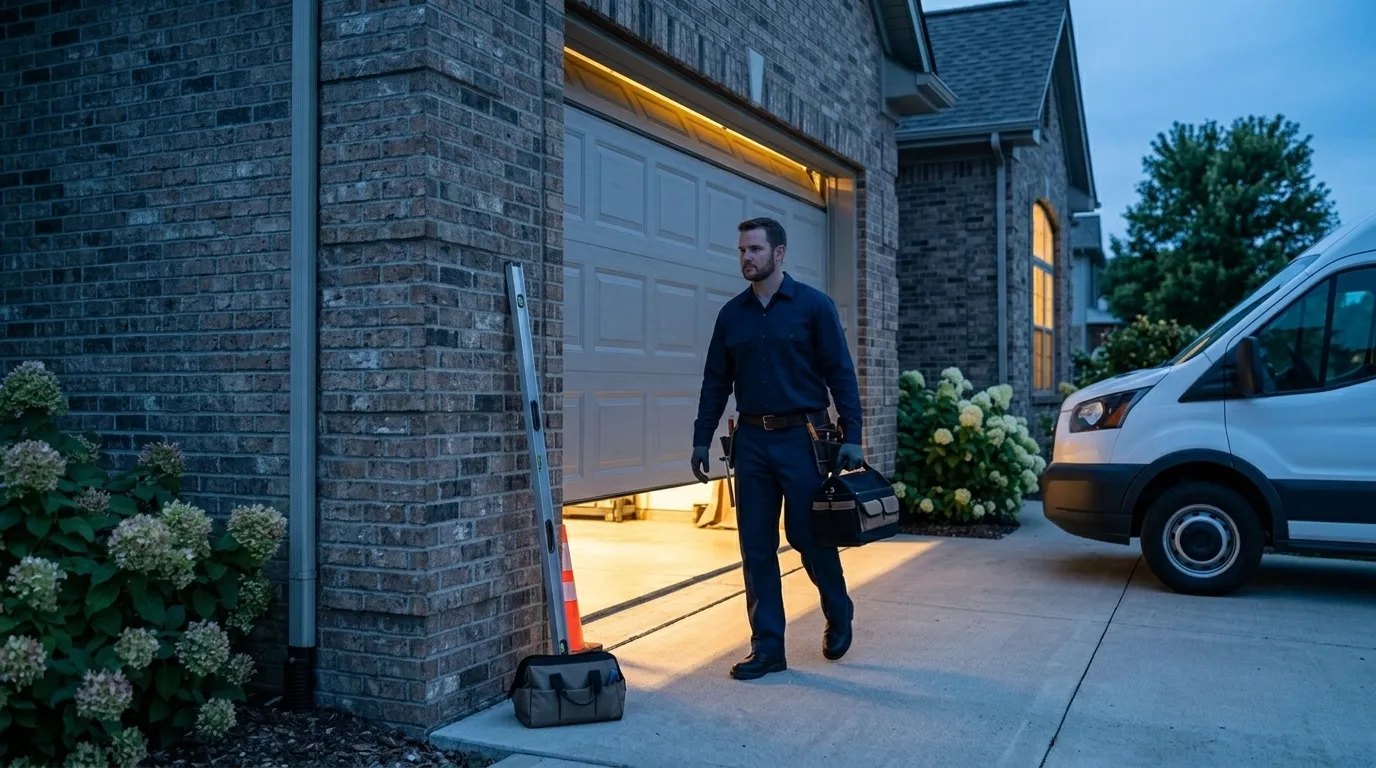
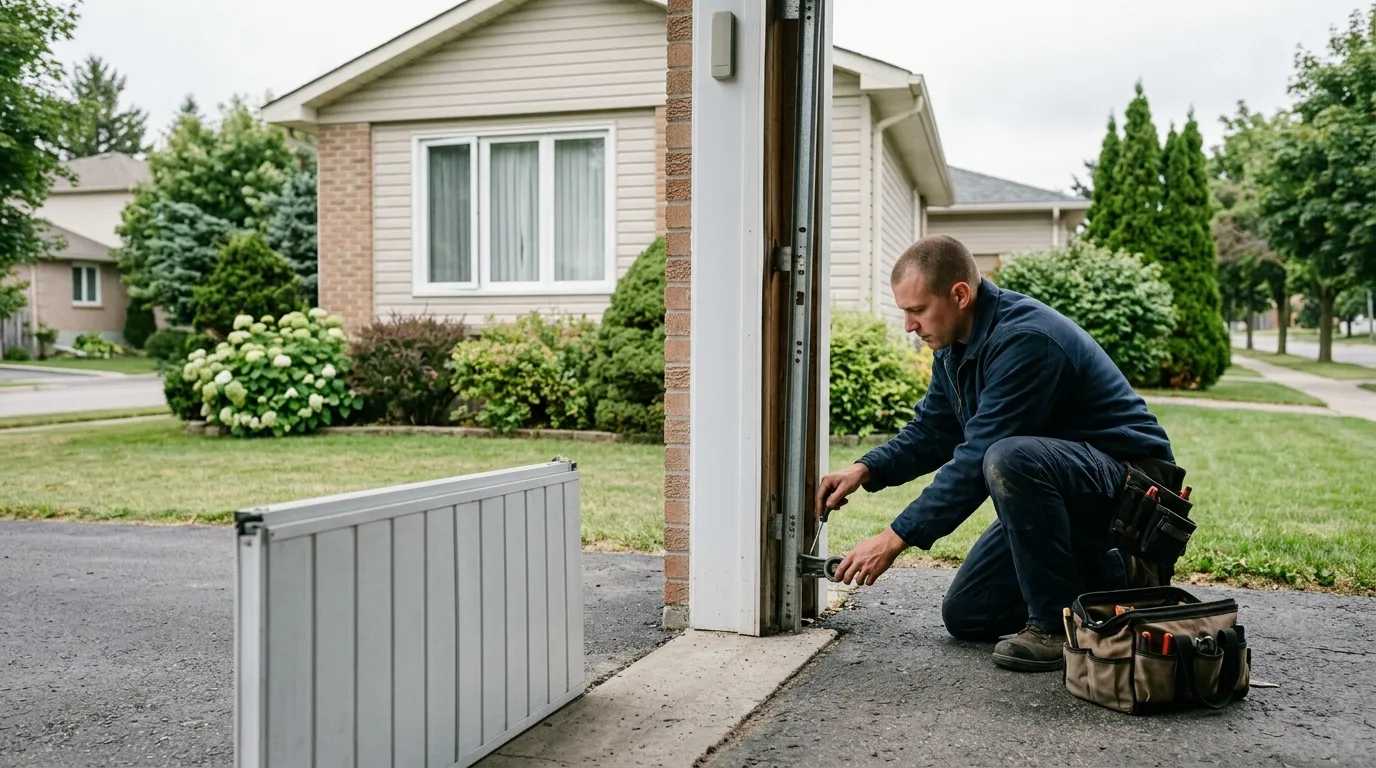
Commerce City's houses run newer than most of the Arvada service area, median build year 2004, so the failures are opener boards and sensors, not old torsion hardware.
Commerce City has about 21,339 households, smaller than most of the towns this company covers, but the truck still has to carry parts for a housing stock that skews younger than the rest of the service area. With a median build year around 2004, most doors here came in with steel sectional panels, factory-set torsion springs on center-mount hardware, and openers running circuit boards and photo-eye safety sensors rather than the older mechanical relay units. That means the stocked parts that matter most for a Commerce City call are photo-eye sensor pairs, standard-wind torsion springs sized for a lighter modern door, and drive belts or chains for openers built in the 2000s and later. What the truck does not carry is obsolete gearing for pre-1980 openers, because that hardware barely exists out here. If a job turns up something older than that median year, expect a return trip once the part is sourced - that is the honest limit of a same-visit fix.
How Long You Are Without the Door
There is no branch in Commerce City - every call comes out of Arvada, roughly 19 miles away, and that drive is part of the honest math on timing. It is not a same-day guarantee; it is a real trip across town that has to be worked into the schedule. Once someone is on site, the actual repair on a 2000s-era door tends to move fast, because the parts are standard sizes still made today, not the odd gauges you find in older housing stock. A broken spring or a burnt-out opener board on a newer sectional door is usually a same-visit job once the part is on the truck. What eats time is diagnosis when a photo-eye sensor has drifted out of alignment rather than failed outright - that can look like a dead opener until someone actually checks the wiring at the base of the track. Given the distance, calling as soon as the door won't move, rather than waiting, gives more room to fit the trip into the same day.
The Symptom
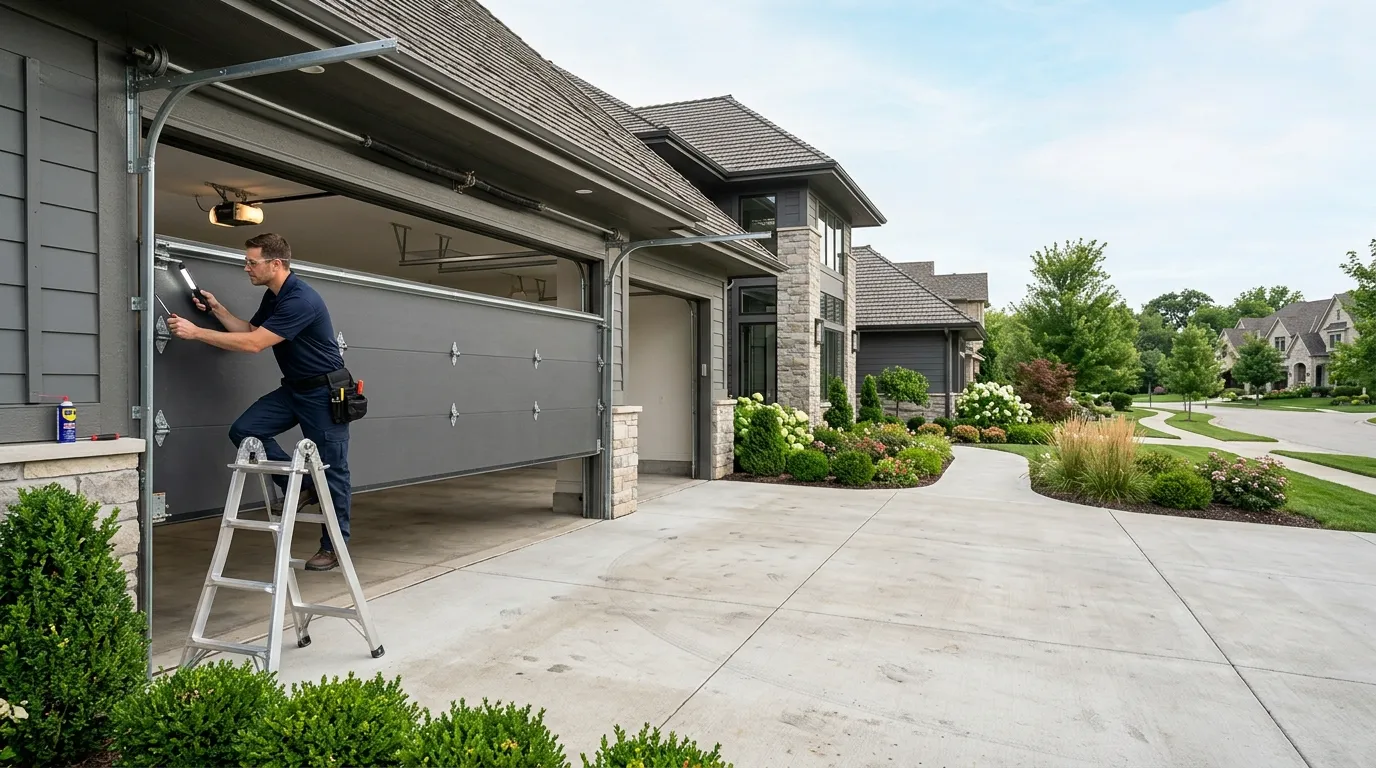
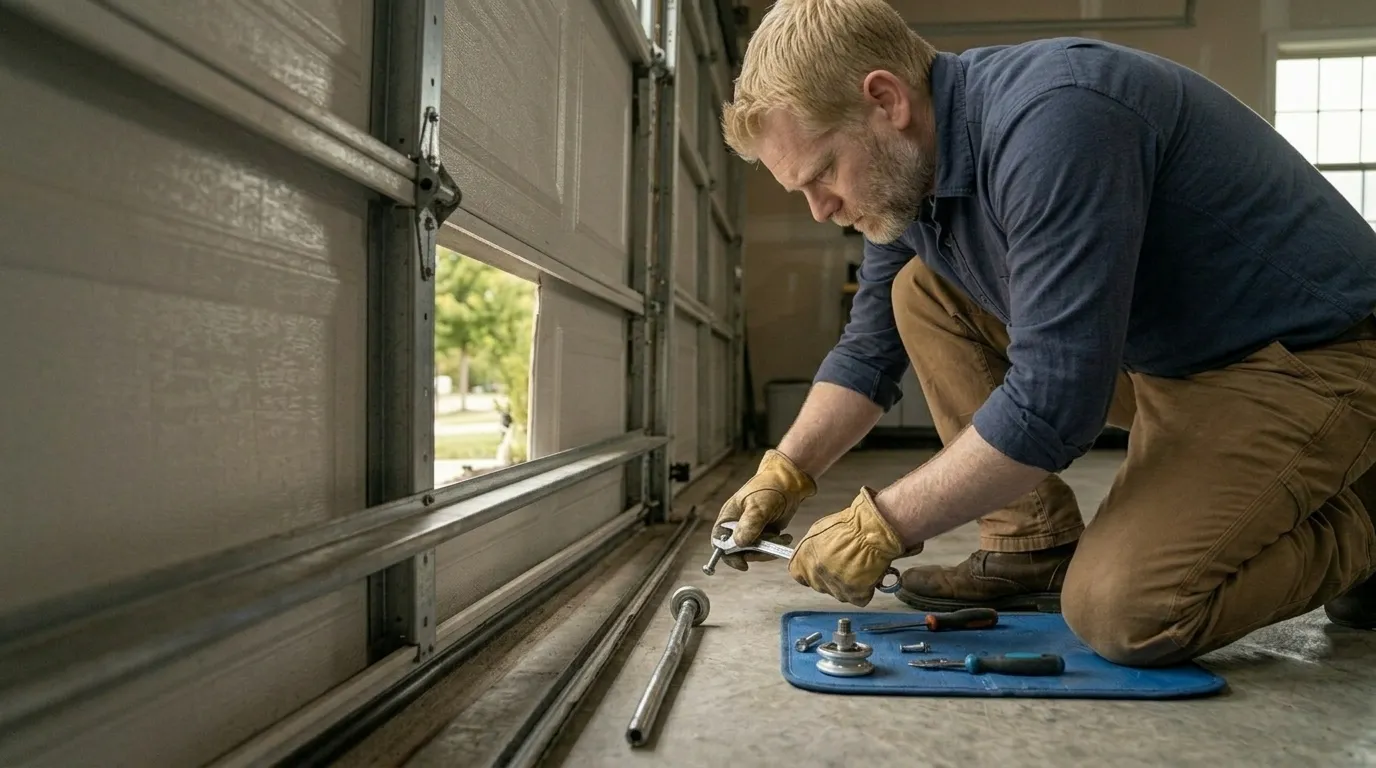
The complaint that shows up most from a town with this build profile is the door that reverses itself halfway down, or won't close at all, with the opener light blinking. That is almost always the photo-eye sensors - the small emitter and receiver units mounted low on each track rail - out of alignment, dirty, or blocked. It is a symptom tied directly to how these houses were built: 2004-median construction means garages wired for opener safety sensors as standard equipment, not retrofits. Older stock elsewhere in the service area sometimes lacks them entirely. A close second symptom is a torsion spring that lets go with a bang on a door that has seen ten to twenty years of daily cycles, which lines up with a median build year in the early 2000s reaching spring end-of-life right about now. Grinding or a door that opens but stalls partway usually points to a roller or cable issue rather than the spring itself, worth ruling out before assuming the worst.
What Causes It Around Here
The cold is the constant. This area sits in a severe cold climate band, and steel torsion springs lose tension and become brittle faster through repeated freeze-thaw cycles, which shortens their working life regardless of how new the door is. On a newer opener, cold also affects the photo-eye sensors indirectly - condensation and frost on the lenses during temperature swings is a common cause of a door that refuses to close in the morning and works fine by afternoon. Because most of Commerce City's roughly 21,339 households sit in housing built well after the 1970s, the failure pattern here leans electronic and sensor-driven more than it does mechanical wear on old hardware. That is a different failure mix than the 38-plus older neighborhoods that make up most of the wider Arvada service area, where median household income runs near $110,968 against Commerce City's roughly $106,756 - a gap that does not change the physics of a cold spring, but it does mean the doors themselves are a different generation of parts.
How it works
From “it’s stuck” to “it’s fixed”
01
Tell us what’s wrong
Describe the symptom - won’t open, loud bang, opener runs but the door won’t move.
02
On-site diagnosis
A technician tests the door under power and by hand and finds what actually failed.
03
Clear, up-front plan
You get the fix that’s needed and what drives the cost - before any work starts.
04
Repaired & tested
The repair is done, the door is set true and tested, and the work area left clean.
Serving Arvada, CO - tell us what your door’s doing and we’ll take it from there.
Straight answers about garage door repair in Arvada. Still unsure? Ask us directly.
Why does my door reverse before it closes?
On a house with newer construction like most of Commerce City, that is almost always the photo-eye sensors near the bottom of the tracks - misaligned, dirty, or frosted over in cold weather. It reads as an obstruction even when the path is clear. Cleaning and realigning the pair usually solves it; a bent bracket from a bump means a replacement sensor.
Is there a branch in Commerce City?
No. This company runs out of Arvada, about 19 miles away, and travels to Commerce City for calls. There's no local depot here, so factor the drive into how you plan the day - it's a real trip, not a same-block response.
My door is only about 15-20 years old - why did the spring already break?
Torsion springs are rated for cycle counts, not calendar years, and severe cold accelerates metal fatigue. A door installed in the early 2000s that runs twice a day has likely put in close to the number of cycles a spring is built for, cold climate or not.
Do you carry parts for older opener models here?
Commerce City's housing runs newer on average, median build year around 2004, so the truck is stocked more for modern opener boards, belts, and sensors than for older mechanical units. If a job needs an obsolete part, that sometimes means a second trip once it's sourced.