Panel Replacement for Ken Caryl's Later-Built Doors
Ken Caryl homes mostly went up after 1987, later than most of the Arvada service area, with steel panel doors that dent and crack in hard freezes. Panel repair from Arvada.
What a panel job runs here depends less on labor and more on what's actually wrong and how old the door is. Ken Caryl's housing stock is mostly newer than the rest of the service area we cover from Arvada - median build year 1987 versus the 1960s-70s stock that dominates most of the 38 named areas we work. That later build date matters for cost: doors from this era are almost always roll-formed steel sections, not the wood or aluminum common in older neighborhoods, and steel sections are still in production, so matching one panel to the rest of the door is usually possible instead of forced into a full-door replacement. The cost driver that actually swings the number is whether the section is insulated or not, and whether the color and rib pattern are still made. We won't quote a number we don't have - every job gets priced after we see the door, not before. What we can tell you is that a single-panel swap on a steel door this age is normally cheaper than replacing the whole door, provided the track and spring are still sound.
Income levels in this part of the service area run a bit above the broader average ($116,838 here versus $110,968 across the full area), which we mention only because it tends to mean more owners ask for insulated or matched-finish panels rather than the cheapest available section.
Stocked Parts
We carry common panel widths and gauges for the steel sectional doors that make up most of what's on the road between Arvada and Ken Caryl, since that's the era and style we see most across the service area. What we don't carry, and won't pretend to, is an exact color or embossing match for every discontinued line - a lot of 1980s-era doors used rib patterns and paint runs that manufacturers stopped making years ago. If your door's a match, we're usually in and out with the panel on the truck. If it's not, we order it, which adds time we won't guess at here.
Hinges, end stiles, and rollers sized for steel sections are stock items for us regardless of which named area the call comes from - Ken Caryl, or anywhere else on the list. The one honest limit: we don't stock every insulated panel variant, because insulated steel sections vary more by thickness and foam density than solid ones, and guessing wrong means a second trip.
The Symptom
The complaint we hear most from doors built in the late 1980s and after isn't the spring failures you'd expect from older torsion hardware - those doors were largely built with torsion systems already standard. It's the bottom one or two panels: cracked seams, buckled ribs, or a rust line at the base where moisture sits after a freeze-thaw cycle. This region sits in a cold, severe climate band, and that swing between freeze and thaw is what splits steel seams that were fine the day they were installed. A dented panel from a scraper or a car bumper is common too, but the cold-driven cracking is what separates this era's failure pattern from the older wood-panel rot we see elsewhere in the service area.
If the damage is confined to one or two lower sections and the rest of the door still tracks straight, that's a panel job, not a door replacement.
What the Fix Involves
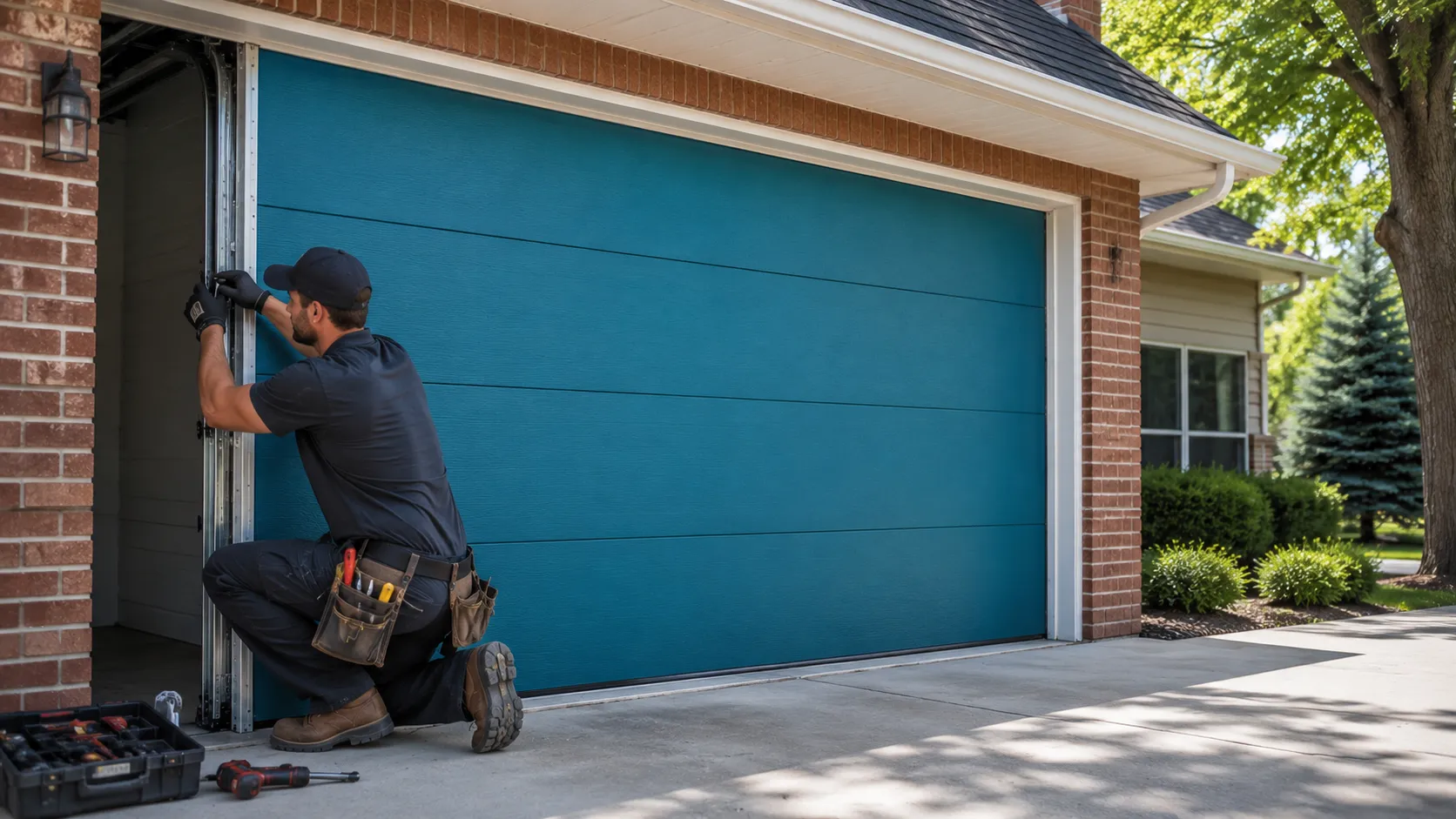
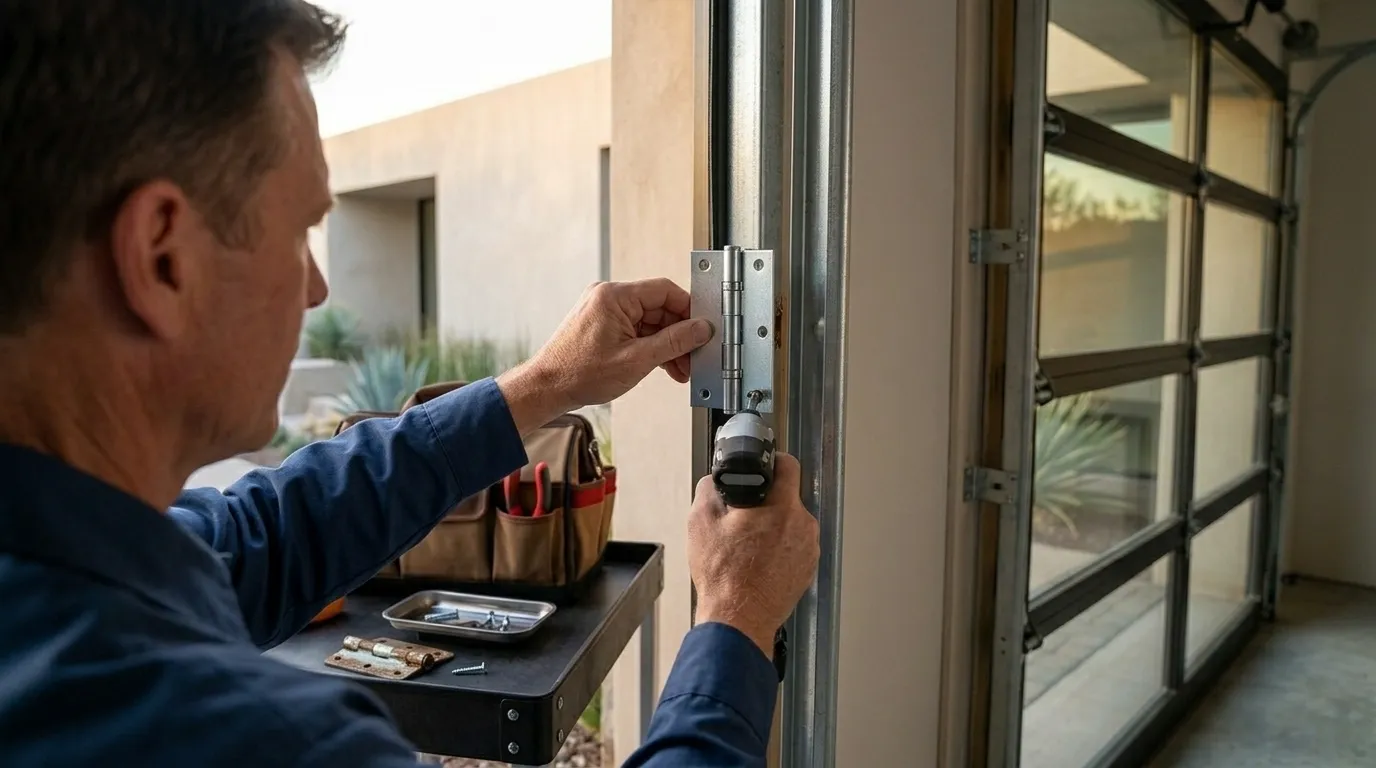
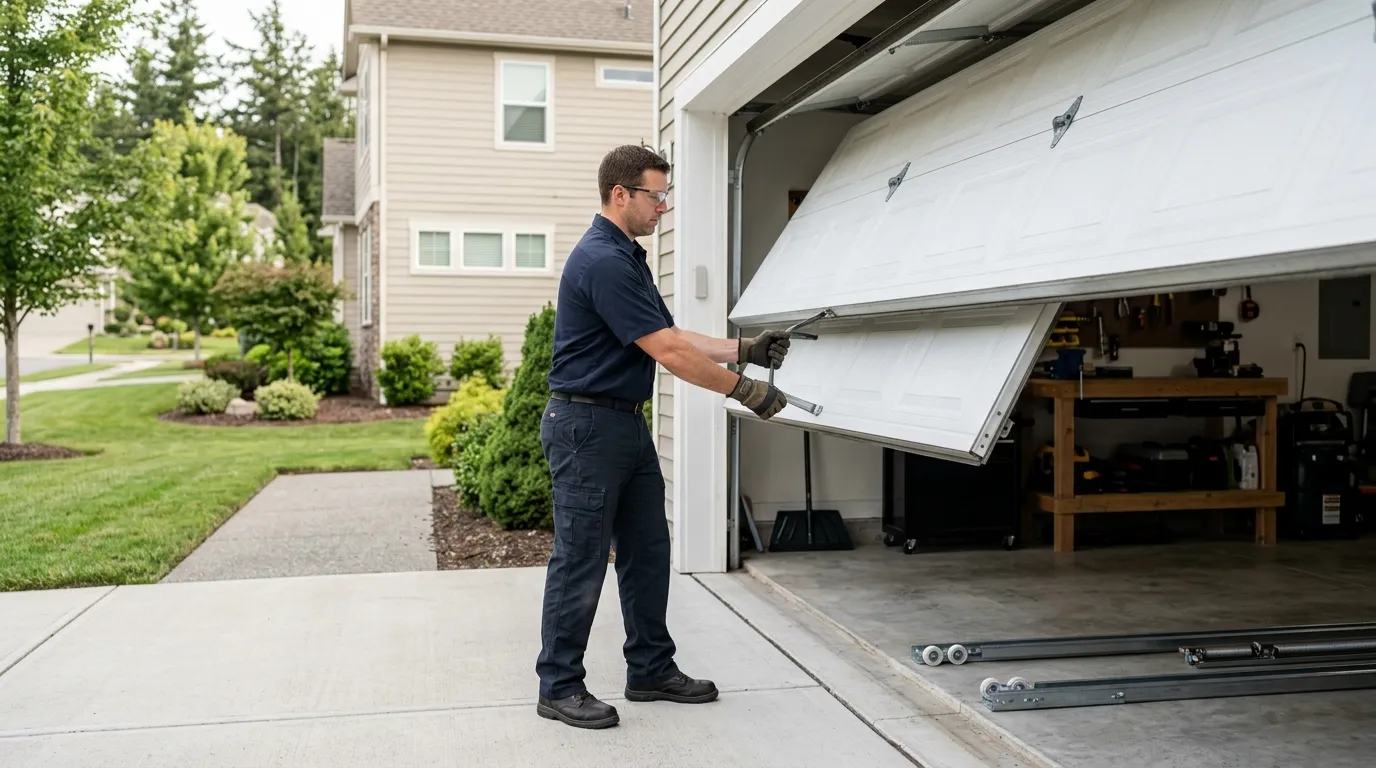
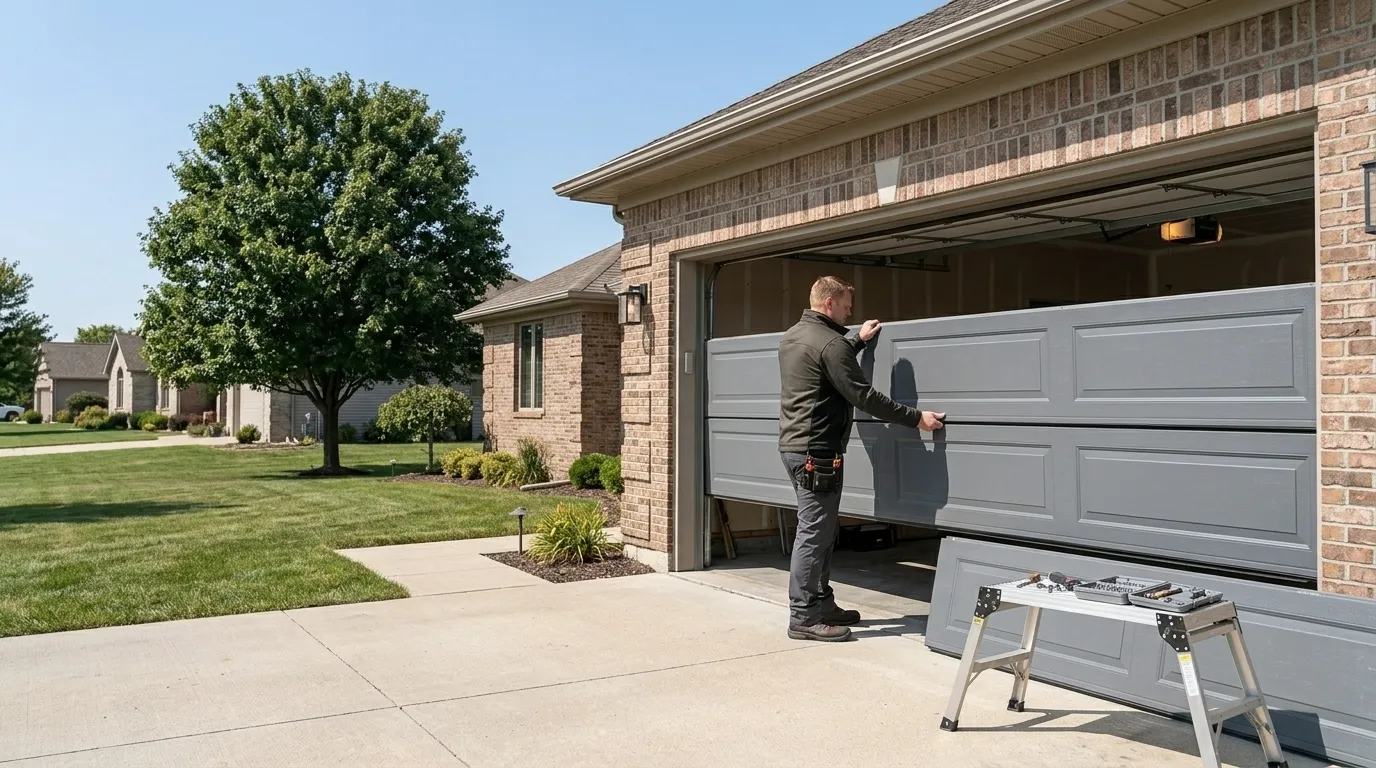
Once we've confirmed the panel is a straight swap, we pull the door off its track, unbolt the damaged section from the stiles above and below it, and set the new panel in with the same hardware - hinges and rollers get reused if they're not bent or rusted through. The tricky part on a steel sectional isn't the swap itself, it's tension: if the bottom panel carried any of the spring load through a worn cable or track, we check that before closing the door back up, because a panel that looks fine after the swap but binds on the track will just crack again at the same spot.
On insulated doors, we match foam density where we can; if we can't get an exact match, we'll say so before the job starts, not after.
The DIY Question
A cosmetic panel swap on a steel sectional door - no spring work, no track adjustment - is within reach for a handy homeowner with the right clamps to hold the door in place while the old section comes off. Where it stops being a weekend project is torsion spring tension: if your panel damage is tied to a worn cable or a spring that's lost tension, that's not a DIY repair, full stop, regardless of how simple the panel swap itself looks. We'd rather tell you that up front than have you find out with a wound spring under load.
If you're only replacing a bottom panel that's purely cosmetic and the door still opens and closes true, doing it yourself is reasonable. If the door binds, drags, or the panel damage lines up with a spring or cable that's already suspect, call it in.
The Complications
The complication we run into most in this part of the service area is color and rib match. A door built around 1987 may carry a rib pattern or a paint color the maker phased out a decade ago, and unlike the older wood doors elsewhere in the service area, there's no refinishing option - steel panels either match or they don't. If they don't, you're choosing between a visibly mismatched panel or replacing the full door, and we'll tell you honestly which one makes more sense once we've seen it.
The other complication is less about the door and more about logistics: we run this job out of Arvada, and Ken Caryl sits about 18 miles out, so scheduling here works best when we can bundle the visit rather than treat it as a same-day emergency call. That's not a knock on the town, it's just the distance.
How it works
From “it’s stuck” to “it’s fixed”
01
Tell us what’s wrong
Describe the symptom - won’t open, loud bang, opener runs but the door won’t move.
02
On-site diagnosis
A technician tests the door under power and by hand and finds what actually failed.
03
Clear, up-front plan
You get the fix that’s needed and what drives the cost - before any work starts.
04
Repaired & tested
The repair is done, the door is set true and tested, and the work area left clean.
Serving Arvada, CO - tell us what your door’s doing and we’ll take it from there.
Straight answers about garage door repair in Arvada. Still unsure? Ask us directly.
Why does my Ken Caryl garage door have steel panels instead of wood?
Most homes in Ken Caryl were built around 1987, later than the 1960s-70s housing that makes up much of the rest of the service area we cover from Arvada. By the late 1980s, roll-formed steel sectional doors had mostly replaced wood-panel doors in new construction, which is why steel is what we find on most calls out here.
Can you match the panel color on an older steel door?
Sometimes. If the door's rib pattern and paint run are still in production, we can match it closely. If the line was discontinued, which happens with doors from the 1980s and 90s, we'll tell you before starting so you can decide between a visible mismatch or a full door replacement.
Do you have a branch in Ken Caryl?
No. We run this job out of Arvada, about 18 miles away. We don't stage a truck or hold same-day emergency slots specific to Ken Caryl, so panel jobs here work best scheduled rather than treated as walk-up emergency calls.
Is a cracked bottom panel from cold weather covered by a quick fix or does the whole door need replacing?
If the crack or buckle is confined to the bottom section or two and the rest of the door still tracks straight, it's usually a panel swap, not a full replacement. This area sits in a cold, severe climate band, so freeze-thaw cracking at the base is common and doesn't necessarily mean the door is done.