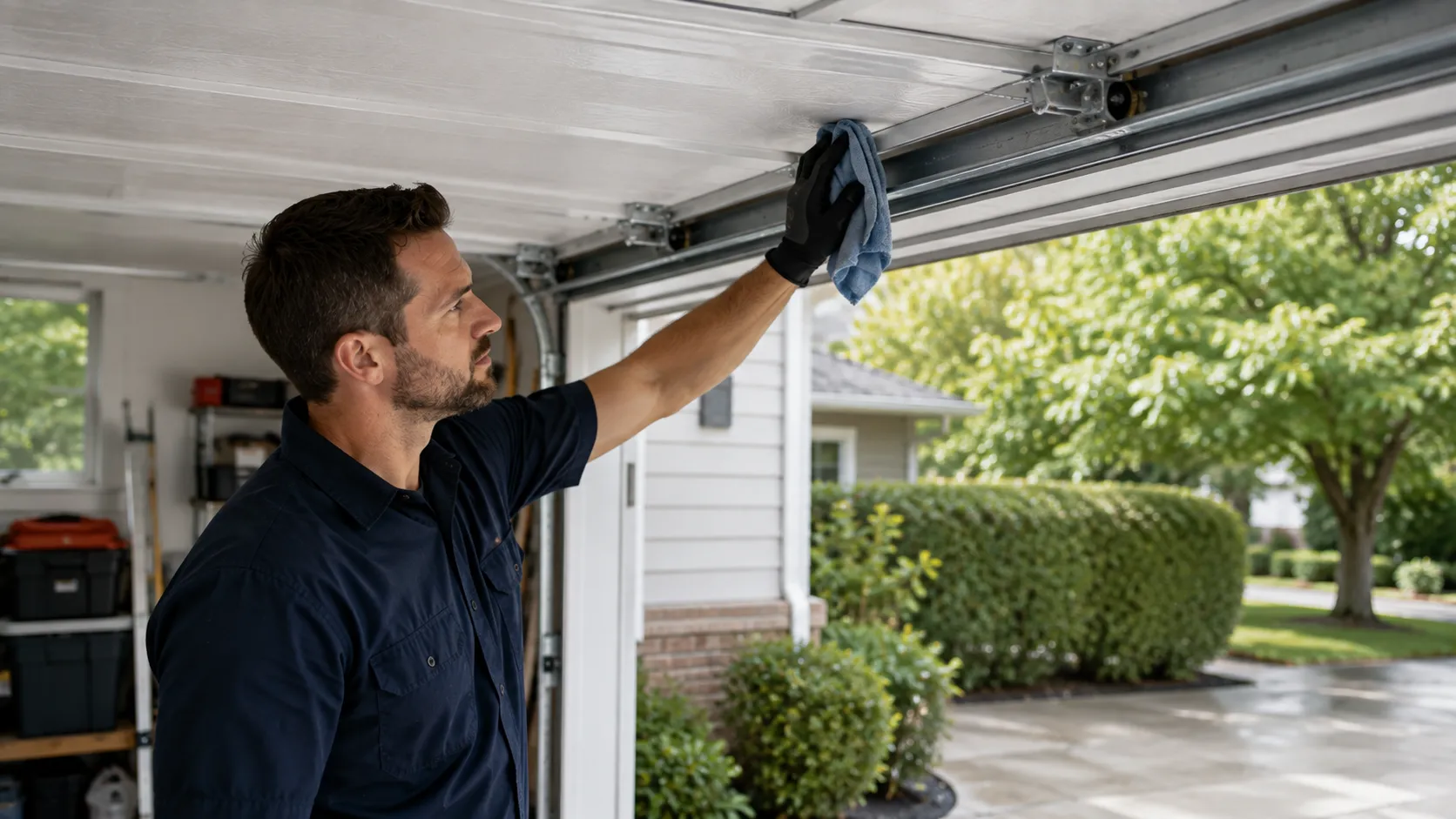
Wheat Ridge homes run older than the Arvada median - built mostly around 1964. That gap changes which springs, hinges, and openers we bring on the truck.
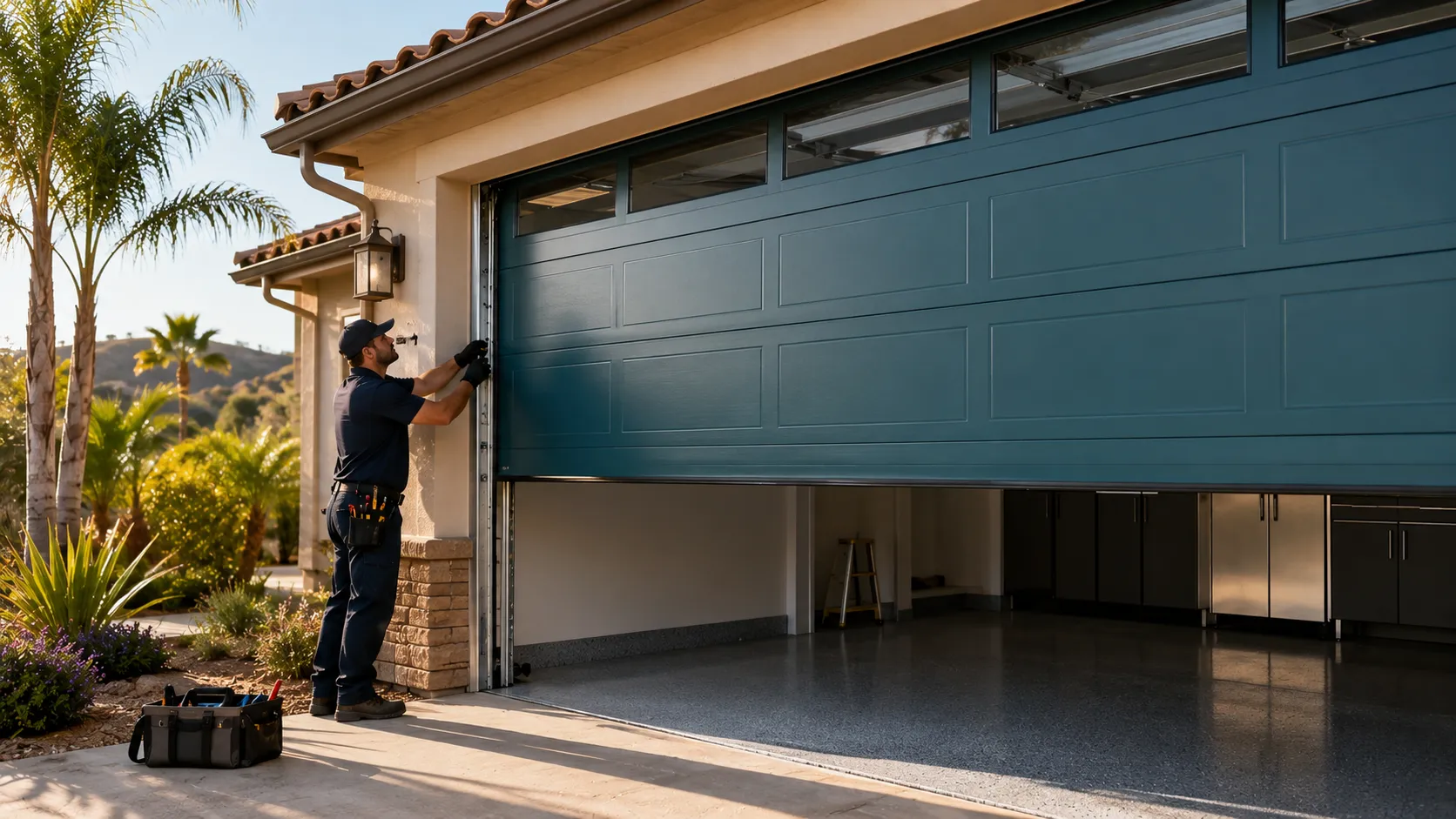
Arvada's housing stock, taken as a whole, runs to a median build year of 1977. Wheat Ridge sits about 5 miles southeast of us, and the houses here skew older - a median build year closer to 1964. That thirteen-year gap matters more than it sounds. A door and opener installed in a mid-1960s house has usually been through at least one full replacement cycle already, sometimes two, and whoever did the last job may have patched in whatever hardware was on the truck that day rather than what actually matched the opening. We see mismatched track gauges, springs sized for a different door weight than what's hanging on them now, and openers bolted to framing that was never meant to carry that motor. None of this is unique to Wheat Ridge, but the odds of running into it go up the older the neighborhood, and this one is old by the standards of the broader service area. We come out from Arvada for these calls; we don't keep a branch or a set response window for the town, so what we bring depends on what we expect to find, and on a street of 1960s houses that means bringing options, not a single fix.
Stocked Parts
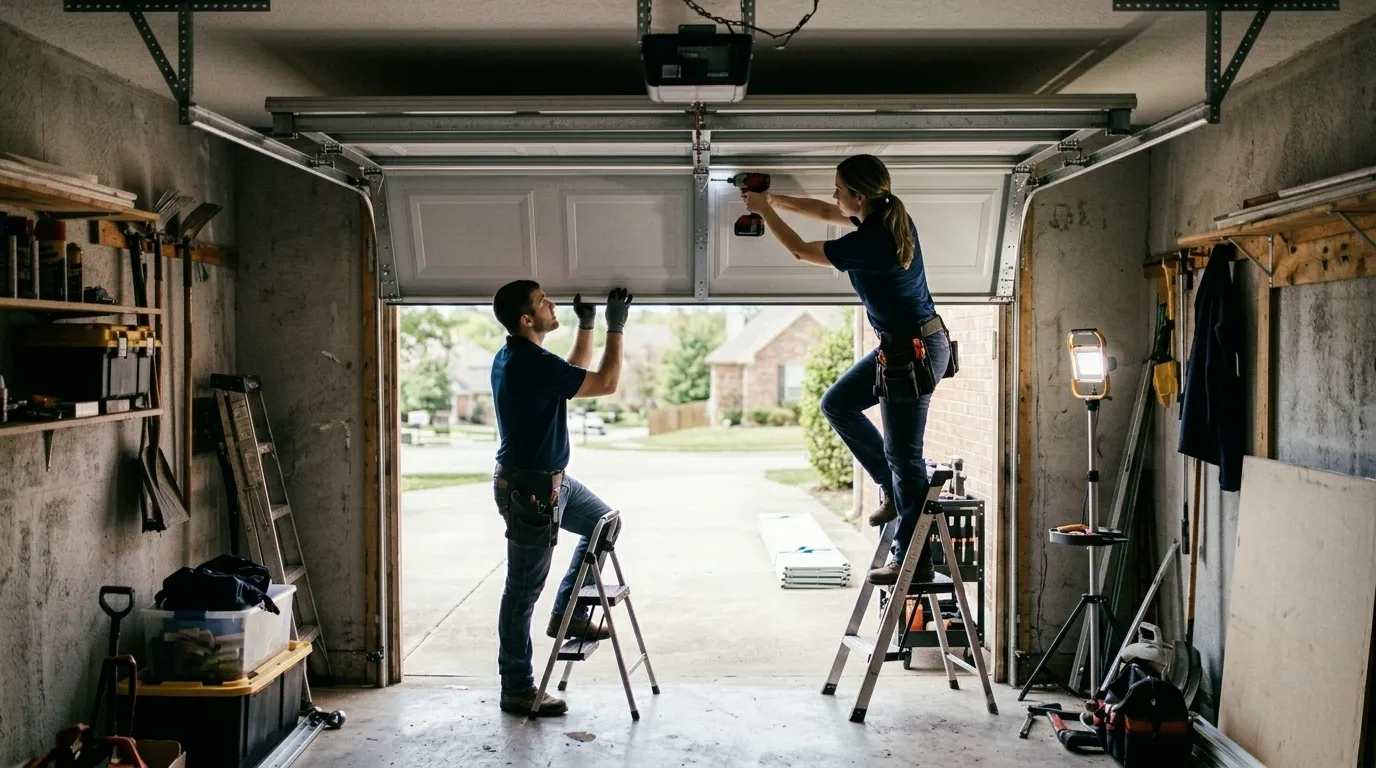
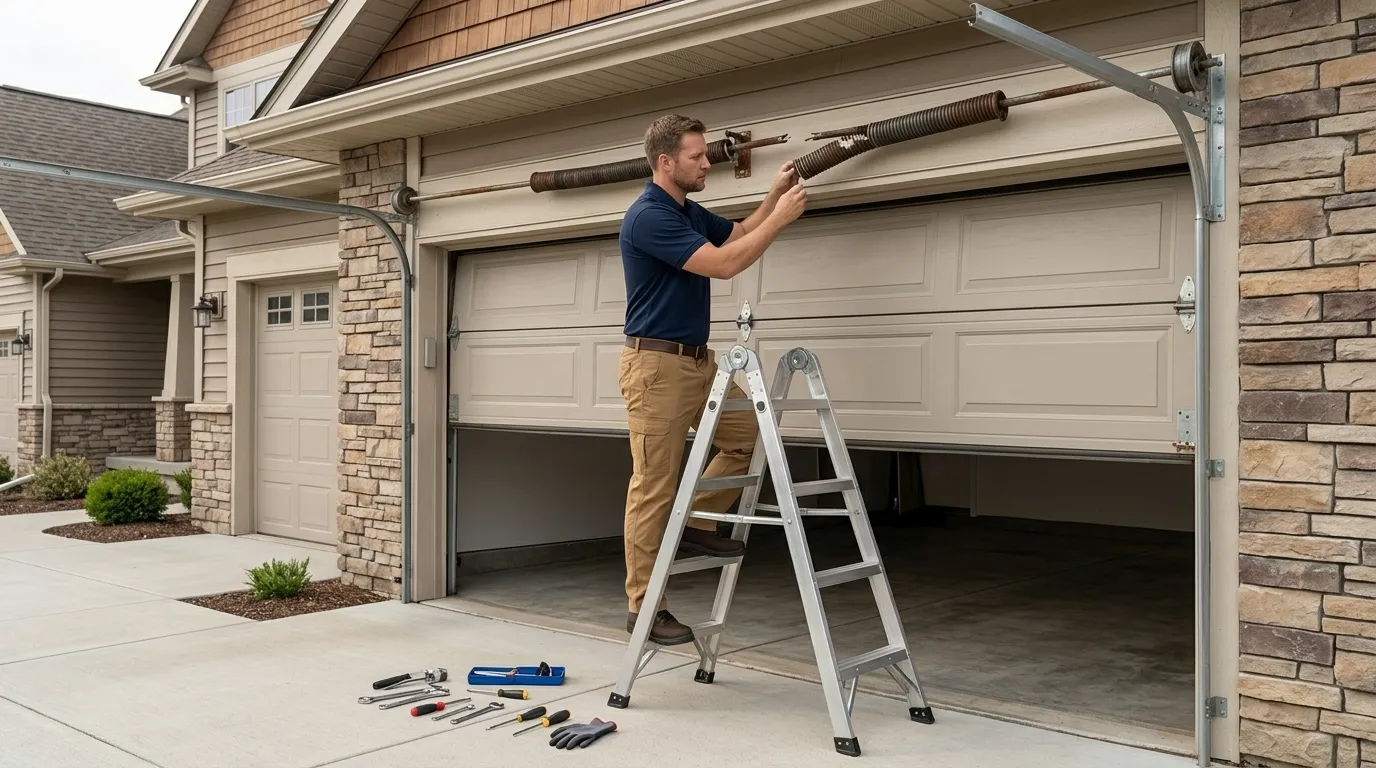
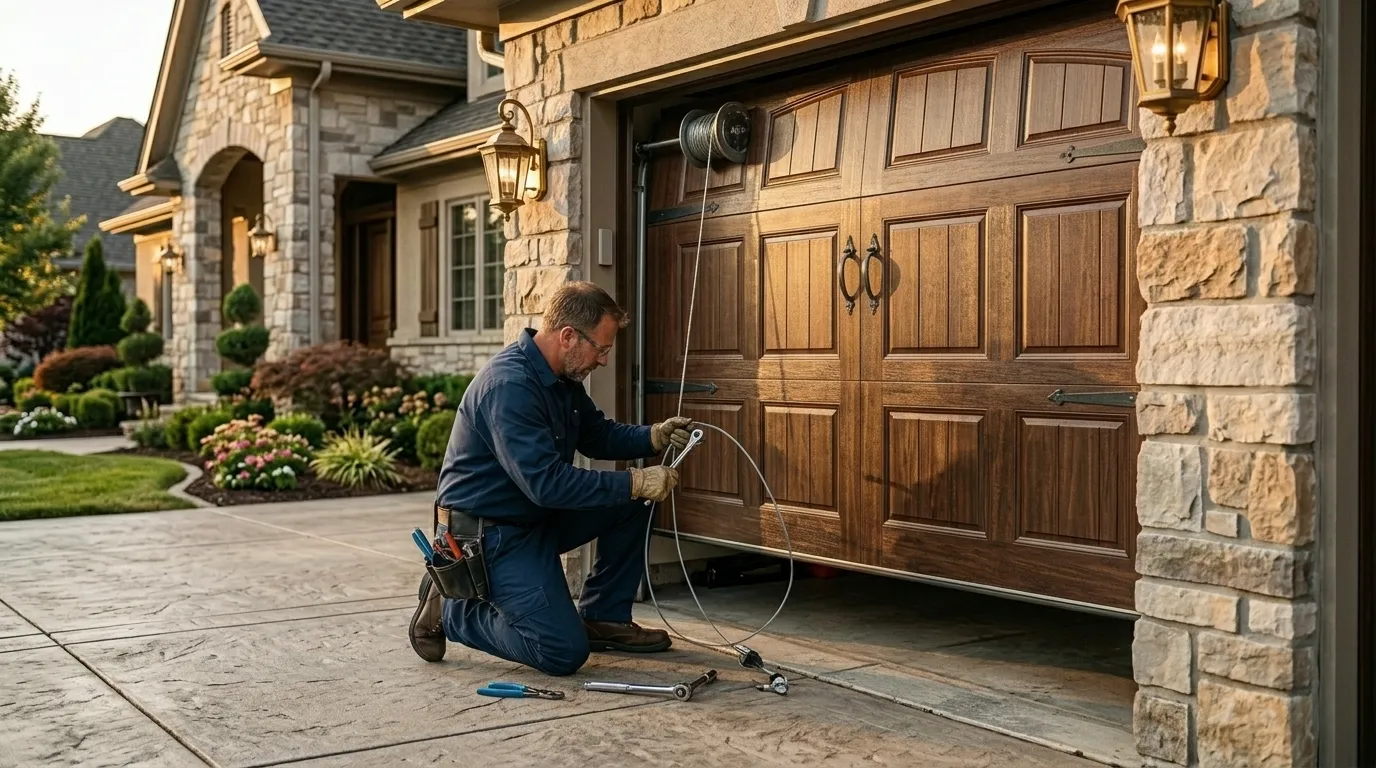
Because the housing here leans older than the Arvada-wide median, we carry parts sized for both eras on the truck rather than assuming one standard. That means torsion springs in a wider range of wire diameters, both the older-style bracket hardware and the newer sectional mounts, and rollers in a couple of different stem lengths. It's not glamorous, but it's the difference between finishing a job in one visit and having to order a part and come back. We don't stock everything - specialty low-headroom kits or oddball opener boards from a defunct manufacturer sometimes take longer, and we'll tell you straight if that's the situation instead of promising a same-day fix we can't back up. For the common failures on a house from this build era - a snapped torsion spring, a worn extension cable, a bent hinge from a decades-old panel - the truck is set up to handle it without a second trip.
The DIY Question
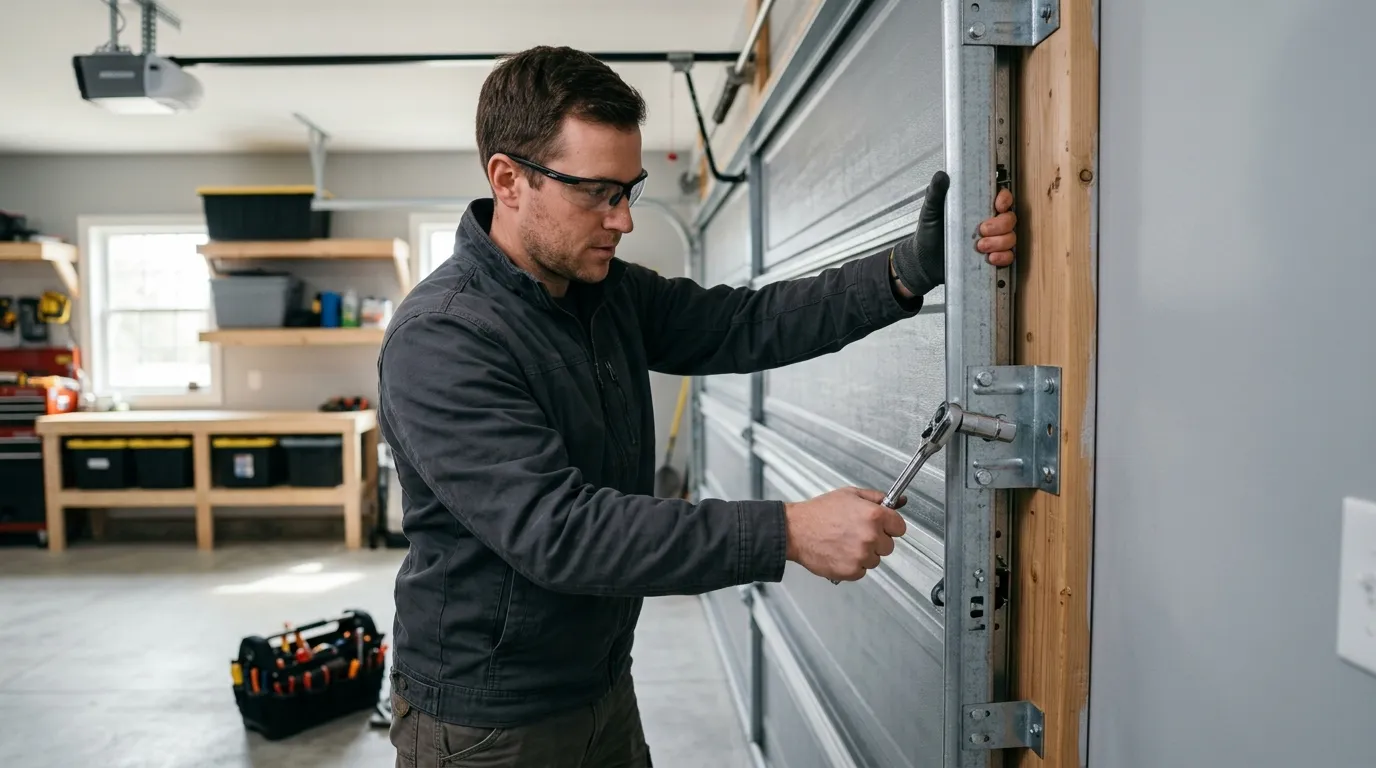
A torsion spring under load can put someone in the hospital, and that risk doesn't change based on the town or the decade the door was built. What does change is how much a homeowner in an older house should trust what they see. On a 1960s door, the spring, cable, and drum setup often looks simpler than it is - fewer safety features, older winding cones, sometimes no visible warning label at all because it wore off decades ago. If your door won't open, won't close all the way, or slams down instead of lowering, that's a spring or cable problem, not something to force with a pry bar or a ladder. Lubricating hinges and rollers, tightening loose bolts on the track, and testing the auto-reverse safety feature are reasonable for an owner to do. Anything involving the torsion spring or the cables under tension isn't.
The Symptom
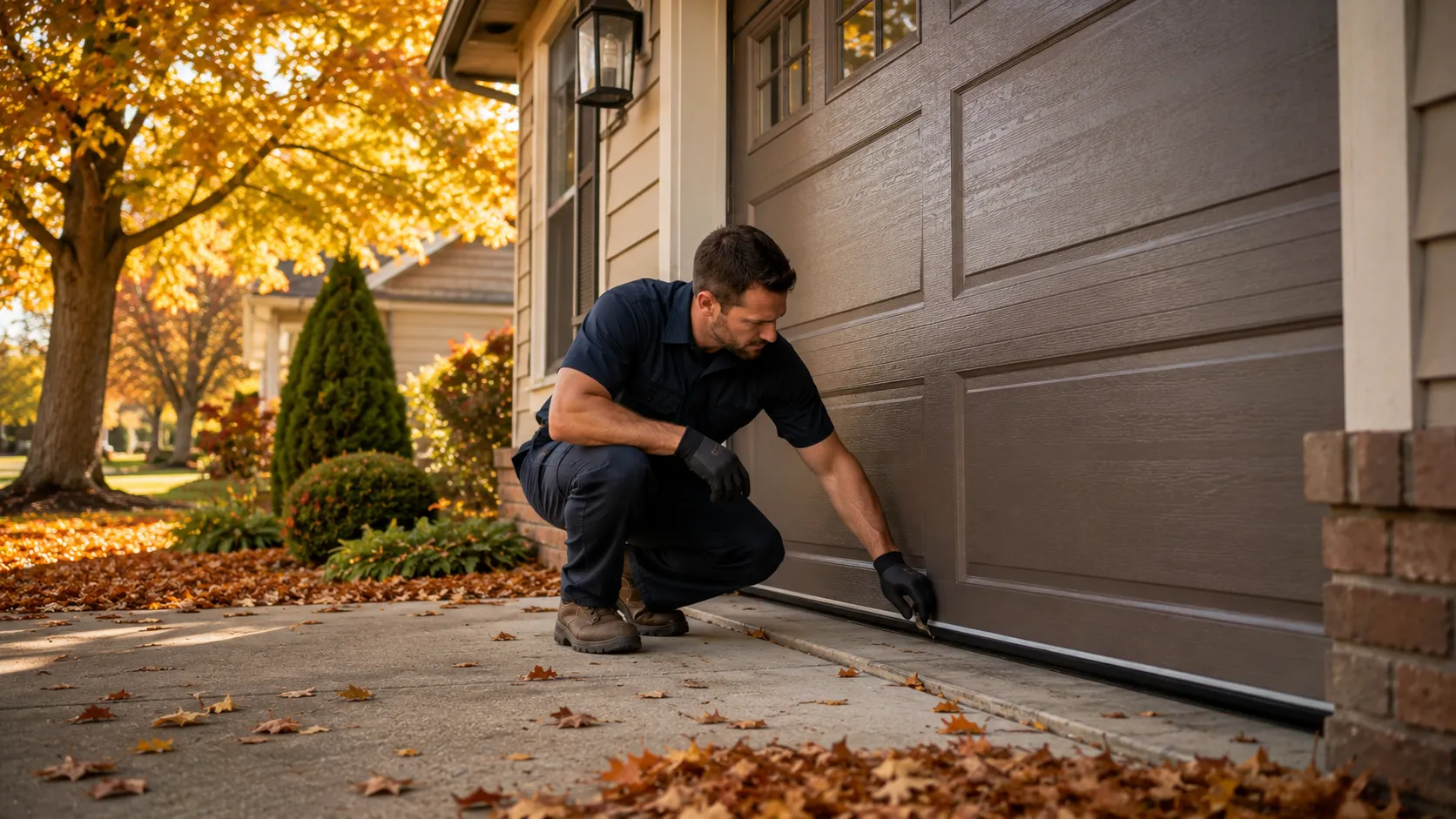
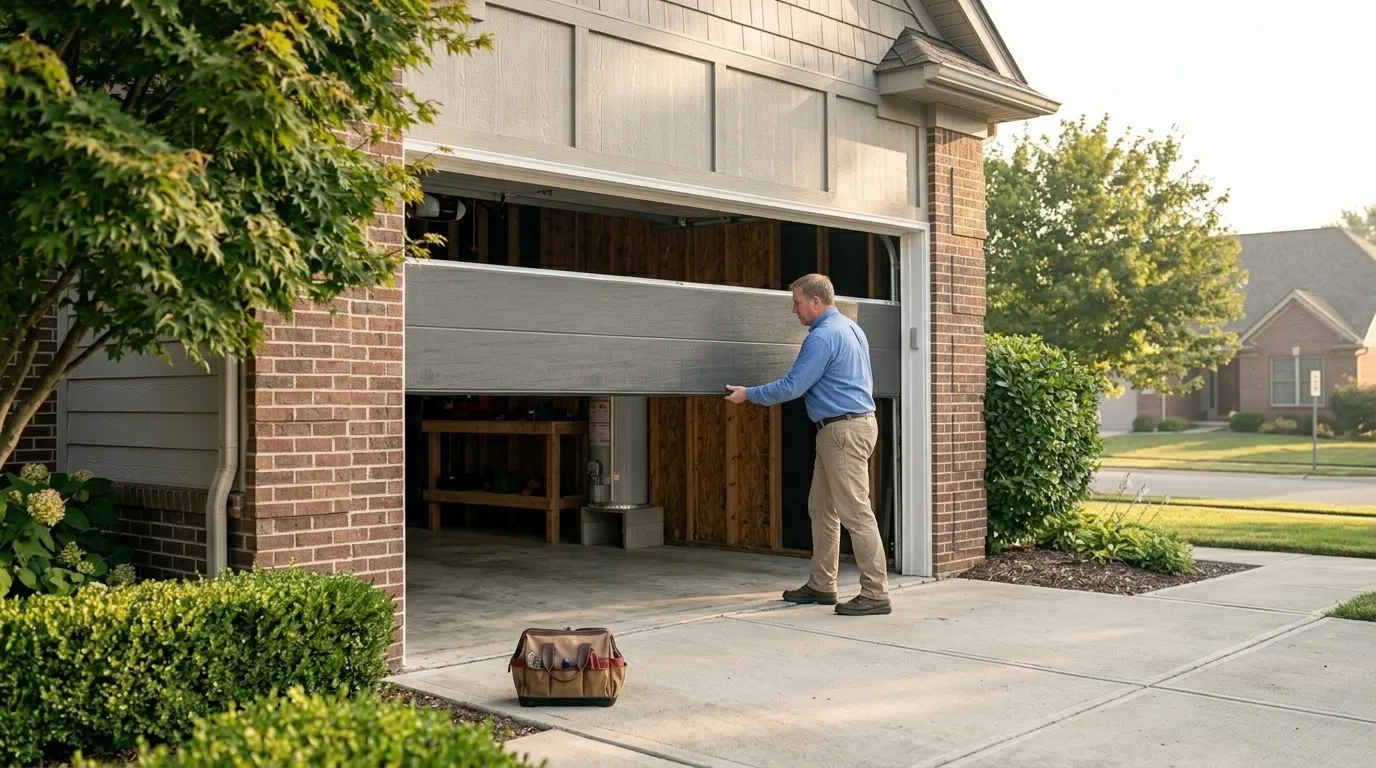
The complaint we hear most from this part of the service area is a door that reverses itself partway down, or one that's suddenly loud - a grinding or popping noise on the way up. On a house built around 1964, that's usually one of two things: a torsion spring that's lost tension after decades of cycles, or a roller and track setup that's worn enough to bind. Both show up as the same symptom to the person standing in the driveway, which is why a phone diagnosis is often wrong. A door that won't budge at all, with the opener straining and clicking, points more toward a broken spring than a track problem - the opener simply isn't built to lift a door's full weight without spring assist, and it shouldn't be asked to.
What Causes It Around Here
Cold is the recurring factor. The service area sits in a severe cold climate band, and steel springs and cables lose some flexibility in winter, which is when a spring that's been slowly weakening for years finally lets go. On a door built in the 1964-median era, that spring has usually never been replaced, which means it's carried thirty-plus winters of expansion and contraction. Combine that with an opener that may also be original or a first-generation replacement, and you get failures that cluster in the first hard cold snap of the season. None of this is dramatic - it's ordinary steel fatigue, sped up by decades and by winters this severe. It's also predictable enough that a spring swap before it fails outright is usually cheaper than an emergency call after it does.
How it works
From “it’s stuck” to “it’s fixed”
01
Tell us what’s wrong
Describe the symptom - won’t open, loud bang, opener runs but the door won’t move.
02
On-site diagnosis
A technician tests the door under power and by hand and finds what actually failed.
03
Clear, up-front plan
You get the fix that’s needed and what drives the cost - before any work starts.
04
Repaired & tested
The repair is done, the door is set true and tested, and the work area left clean.
Serving Arvada, CO - tell us what your door’s doing and we’ll take it from there.
Straight answers about garage door repair in Arvada. Still unsure? Ask us directly.
Is Wheat Ridge covered by a local branch?
No. We run out of Arvada, about 5 miles away, and travel to Wheat Ridge for calls. We don't keep a separate depot or a different crew for this town - it's the same trucks and the same techs who work the rest of the service area.
Why does my door's age matter more than its brand?
Because springs and openers are matched to the door's weight and the opening it was built for, not to a brand name. A house from around 1964 has usually had at least one hardware swap already, and the parts on it now may not match each other. We check the actual setup rather than guessing from the house's age alone.
Can I just replace the spring myself?
We wouldn't recommend it. A wound torsion spring holds enough force to cause serious injury if it lets go while you're working on it. Lubrication and bolt checks are fine for an owner to do; the spring and cable work isn't.