Garage Door Repair for Wheat Ridge's 1960s Housing Stock
Wheat Ridge homes mostly date to the early 1960s, older than much of Arvada's stock. See what that means for garage door repair, parts, and springs here.
The fault we run into most in Wheat Ridge doesn't look like the fault we run into in the newer pockets of the service area. Doors here bind on the track before the opener ever takes the blame, because the track was hung to a spec nobody's made hardware for since the 1970s.
Wheat Ridge's housing stock centers on a median build year of 1964, a decade older than the broader Arvada service area's 1977 median. That decade matters more than it sounds. A door installed in the early-to-mid 1960s usually rides on a narrower track with a lighter roller channel, and if the spring's been swapped out sometime in the last sixty years, there's a decent chance the replacement doesn't match the drum size the original track geometry called for. That mismatch shows up as a door that drops crooked on one side, or an opener that strains and reverses on the way down.
We make the five-mile drive out from Arvada expecting that mismatch, not a straightforward panel swap. It changes what we bring on the truck and how we quote the job before we've even opened the panel.
None of this means a 1964-era door is a lost cause. It means the fix starts with matching hardware to the track's original geometry, not just bolting on whatever spring is closest in size.
Stocked Parts
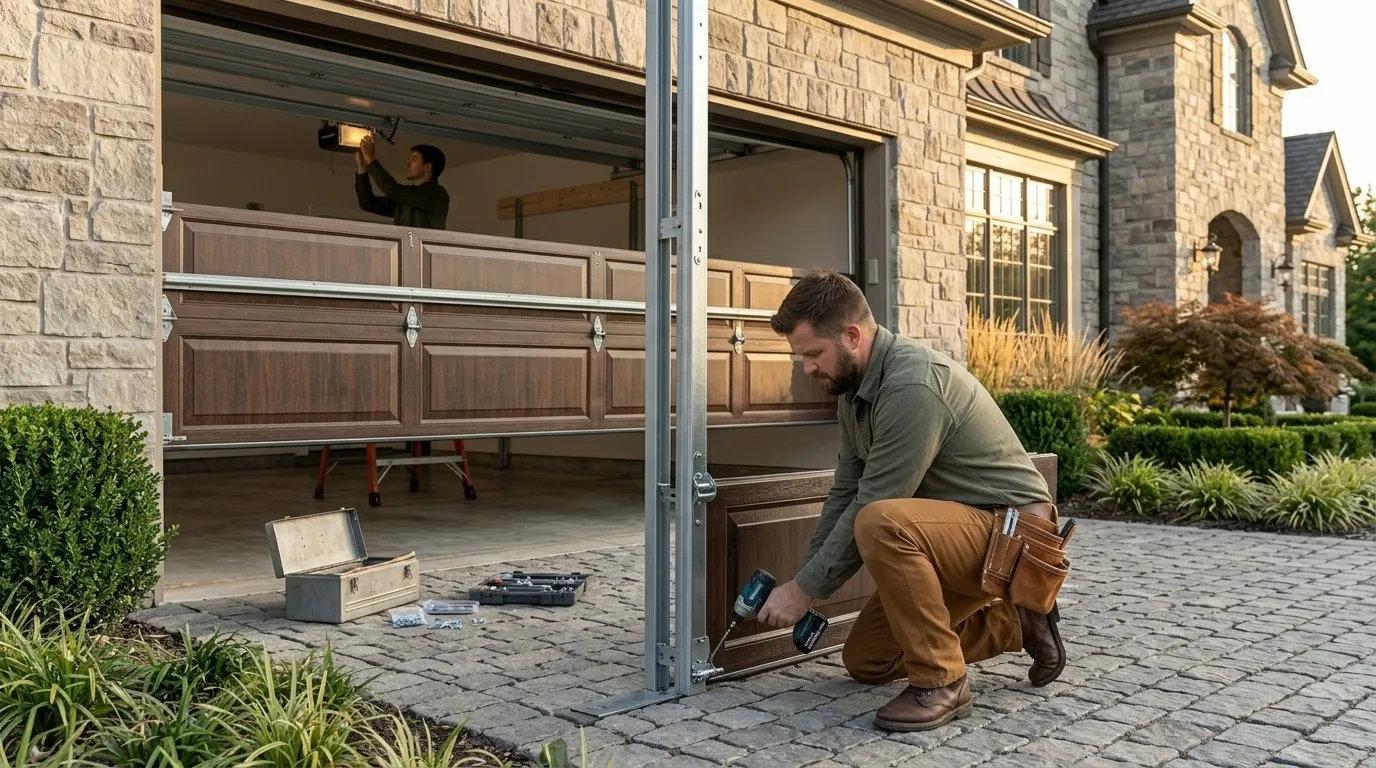
Because so much of Wheat Ridge's housing sits in that 1964-median window, the truck carries torsion springs in a spread of drum sizes rather than just the one or two sizes that fit newer construction. We also carry rollers sized for narrower track channels, since a lot of these doors were never upgraded to the wider modern rail.
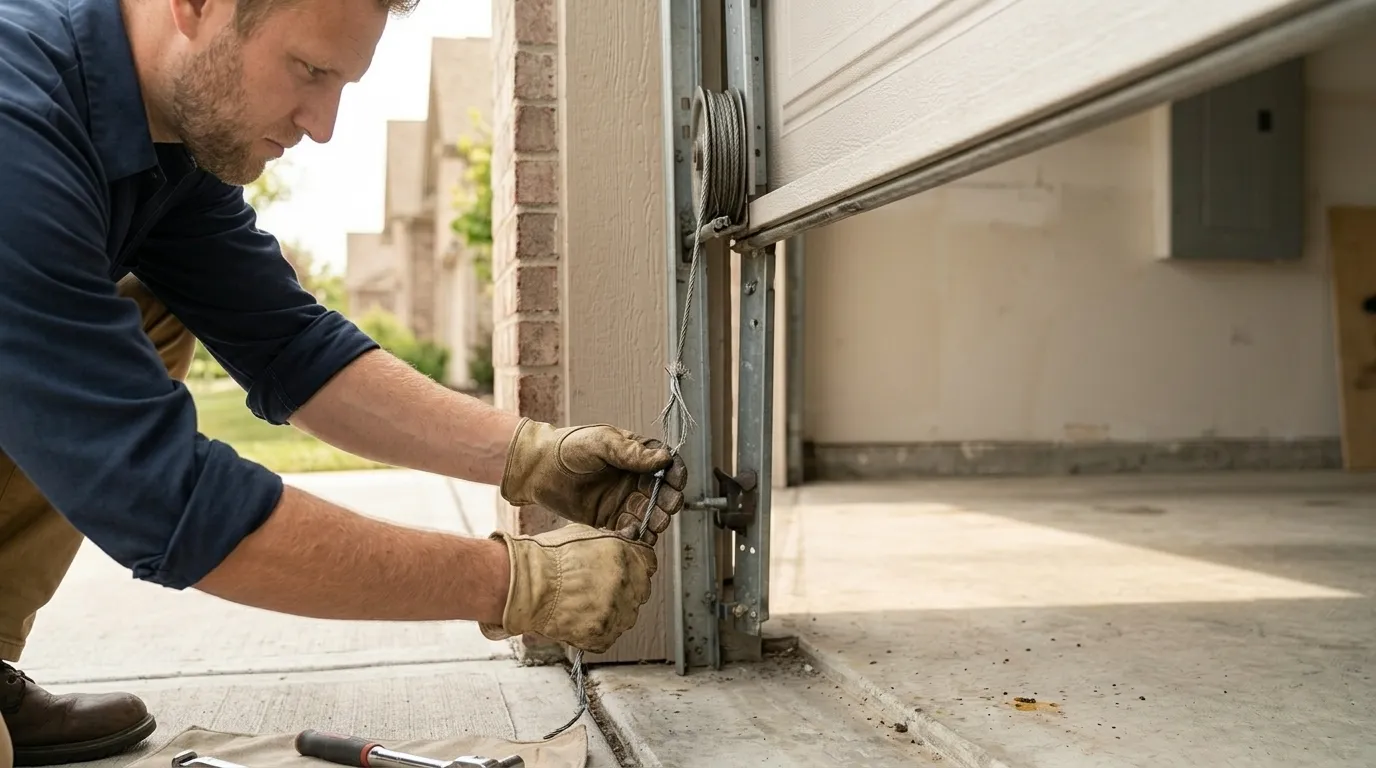
Cable and drum sets get replaced together here more often than not. On a door this old, the drum has usually worn enough that a new cable on an old drum just wears through again within a season, especially with the temperature swings this area gets. We'd rather tell you that upfront than sell you a cable-only fix that fails by winter.
We don't carry every obsolete opener logic board from that era, and we won't pretend we can source one same-day. If your opener is original to a 1964-era door, plan on a modern opener replacement rather than a repair - the drive parts for units that old simply aren't in production, and hunting down a used board isn't a repair we'll stand behind.
The DIY Question
A torsion spring under load can break a hand or worse, and that's true whether the door is five years old or sixty. On a Wheat Ridge door built to 1960s spec, the risk goes up because the spring size is less predictable and the winding cone may not match anything you'd find at a hardware store.
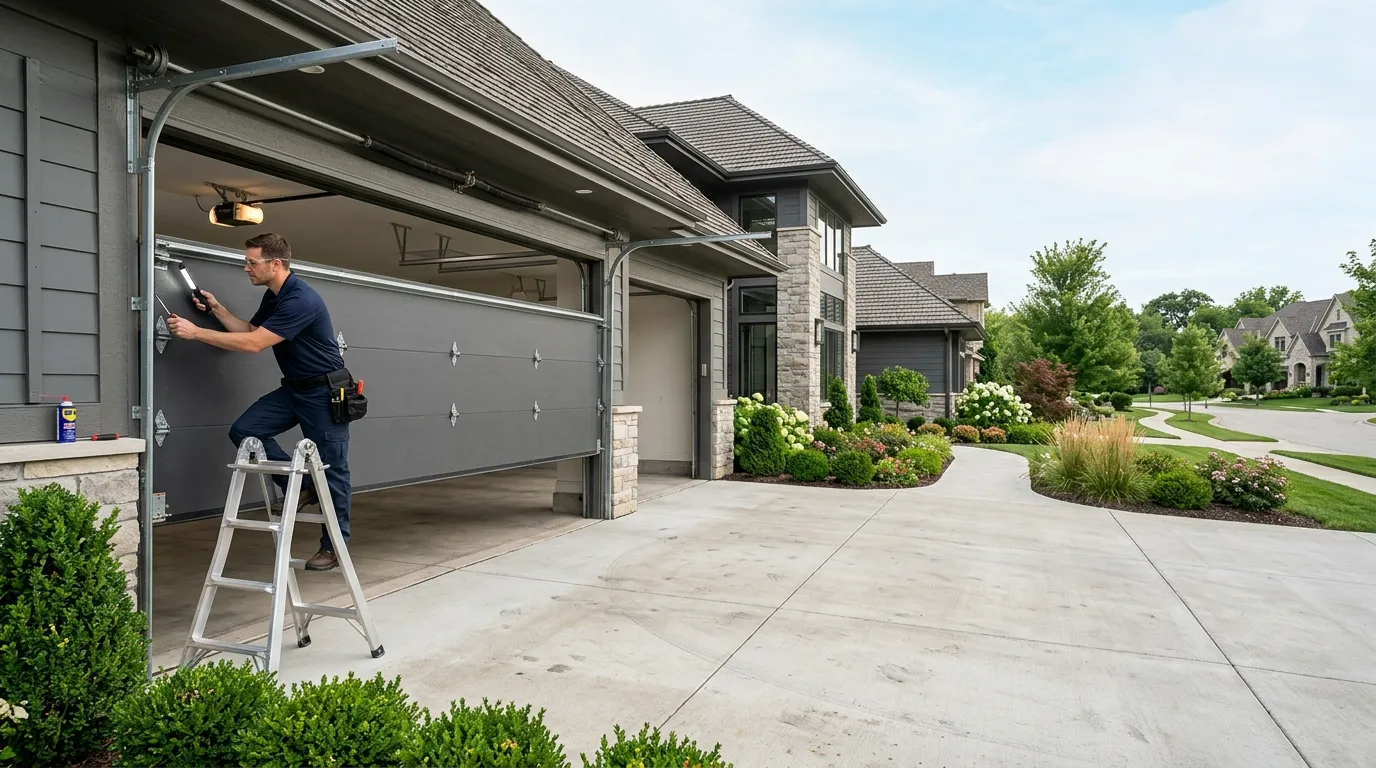
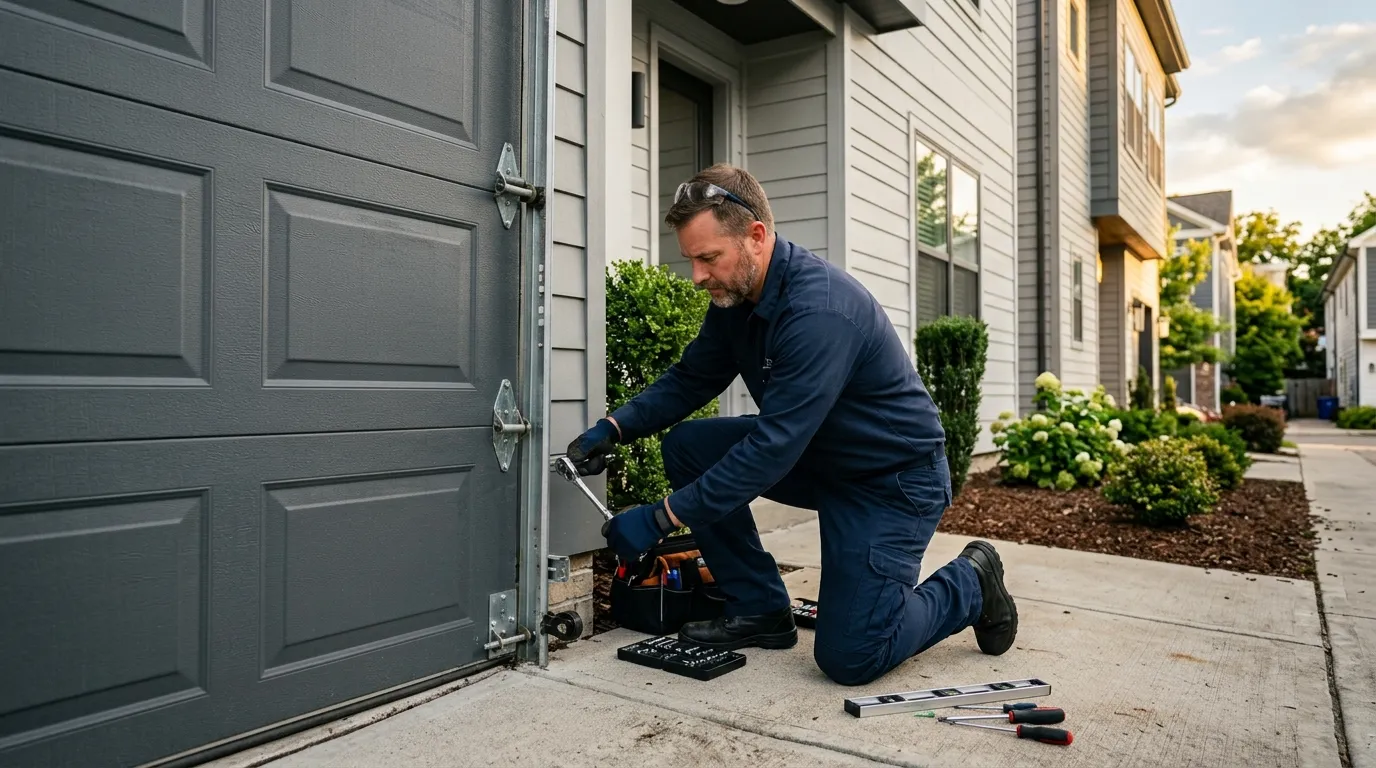
Rollers and hinges are a different story. If a roller's worn and the door still tracks straight, swapping it yourself is reasonable work, and there's no shame in doing it.
Where we draw the line is anything that touches the spring, the cable, or the drum. On these older tracks, the tension calculations aren't the same as the sticker math printed on a big-box replacement spring, and guessing wrong means the door slams instead of lowers. If you're not sure which side of that line you're on, that uncertainty is the answer - call it in.
The Symptom
The complaint we hear most from Wheat Ridge callers is a door that catches partway down, then either stops dead or jerks and keeps going. On a newer door that's usually the opener's travel limit. On a door built to the 1964-median stock here, it's more often the cable riding slightly off the drum because the drum's worn a groove that's no longer centered.
A second version of the same complaint: the door closes fine most days, then binds hard on the coldest mornings. That's the track and rollers stiffening under the temperature drop this area gets in winter, on hardware that had less clearance built in to begin with. Warmer afternoons, the same door runs smooth again, which is why people assume it fixed itself.
Neither of these is an opener problem, even though the opener is what strains and makes the noise. Replacing the opener without touching the track or drum just buys you a stronger motor fighting the same bad geometry, and it fails again within a year.
What Causes It Around Here
The service area sits in a climate band the federal data classifies as cold and severe, and Wheat Ridge gets the same freeze-thaw cycling as the rest of it. On a door built to 1964-era tolerances, that cycling matters more than on newer stock, because the clearances between track and roller were narrower to begin with. Cold tightens metal just enough to turn a minor misalignment into a bind.
The area's median household income of $87,598 runs lower than the wider service area's $110,968, and that tracks with what we see on service calls: fewer full door replacements, more requests to keep an original door running as long as it reasonably can. That's not a knock on the neighborhood - it's just a different math than a newer subdivision runs, and we quote accordingly.
Across the roughly 15,041 households in Wheat Ridge, the majority of the doors we're called to sit on that same original-era hardware, which is why the fixes here lean toward matched-replacement parts rather than a full door swap as the default answer.
How it works
From “it’s stuck” to “it’s fixed”
01
Tell us what’s wrong
Describe the symptom - won’t open, loud bang, opener runs but the door won’t move.
02
On-site diagnosis
A technician tests the door under power and by hand and finds what actually failed.
03
Clear, up-front plan
You get the fix that’s needed and what drives the cost - before any work starts.
04
Repaired & tested
The repair is done, the door is set true and tested, and the work area left clean.
Serving Arvada, CO - tell us what your door’s doing and we’ll take it from there.
Straight answers about garage door repair in Arvada. Still unsure? Ask us directly.
Why does my garage door only stick in cold weather?
On a door built to the 1960s track spec common in Wheat Ridge, the clearance between roller and track was narrower to start with. Cold tightens the metal just enough to turn that narrow clearance into a bind. It usually loosens up again once temperatures climb, which is why it can look intermittent rather than broken.
Is it worth repairing an original 1960s-era door instead of replacing it?
Often yes, if the panel and track are still square. Springs, cables, rollers, and drums can all be matched to the original geometry without touching the door itself. Where it stops being worth it is a warped panel or a track that's been bent - at that point you're patching a shape problem, not a parts problem.
Do you have a shop in Wheat Ridge?
No - we run out of Arvada and cover Wheat Ridge from there, about five miles out. There's no local branch or drop-off counter here; the truck comes to you.
Can I just replace the spring myself if I match the size?
We'd rather you didn't. On doors this age the winding cone and drum size aren't always what a size chart assumes, and a mismatched spring under tension is a real injury risk. Rollers and hinges are fair game for a homeowner; springs, cables, and drums aren't.