What to Know Before You Buy a Replacement Garage Door in Arvada
Arvada homes span 1938 to 2010, most built in the 1960s and 1970s. Here's what that means for door sizing, cold-climate codes, and picking a replacement.
Arvada's housing stock runs from 1938 through 2010, with the bulk of it going up in the 1960s and 70s and a median build year of 1977. That matters more than most homeowners think when it's time to buy. A door ordered for a house in Cameo Estates or Ralston Valley, where the original openings were framed to older lumber and hardware standards, won't necessarily bolt into a header built the same way as one in Northwest Arvada or Northwood Acres a mile away, even though both areas are only a few minutes apart. Across the wider area you've got 38 named neighborhoods and roughly 99,082 owner-occupied houses, and the mix of build decades means there's no single "standard" opening size to shop against. Before you buy, you measure the actual rough opening on your house, not the nominal size stamped on the old door. A lot of the 1960s and 70s builds used narrower jamb clearances than doors sold off the shelf today assume. That gap is where a lot of bad installs start - the door fits the box but not the header, and the installer ends up shimming or trimming trim to make it work. Know your build era before you shop, and you avoid ordering the wrong thing twice.
What Local Conditions Do
This is a severe cold climate, and that changes what "a garage door" needs to do here versus somewhere milder. Steel panels contract in hard cold, and on older single-layer doors from the 1960s and 70s building wave, that contraction is often what finally splits a panel seam or knocks a torsion spring out of adjustment - not impact damage. If you're buying new, insulation value isn't a nice-to-have, it's the difference between a door that holds its shape through a cold snap and one that doesn't. With median household income across the area at $110,968, most owners here can afford to buy a properly insulated door rather than the cheapest bare-steel option, and given the climate band, that's the better spend. Cold also affects timing: openers, weatherstripping, and bottom seals all perform worse in low temperatures, so if you're replacing a door in winter, ask what the seal and opener are rated for, not just what it costs installed. A door bought for a warm-climate spec sheet is the wrong door here, full stop.
When to Get Help
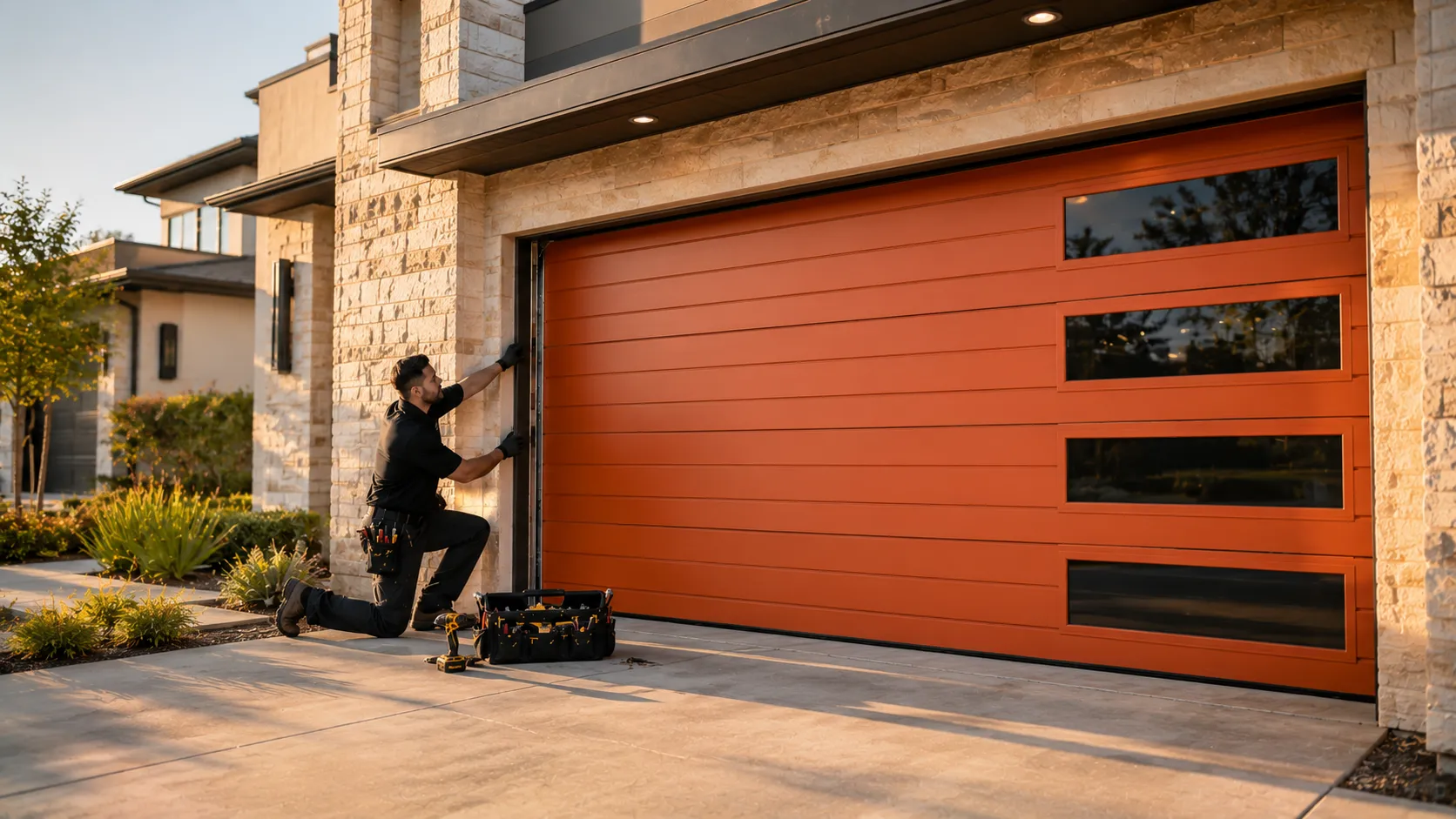
If a panel is dented but the door still tracks straight and closes flush, that's often a repair, not a replacement - we'll say so rather than sell you a door you don't need. Where replacement makes sense is when the opening itself has shifted (common in the older end of the 1938-2010 build range as houses settle) or when the door is original to a 1960s or 70s house and parts for it simply aren't made anymore. One honest limit: specialty sizes and custom insulated panels aren't something we keep on the truck, and depending on the manufacturer they can take longer to arrive than a standard-width door. If your house falls outside the common opening sizes from that build era, plan for a lead time conversation before you commit to a date. We'll tell you upfront if we're waiting on a supplier rather than let you assume it's on us.
What to Look At First
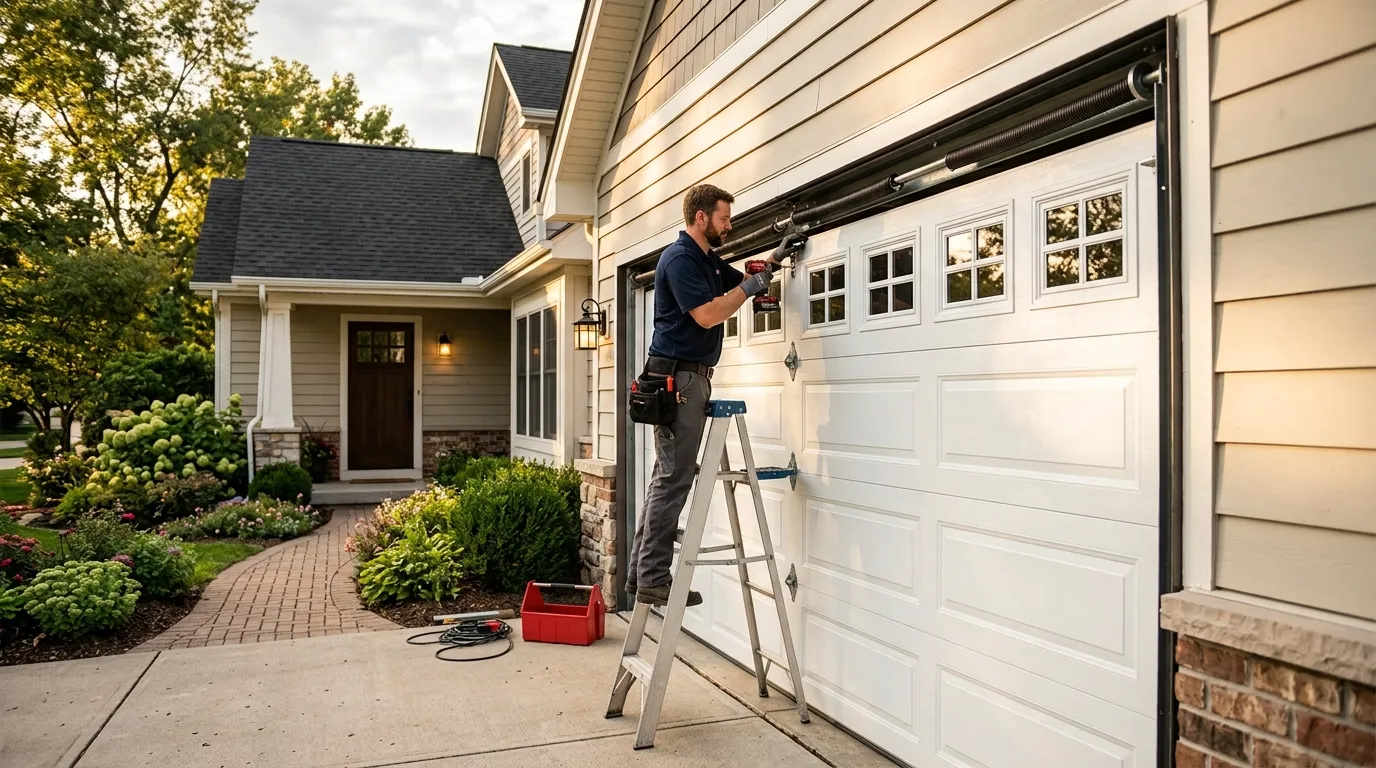
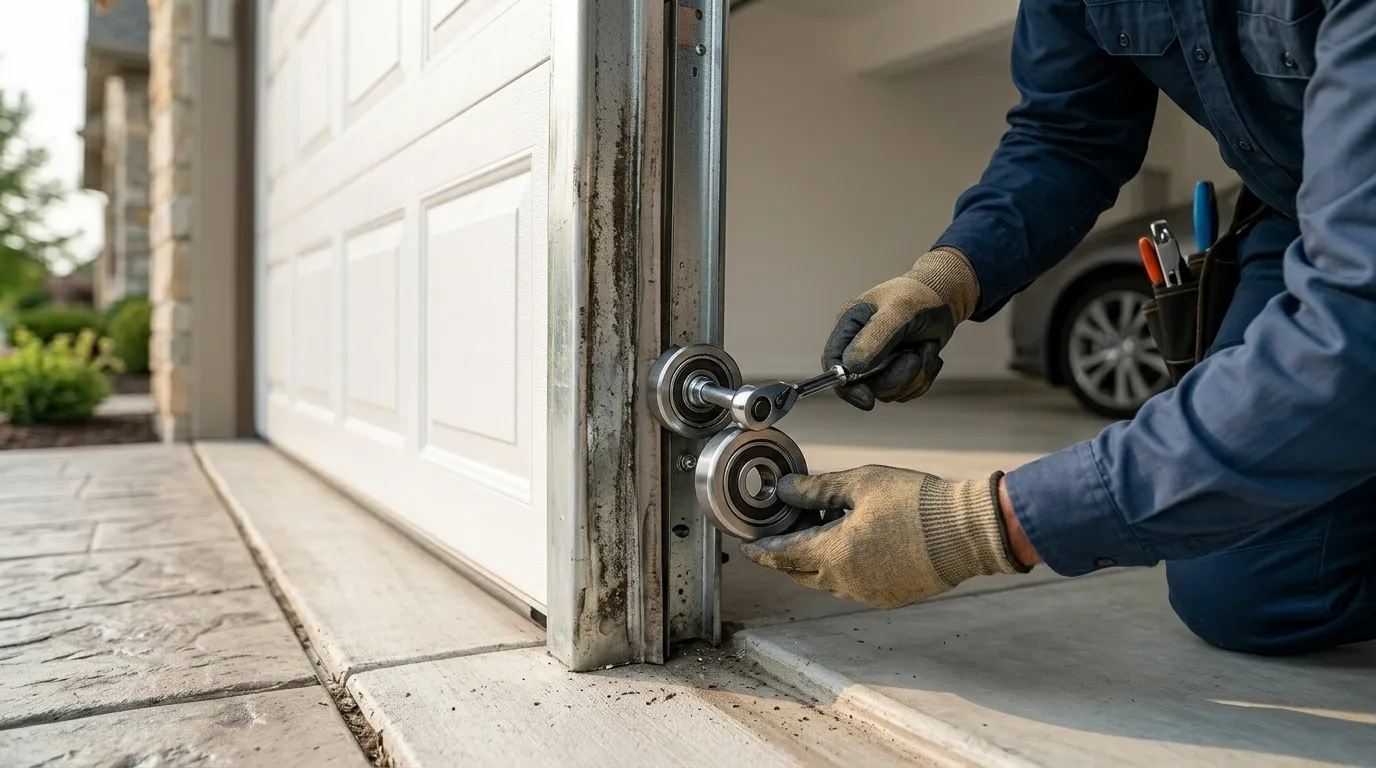
Start with the track and rollers, not the panel - in a cold climate, track misalignment from seasonal contraction shows up as noise and binding well before a panel ever fails. Next, check the header and jamb framing against your door's actual measurements; houses built in the 1960s and 70s wave often used different jamb depths than current stock doors assume, so a tape measure now saves a return trip later. Look at insulation: if your current door is a bare single-layer panel, that's consistent with the older end of the 1938-2010 range and it's worth pricing an insulated replacement given how the winters run here. Finally, check the opener's rated cycle life and cold-weather performance if it's original to the house - a worn opener paired with a new heavy insulated door is a mismatch that shows up fast. None of this requires a service call to check yourself; it's a five-minute walk around the garage with a tape measure and a flashlight before you start pricing doors.
How it works
From “it’s stuck” to “it’s fixed”
01
Tell us what’s wrong
Describe the symptom - won’t open, loud bang, opener runs but the door won’t move.
02
On-site diagnosis
A technician tests the door under power and by hand and finds what actually failed.
03
Clear, up-front plan
You get the fix that’s needed and what drives the cost - before any work starts.
04
Repaired & tested
The repair is done, the door is set true and tested, and the work area left clean.
Serving Arvada, CO - tell us what your door’s doing and we’ll take it from there.
Straight answers about garage door repair in Arvada. Still unsure? Ask us directly.
How do I know if my garage door opening is a standard size?
You measure it. Houses in this area were built anywhere from 1938 to 2010, with most from the 1960s and 70s, and jamb depth and rough opening width varied by builder and decade. Don't assume the size stamped on your old door is still accurate - measure the actual framed opening before ordering a replacement.
Do I need an insulated door in Arvada?
Given the severe cold climate here, an insulated door holds up better through winter than a bare single-layer panel, especially on older doors from the 1960s-70s building wave that were never insulated to begin with. It costs more upfront but avoids the seam and hardware stress that cold contraction causes on uninsulated steel.
My house is older - will a new door even fit?
Often yes, but not always without adjustment. Homes built earlier in the 1938-2010 range sometimes have narrower jamb clearances than current standard doors assume. We measure your actual opening against the door spec before ordering, so you're not stuck trimming trim to force a fit.
Is it ever better to repair than replace?
If the panel is dented but the door still tracks straight and seals properly, repair usually makes more sense than replacement. We'll tell you that directly rather than sell a full door when a spring, roller, or panel swap solves it.