Why so many Arvada garage doors leak cold air and let in draughts - tied to this area's 1960s-70s housing stock and the cold-severe climate band it sits in.
Arvada's housing stock runs from 1938 to 2010, with the median home built in 1977. That one number explains a lot of the draught calls we get. A door installed when a house was built in the mid-70s came with the bottom seal and side weatherstrip standard of that decade - a thin vinyl bulb pressed into a metal retainer, never meant to last 50 years. Across the 38 named areas we work in, from Cameo Estates and Ralston Valley up near the shop out to older sections like Olde Town Arvada, the bulk of the stock dates to the 1960s and 70s. That means the same tired seal shows up on door after door, house after house, regardless of who built the neighborhood or when it was platted. The seal has usually gone stiff, cracked at the corners, or pulled loose from the track entirely. It's not a defect specific to one builder - it's just age catching up with rubber and vinyl that were never rated for decades of Colorado sun and cold.
What Local Conditions Do
Arvada sits in what climate data classes as a cold-severe band, and that matters more for seals than most homeowners expect. It isn't the cold itself that kills a weather seal - it's the freeze-thaw cycling. A vinyl bulb that gets soft in a 45-degree afternoon and then locks rigid overnight, day after day through a Front Range winter, hardens and cracks years faster than the same part would in a mild-winter town. With 99,082 owner-occupied houses across the service area, a large share of those garages share the same original weatherstrip channel, and that channel was never designed for this kind of swing. Once the seal cracks, cold air and moisture work into the channel itself, and you start seeing frost form along the bottom of the door on hard mornings. That's usually the first sign something needs attention, not just a cosmetic annoyance.
When to Get Help
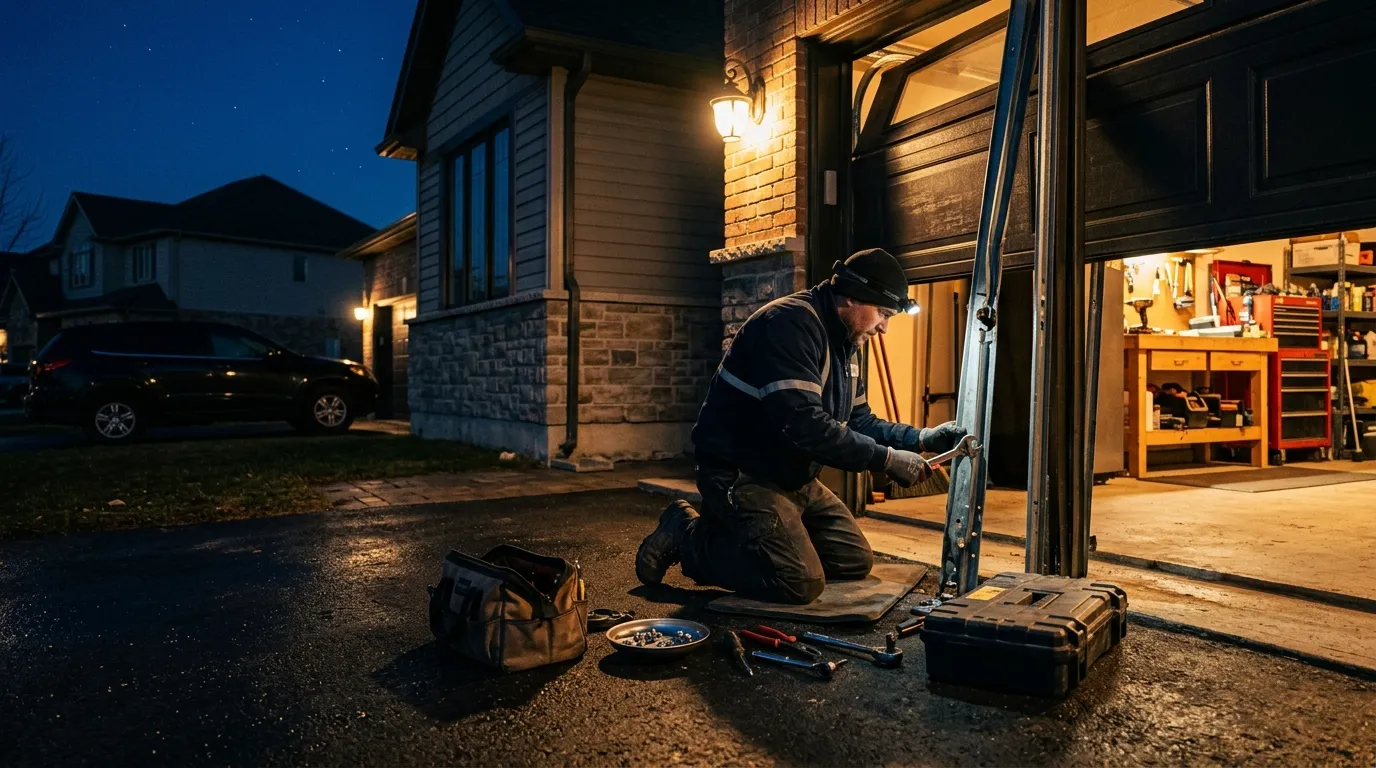
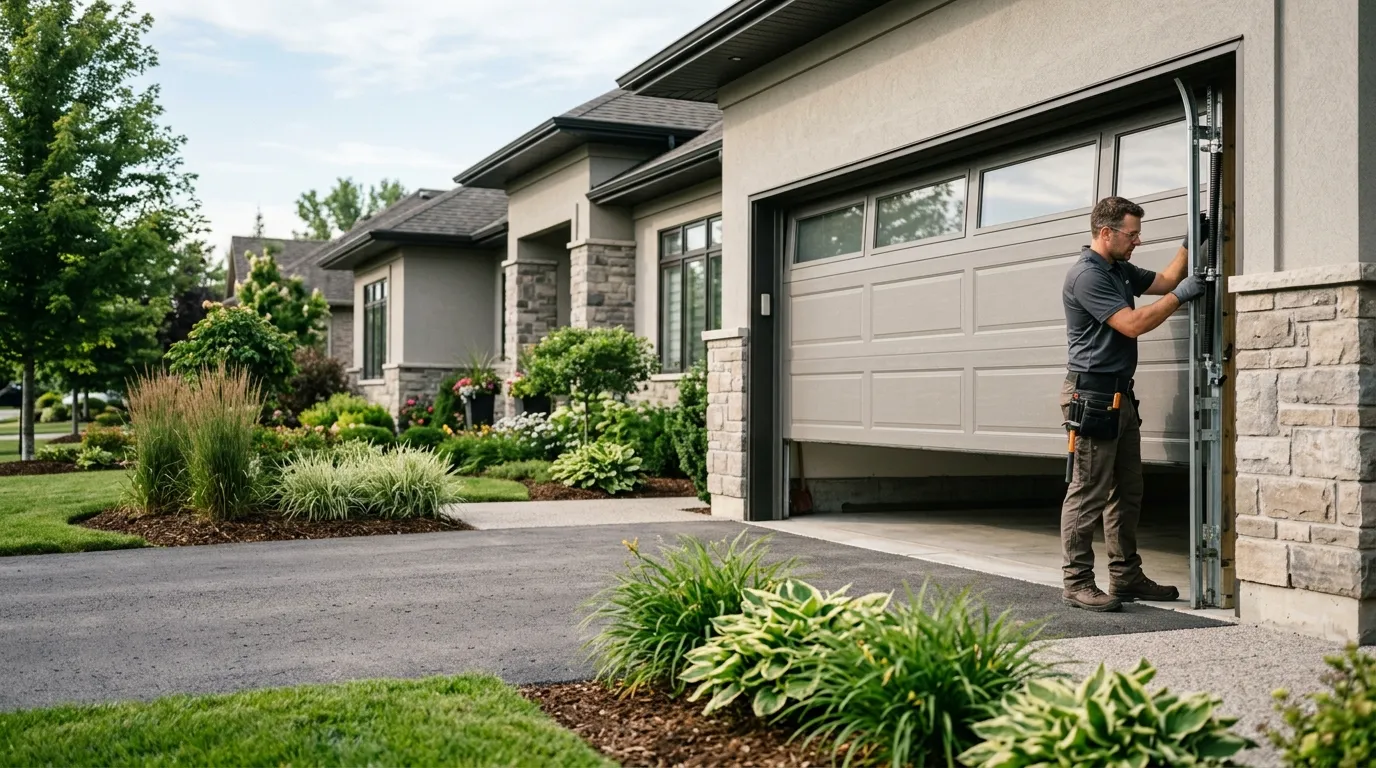
If you're feeling a steady draught along the bottom of the door, or you notice frost or ice built up on the inside edge of the panel on cold mornings, that's worth a call rather than a wait-and-see. In neighborhoods like Ralston Valley and Northwood Acres, both sitting within a couple miles of older Arvada stock, we see the same 1970s-era steel doors showing identical gaps at the bottom corners - once one seal fails, the rest of that same batch of doors isn't far behind. Call sooner if the door is also harder to lift than it used to be; a seal that's swollen with trapped moisture can bind against the track and put extra strain on the springs. We won't tell you to replace a door that just needs a new bottom seal and side weatherstrip - that's a straightforward fix. Replacement only makes sense when the panel itself is warped or the track has rusted through, which is a separate problem from a worn seal.
What to Look At First
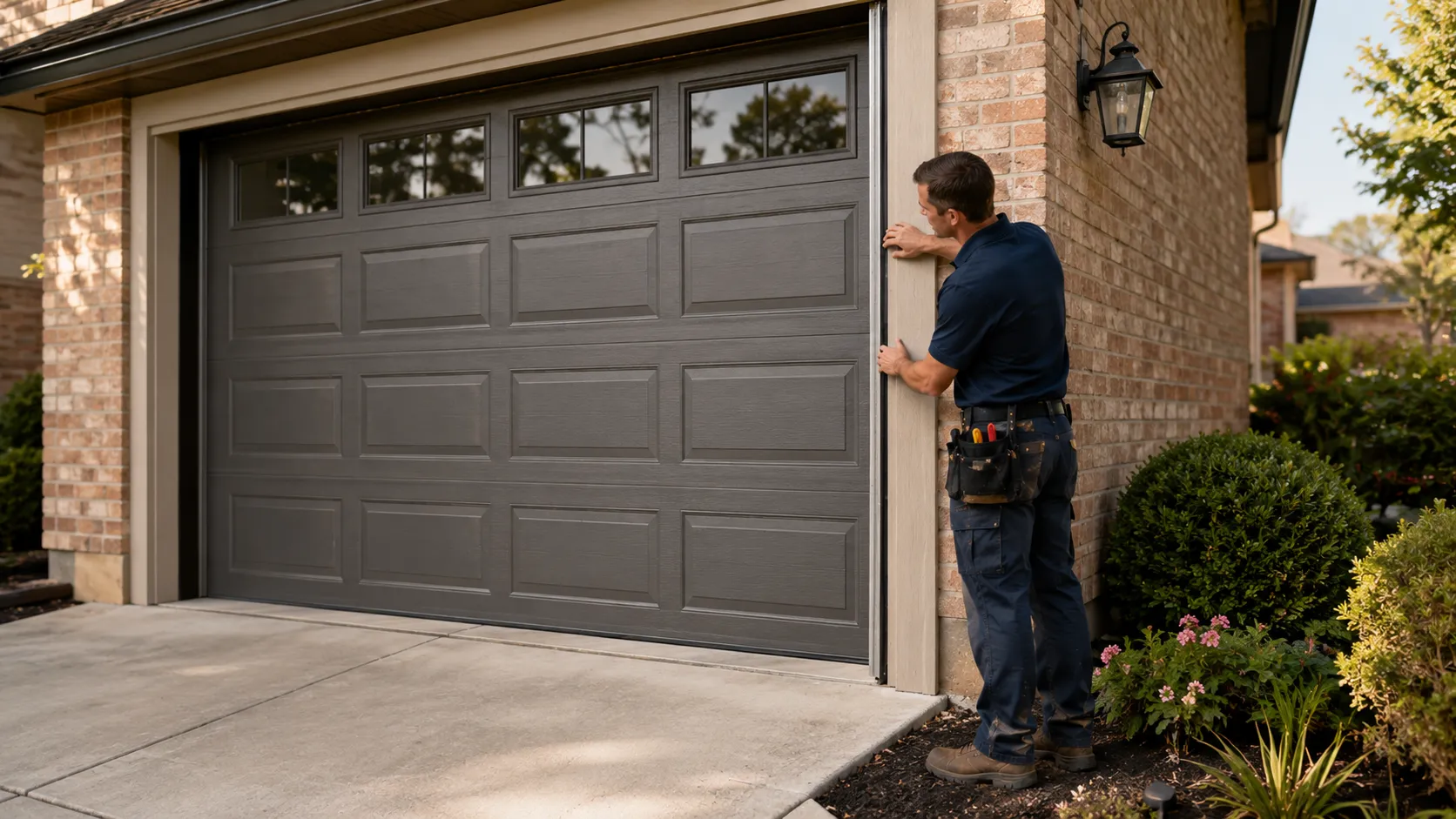
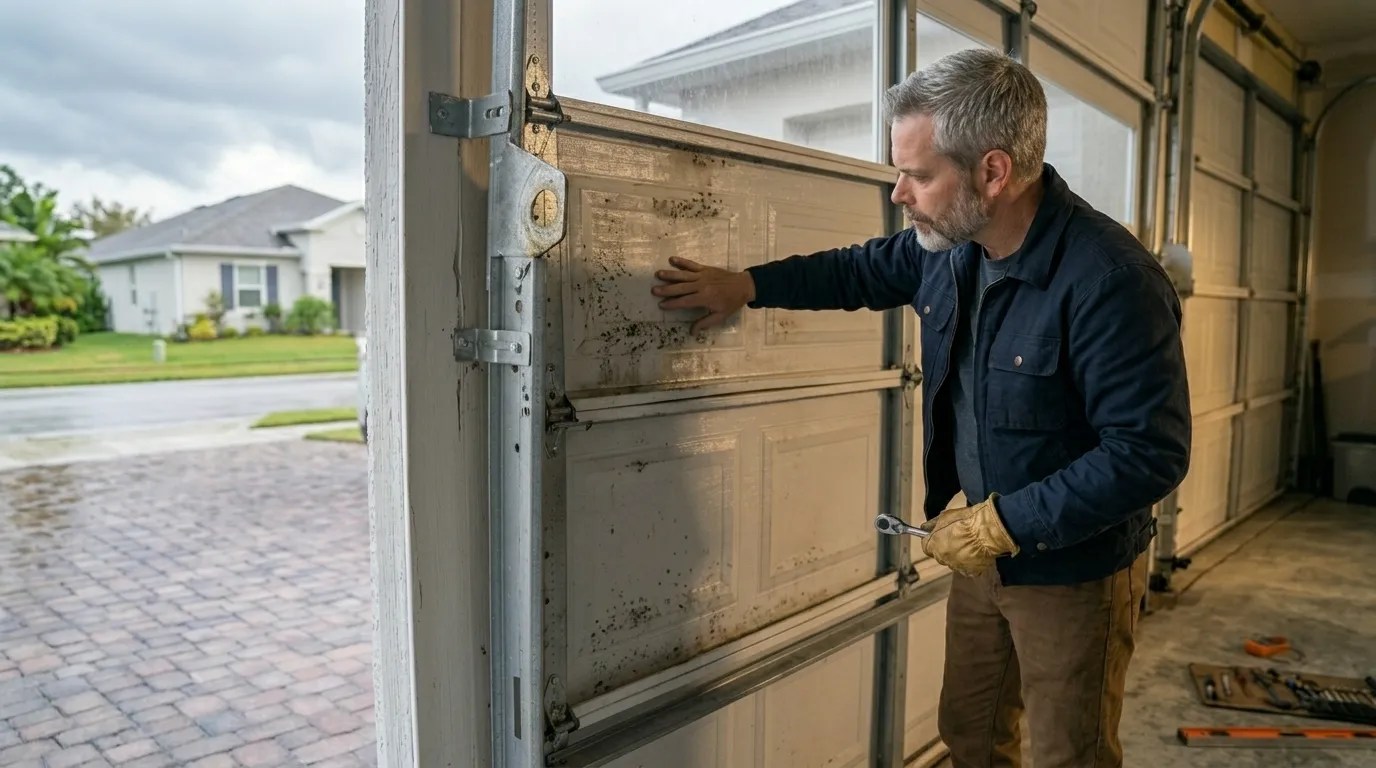
Start at the bottom seal - press a hand along the base of the closed door on a cold day and feel for moving air. Next, check the side and top weatherstrip where the door meets the frame; on older Arvada homes built anywhere near that 1977 median, this is usually the original strip and it's brittle by now. Look at the corners first, since that's where vinyl cracks earliest under repeated freeze-thaw stress. If you see daylight at the bottom corners or the strip has pulled away from its track, that's your answer without needing to open the door at all. One limitation worth knowing: we can swap seals and weatherstrip in a standard visit, but if the track itself has warped from years of water sitting against it, that's a bigger job and we'll tell you honestly if replacement makes more sense than another repair.
How it works
From “it’s stuck” to “it’s fixed”
01
Tell us what’s wrong
Describe the symptom - won’t open, loud bang, opener runs but the door won’t move.
02
On-site diagnosis
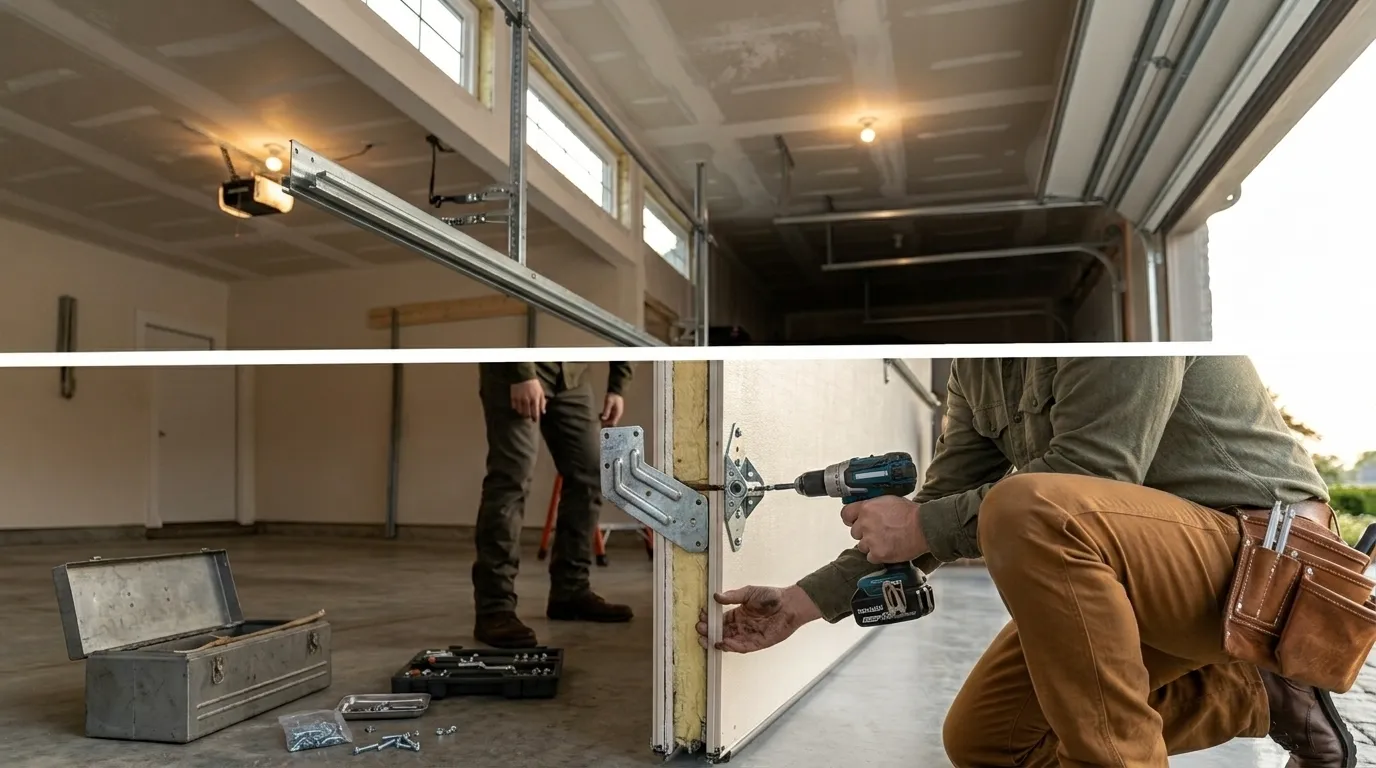
A technician tests the door under power and by hand and finds what actually failed.
03
Clear, up-front plan
You get the fix that’s needed and what drives the cost - before any work starts.
04
Repaired & tested
The repair is done, the door is set true and tested, and the work area left clean.
Serving Arvada, CO - tell us what your door’s doing and we’ll take it from there.
Straight answers about garage door repair in Arvada. Still unsure? Ask us directly.
Why does my garage door let in cold air even though it looks fine?
On a lot of Arvada homes, the door looks fine because the panel itself is sound - it's the bottom seal and side weatherstrip that have failed. These parts are vinyl or rubber, and after years of freeze-thaw cycling in a cold climate band like ours, they crack and shrink even when nothing looks visibly broken from a few feet away.
Is a draughty garage door a sign I need a new door?
Not usually. Most draughts come from a worn bottom seal or side weatherstrip, both replaceable without touching the door panel itself. Replacement makes sense when the panel is warped or the track has rusted through - that's a different problem than a seal that's simply aged out.
How often do weather seals need replacing in this area?
We don't have a fixed interval to give you, but original seals on homes built near the 1977 median age here are well past their useful life. If you haven't replaced yours and the house is that old, it's worth checking now rather than waiting for frost to show up inside.