The Noises Your Arvada Garage Door Is Actually Making
A guide for Arvada homeowners to the specific sounds a garage door makes on 1960s-70s stock and older 1938-era houses, and when a noise means call someone now.
Arvada's housing stock spans 1938 to 2010, with the median build year landing around 1977, and most of the 38 named areas we cover - from Ralston Valley to Olde Town Arvada - are dominated by that 1960s-70s wave of construction. That matters for noise because doors and openers installed or replaced during that era used hardware that has since aged out of production. A grinding sound on a door from that period is often the rollers themselves, worn nylon or steel that was standard then and rarely gets swapped until it fails outright. A rhythmic thump every few feet as the door travels usually points to a flat spot on a roller or a bent track section, both common on doors that have logged four to five decades of Front Range temperature swings. Newer builds closer to 2010 tend to have nylon rollers and sealed bearings, so the same noise on a newer house usually means something different - a loose bracket or a track that was never quite aligned. Knowing roughly when your house was built tells you which failure is more likely before anyone even opens the panel.
What Local Conditions Do
Arvada sits in a severe cold climate band, and that changes what noise means here versus somewhere milder. Steel torsion springs lose a measurable amount of tension as temperatures drop, and a door that was quiet in August can start creaking or catching in January simply because the spring is now working harder to lift the same weight. That creak is not the spring breaking - it is the spring compensating - but it is also the sound that precedes a lot of winter spring failures, because the extra strain finds any existing fatigue in the coil. Lubricant matters more here too. Grease that is fine in a mild climate can stiffen in a cold garage, and a squeal that shows up only on the coldest mornings is often just that grease seizing up, not a mechanical fault. Metal hardware also contracts, so a rattling bracket in summer can become a knocking bracket in winter as the fasteners work loose from repeated thermal cycling. None of this is unique to any one house - it's a function of how many freeze-thaw cycles the hardware has been through, which for a lot of Arvada's 1960s-70s doors is a lot.
When to Get Help
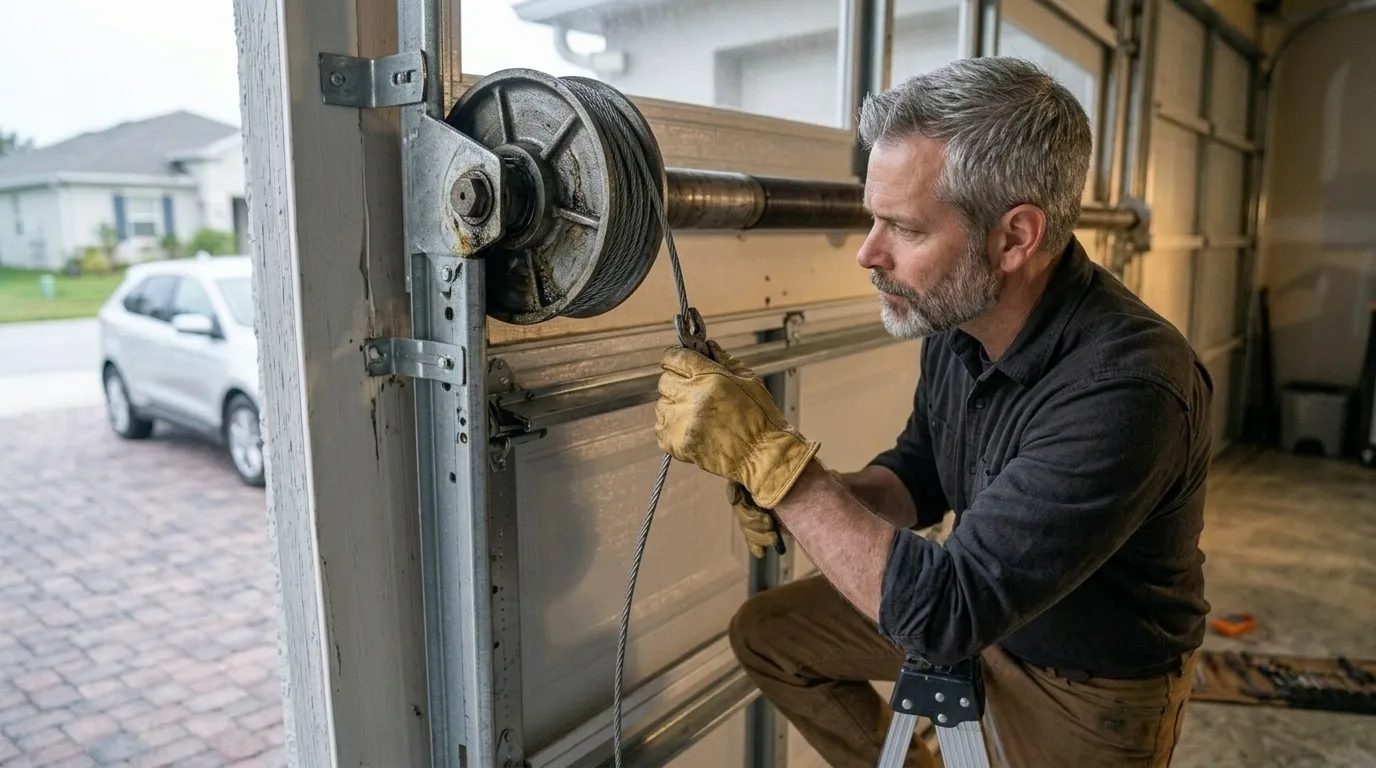
A single loud bang, especially in cold weather, usually means a torsion spring has let go - that's a call now, not a maintenance-later item, because a door with a broken spring is heavier than any opener is built to lift and can drop the panel on someone reaching for something in the garage. A grinding or scraping noise that gets louder over a week or two is a bearing or roller failing gradually, which gives you more room to schedule it but not to ignore it. A single sharp pop followed by the door refusing to open at all often means a cable has jumped its drum, which is a hardware job, not an opener setting to fiddle with. We don't recommend homeowners open the spring system themselves - that part of the job needs the right winding bars and the door secured, and on the older torsion setups still common across Arvada's mid-century blocks, that's not a place to improvise. If the noise is new, sudden, and paired with the door sticking or reversing, that's the combination worth a same-week call rather than waiting for it to get worse.
What Look At First
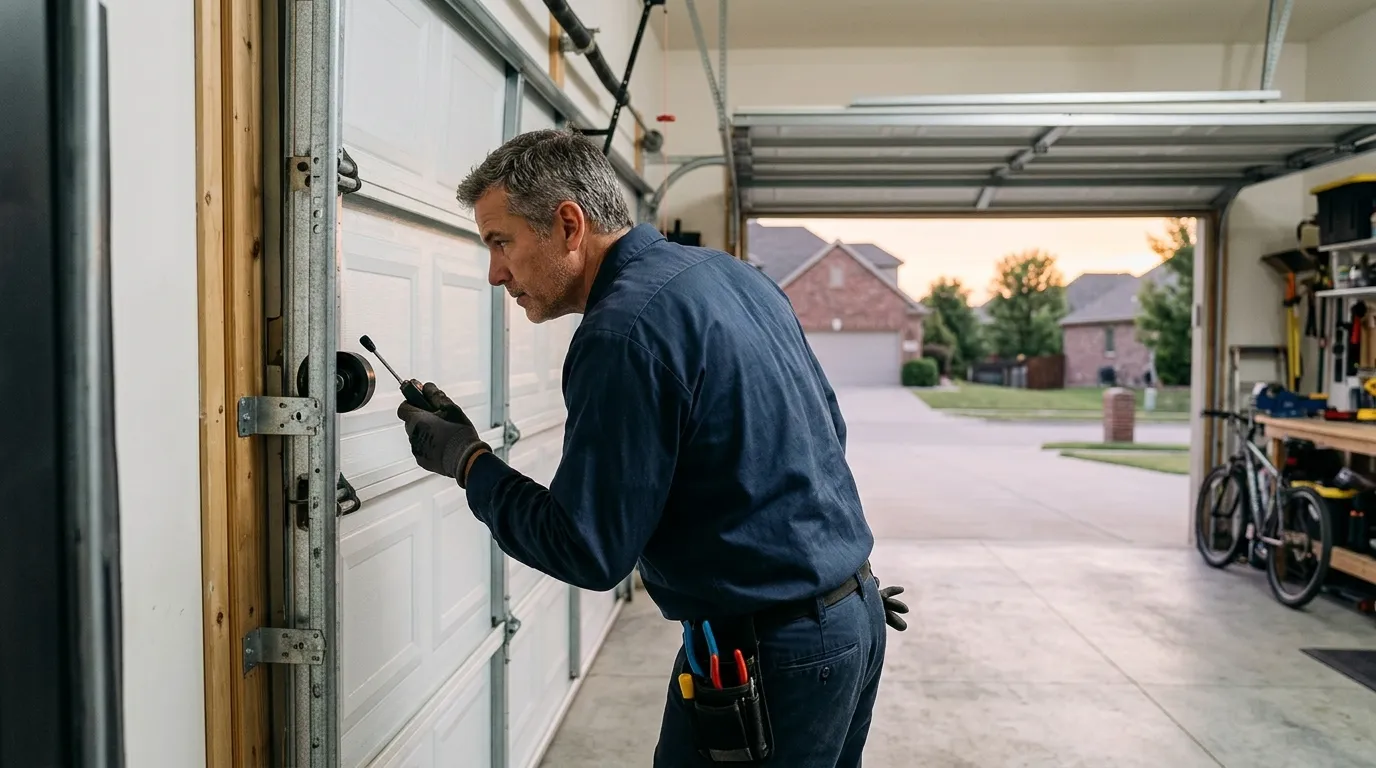
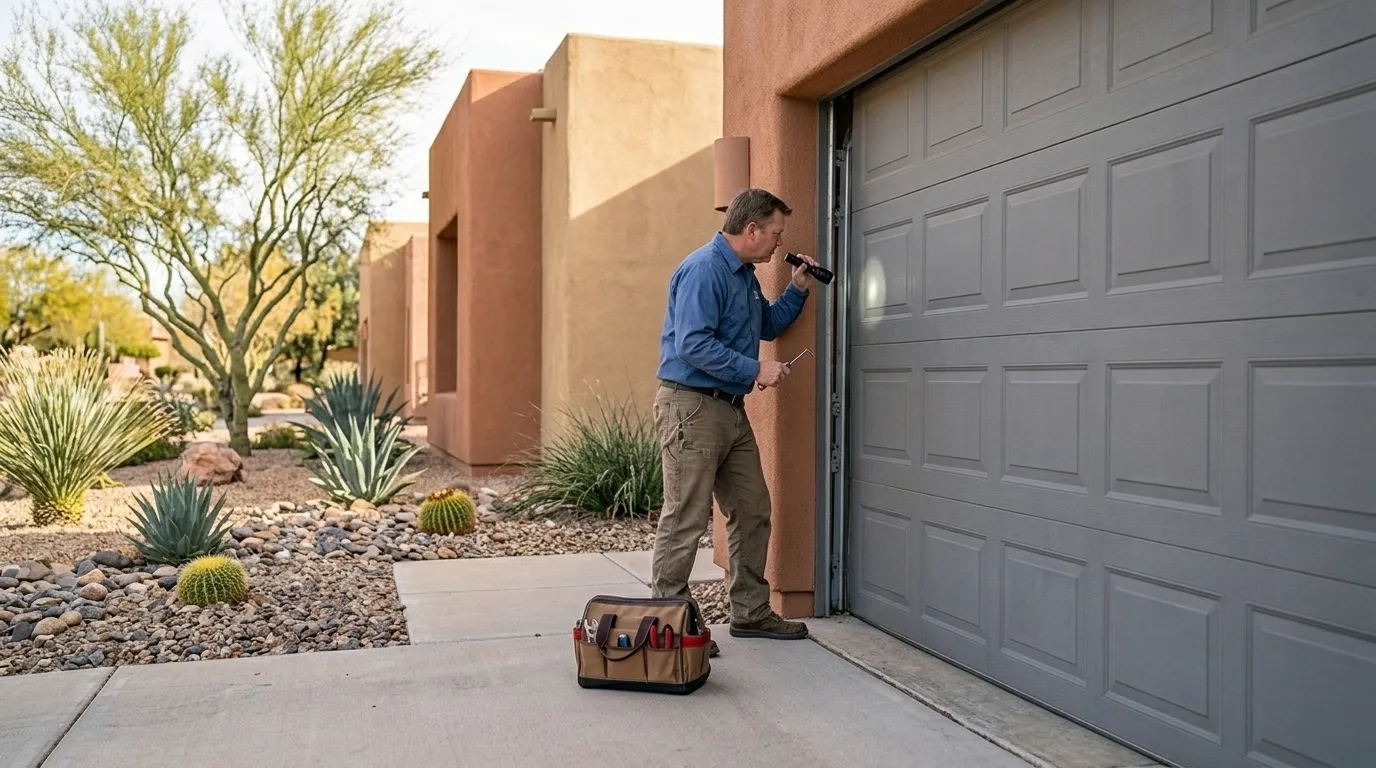
Before you call anyone, stand at the door with it open and look at the tracks for daylight gaps or visible rust, common on Arvada garages that see winter road salt tracked in on tires. Check the rollers next - if you can see flat sides or hear a distinct clunk as each one passes the track bracket, that's your grinding noise. Look at the spring itself, the coil above the door: a visible gap in the coil means it's already broken and the door should not be operated until it's replaced. On houses built in that 1960s-70s window, also check whether the door is a single heavy wood or early steel panel - those are heavier than modern doors and put more strain on aging springs, which is often why the noise shows up there first. One honest limitation: if the door is original to a house from that era and the track, springs, and rollers are all showing wear together, patching one part often just moves the noise somewhere else within a season, and replacement ends up cheaper than a string of repair calls.
How it works
From “it’s stuck” to “it’s fixed”
01
Tell us what’s wrong
Describe the symptom - won’t open, loud bang, opener runs but the door won’t move.
02
On-site diagnosis
A technician tests the door under power and by hand and finds what actually failed.
03
Clear, up-front plan
You get the fix that’s needed and what drives the cost - before any work starts.
04
Repaired & tested
The repair is done, the door is set true and tested, and the work area left clean.
Serving Arvada, CO - tell us what your door’s doing and we’ll take it from there.
Straight answers about garage door repair in Arvada. Still unsure? Ask us directly.
Why does my garage door only squeal in winter?
Cold hardens standard lubricant and steel torsion springs lose tension as temperatures drop, so the mechanism works harder and the grease resists more. It's common on Arvada's older doors once overnight lows drop, and it usually points to a re-lube rather than a broken part, though it's worth checking the spring coil for gaps while you're at it.
Is a loud bang from my garage always a broken spring?
On a door with a standard torsion spring, a single sharp bang is almost always the spring letting go, especially in cold weather when tension is already reduced. Stop using the opener and look for a visible gap in the coil above the door before doing anything else.
My house was built in the 1960s - does that matter for the noise?
Yes. Doors and hardware from that era across Arvada's older neighborhoods have had decades of freeze-thaw cycling, and rollers and cables from that period are more likely to be original than on a house built after 2000. That age is usually the first thing worth checking when a noise shows up.