Why So Many Arvada Garage Doors Have No Insulation Behind Them
Arvada's housing stock runs 1938 to 2010, with most built in the 1960s and 70s, before insulation codes covered garage doors. Here's what that means for your door today.
Arvada's housing stock spans 1938 to 2010, but the median build year sits at 1977, and most of the 38 named areas that make up the service territory - Cameo Estates, Ralston Valley, Northwood Acres, Northwest Arvada, and the rest - went up in the 1960s and 70s wave. That matters for one specific reason: insulation requirements for garage doors weren't standard building practice yet. A door installed on a house from that era is almost always a single layer of steel or aluminum with no foam core behind it, hung on hardware that was never asked to hold anything heavier.
This isn't a defect. It's just what the code allowed when the house was framed. The door did its job for decades. The problem shows up now, because the rest of the house has probably been upgraded - new windows, added attic insulation, a finished bonus room over the garage - while the door itself is the one component nobody touched. It's the thermal weak point in a house that's otherwise been brought up to date, and on the older streets in this territory, that's the rule rather than the exception.
What Local Conditions Do
Arvada sits in a severe cold climate band, and an uninsulated steel door doesn't just let heat out - it moves with temperature swings in ways an insulated door doesn't. Steel contracts in a hard freeze and expands again on a 50-degree afternoon, which is a normal winter day here. On a door with no foam core to add rigidity, that flex works the panel seams and the hinge screws a little more each cycle. Over enough winters, you get warped panels, gaps at the bottom seal that let cold air and meltwater into the garage, and hardware that's loosened from the constant expansion and contraction.
If the garage shares a wall with living space, which is common in the 1960s and 70s tract layouts this area was built on, an uninsulated door isn't just a garage problem. It's a heating bill problem and a comfort problem in the room next to it. None of that shows up as a sudden failure. It shows up slowly, as a door that gets harder to close square, a cold spot in the next room, or an opener that starts working noticeably harder once temperatures drop.
When to Get Help
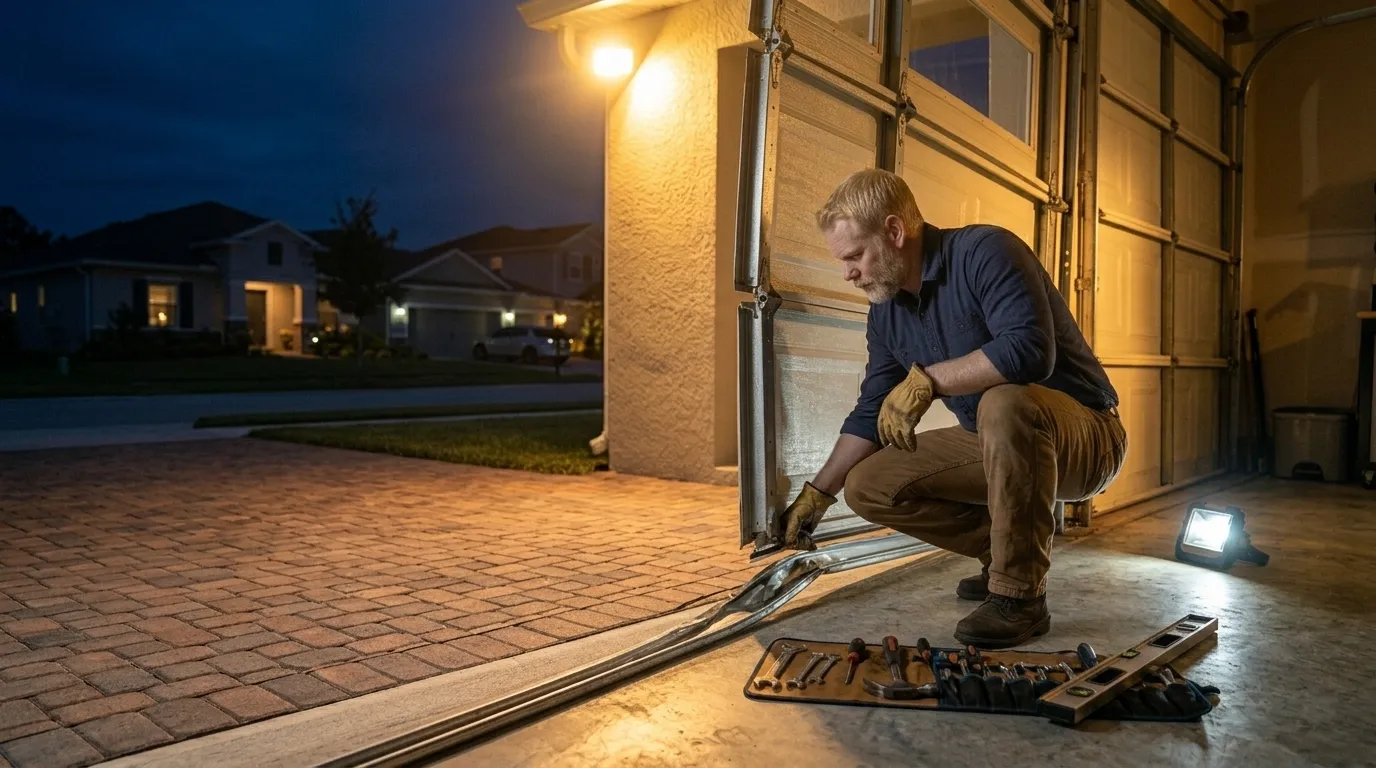
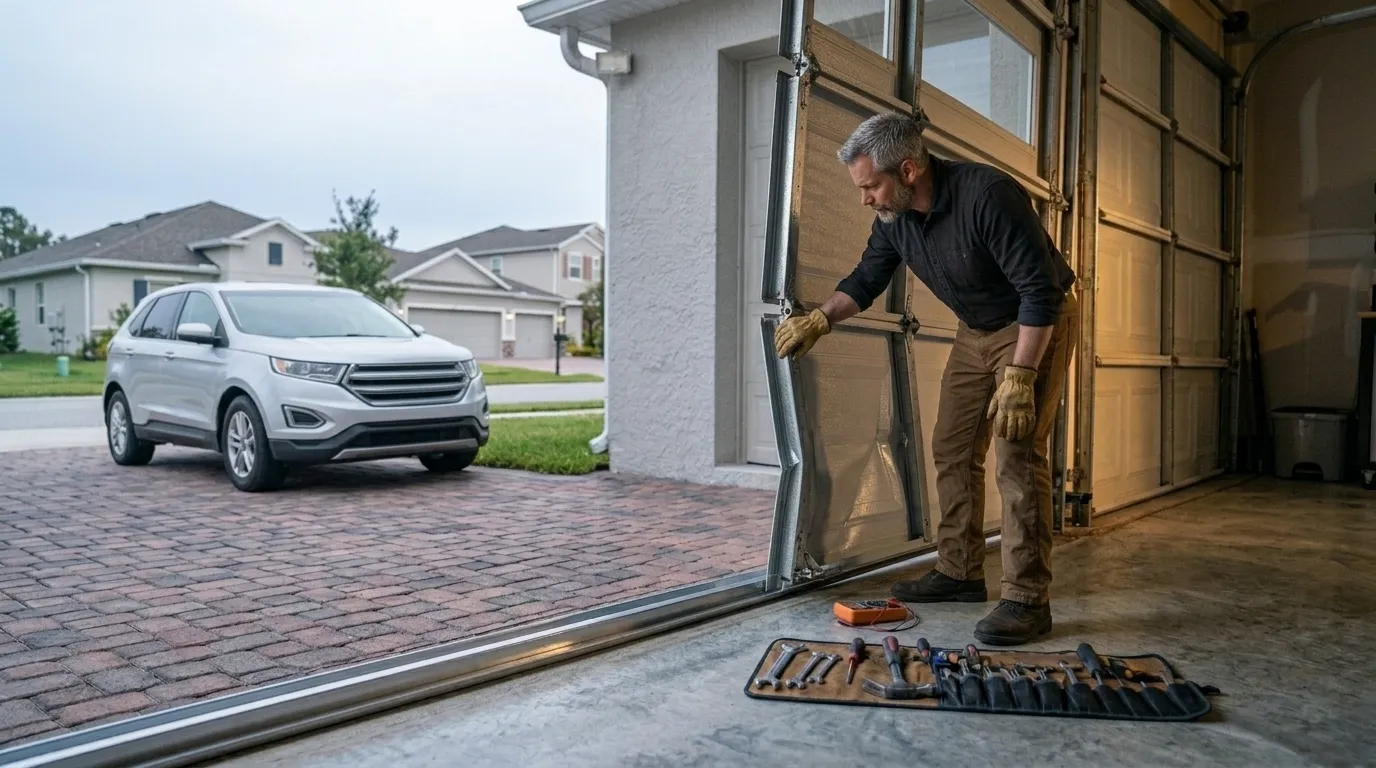
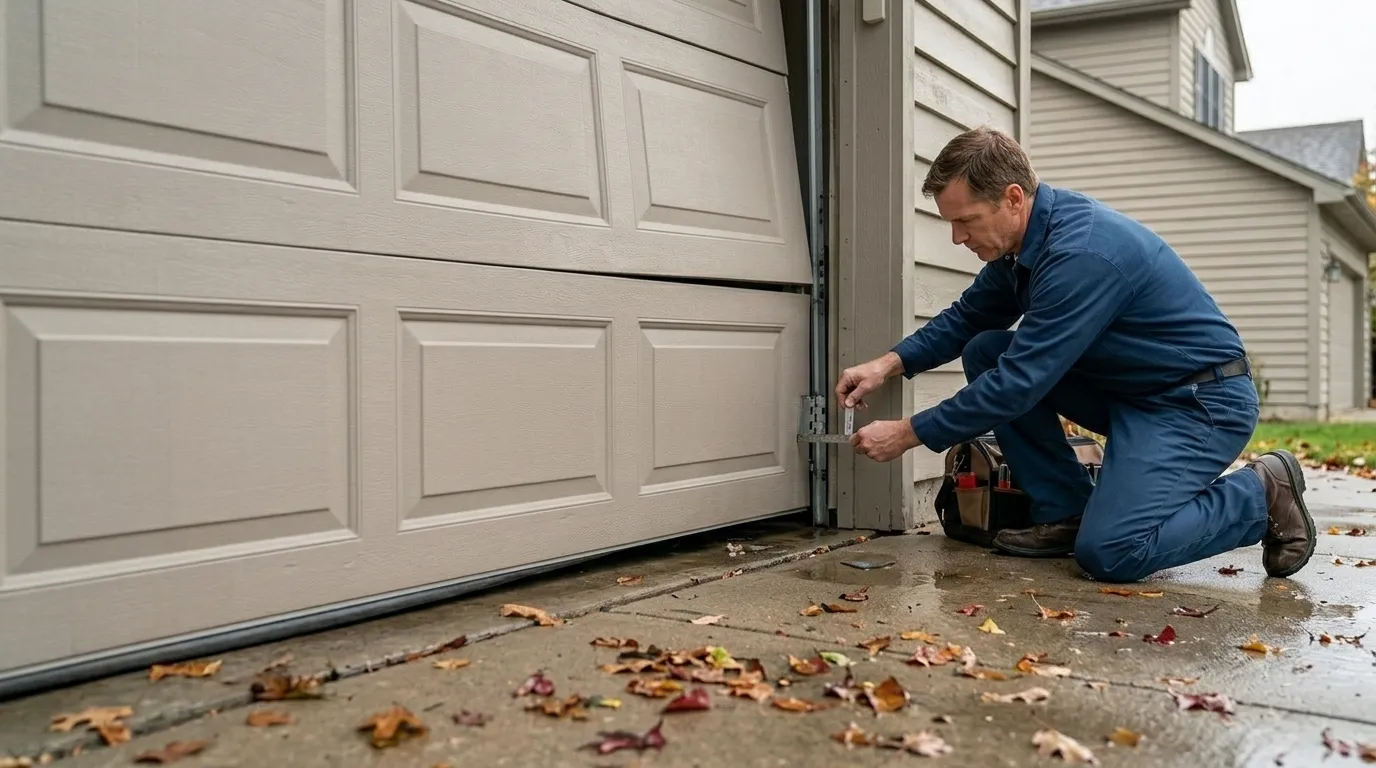
Call before the door fails outright, not after. If a door from that 1960s-70s stock is dragging at the bottom of its track, sitting slightly crooked when closed, or making the opener strain more in cold weather than it did last winter, those are the early signs of a panel or track that's been flexing for years without insulation to stiffen it. Ice buildup at the bottom seal that wasn't there in past winters is another one - it usually means the seal has degraded to the point it's letting cold air work the gap wider.
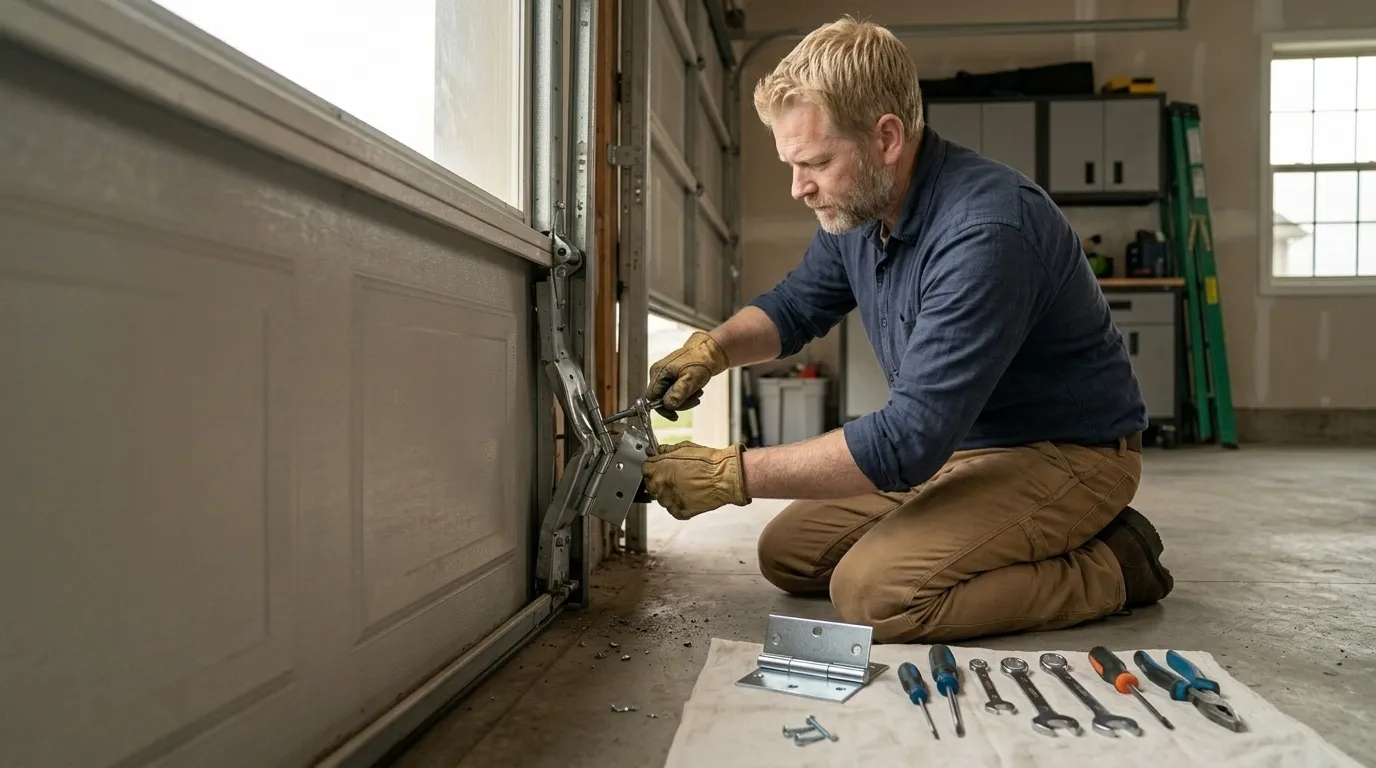
We can't promise a same-day fix on every job. If a panel needs replacing on a door this old, matching hardware isn't always sitting on the truck, and depending on the model, we may need to order a part. That's a real limitation, and it's worth knowing before you call, but it doesn't change the advice: catching a flex problem early on a door this age is a repair, and waiting until a panel actually cracks or a spring gives out under the extra strain is a full replacement.
What to Look At First
Start with the bottom seal - the rubber strip along the floor. On an original door from the 1960s-70s stock, this has usually been replaced once or twice already, and if it's cracked, flattened, or gapping at the corners, that's the fastest source of cold air and the cheapest thing to fix. Next, look at the panels themselves under a flashlight: an uninsulated steel panel that's flexed for fifty winters will show wave or ripple in the surface, especially near the bottom two sections, which take the most stress opening and closing.
Then check the weight the opener is handling. If the opener has started reversing on close, or straining audibly compared to a year ago, the door has likely gotten heavier to move as hardware loosens - not because the opener failed, but because a door with no insulation and a cold-flexed frame just takes more to move. None of this requires guesswork on your end; it's a five-minute look before you decide whether it's a seal, a panel, or the whole door.
How it works
From “it’s stuck” to “it’s fixed”
01
Tell us what’s wrong
Describe the symptom - won’t open, loud bang, opener runs but the door won’t move.
02
On-site diagnosis
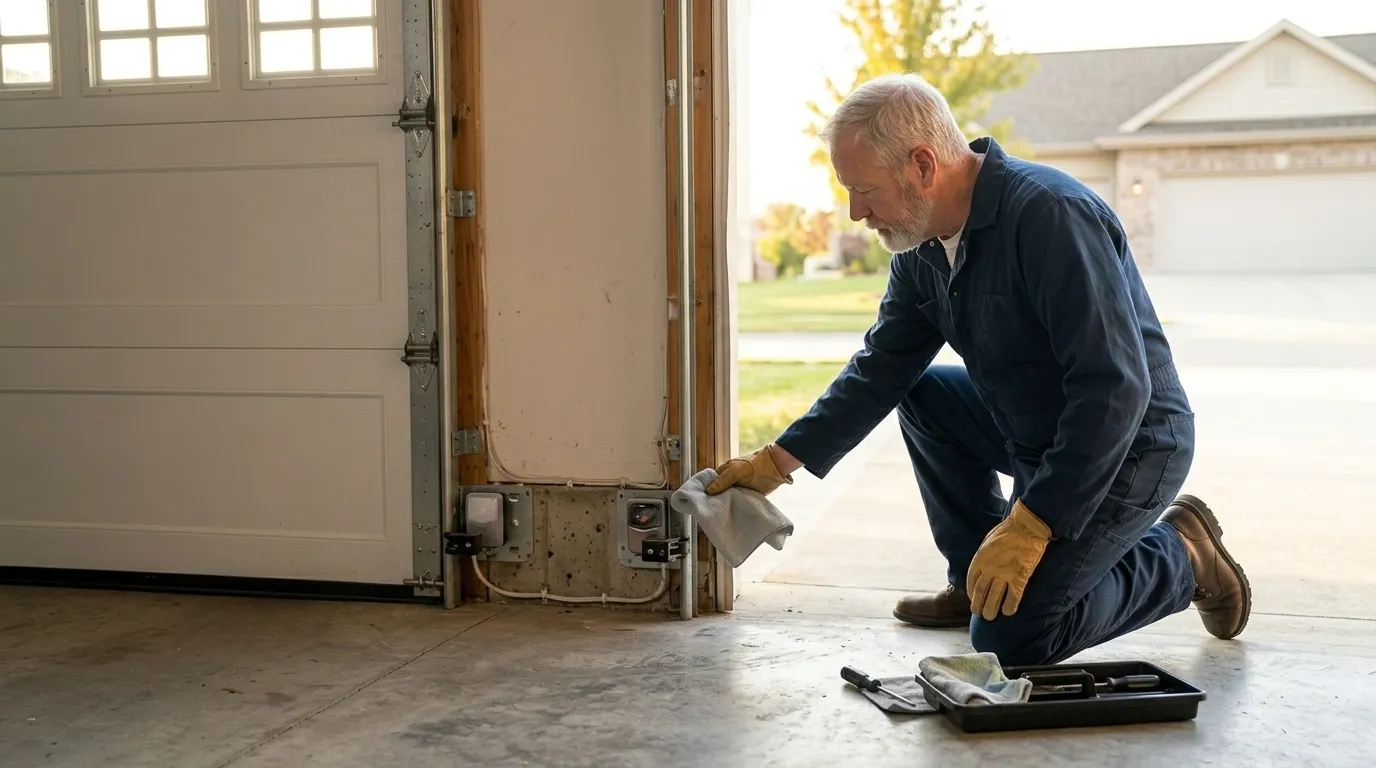
A technician tests the door under power and by hand and finds what actually failed.
03
Clear, up-front plan
You get the fix that’s needed and what drives the cost - before any work starts.
04
Repaired & tested
The repair is done, the door is set true and tested, and the work area left clean.
Serving Arvada, CO - tell us what your door’s doing and we’ll take it from there.
Straight answers about garage door repair in Arvada. Still unsure? Ask us directly.
Is it worth adding insulation to my existing garage door instead of replacing it?
On some doors, yes - a foam insulation kit can go into the panel bays of a steel door and cut down on drafts. But if the panels are already warped from decades of temperature flex, adding insulation won't fix the flex, and you'd be putting new material into a door that's already working itself loose.
Why does my opener struggle more in winter than summer?
An uninsulated steel door on 1960s-70s hardware gets stiffer to move as temperatures drop, and if the panels have any warp from years of expansion and contraction, that adds resistance the opener has to overcome. It's usually not the opener failing - it's the door asking more of it.
Can you match panels on a door this old?
Sometimes, but not always off the truck. Hardware and panel styles from houses built in the 1960s and 70s aren't all still in production, so a panel-only repair may need an order and a short wait rather than a same-visit fix.