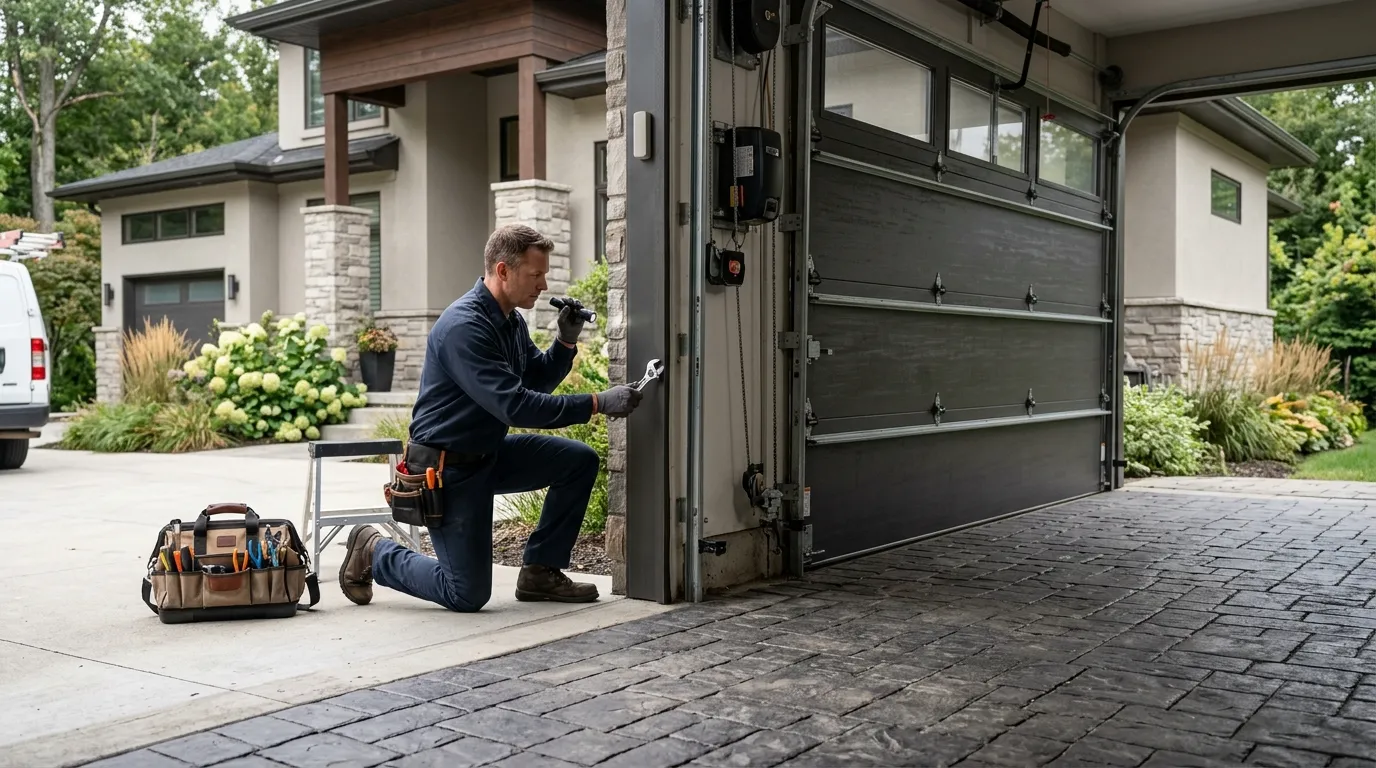
Is Your Arvada Garage Door Worth Fixing, or Time to Replace
Arvada homes mostly date 1960s-70s, with stock running 1938-2010. Here's how that age and our cold climate decide whether your door is worth repairing.
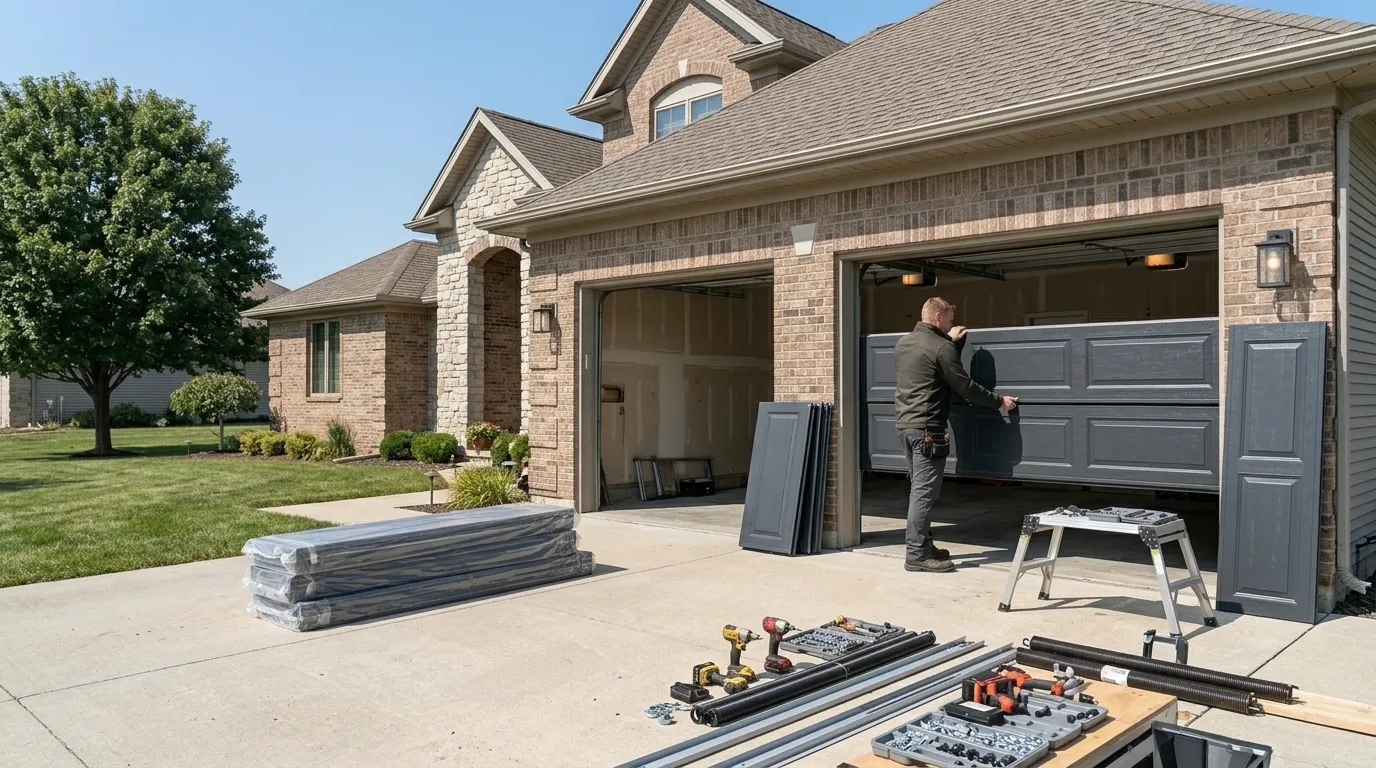
Most of the doors we get called on in Arvada were installed sometime between the 1960s and the 1990s, which lines up with how the housing stock here actually breaks down - built between 1938 and 2010, with the median landing around 1977. That means a lot of the doors we see aren't the original ones anymore, but they're often the second or even third door on a house whose framing and track spacing was set up decades ago for a narrower, lighter panel than what's sold today. In neighborhoods like Ralston Valley or Northwood Acres, where a lot of the housing went up in that same mid-century wave, we run into openings that are slightly out of square from settling, which throws off how a replacement door hangs even when the door itself is fine. The question we're actually answering on a service call isn't 'how old is this door' - it's whether the track, jambs, and header are still square enough and strong enough to carry a new door without a rebuild. That's a different job and a different price than swapping panels.
What Local Conditions Do
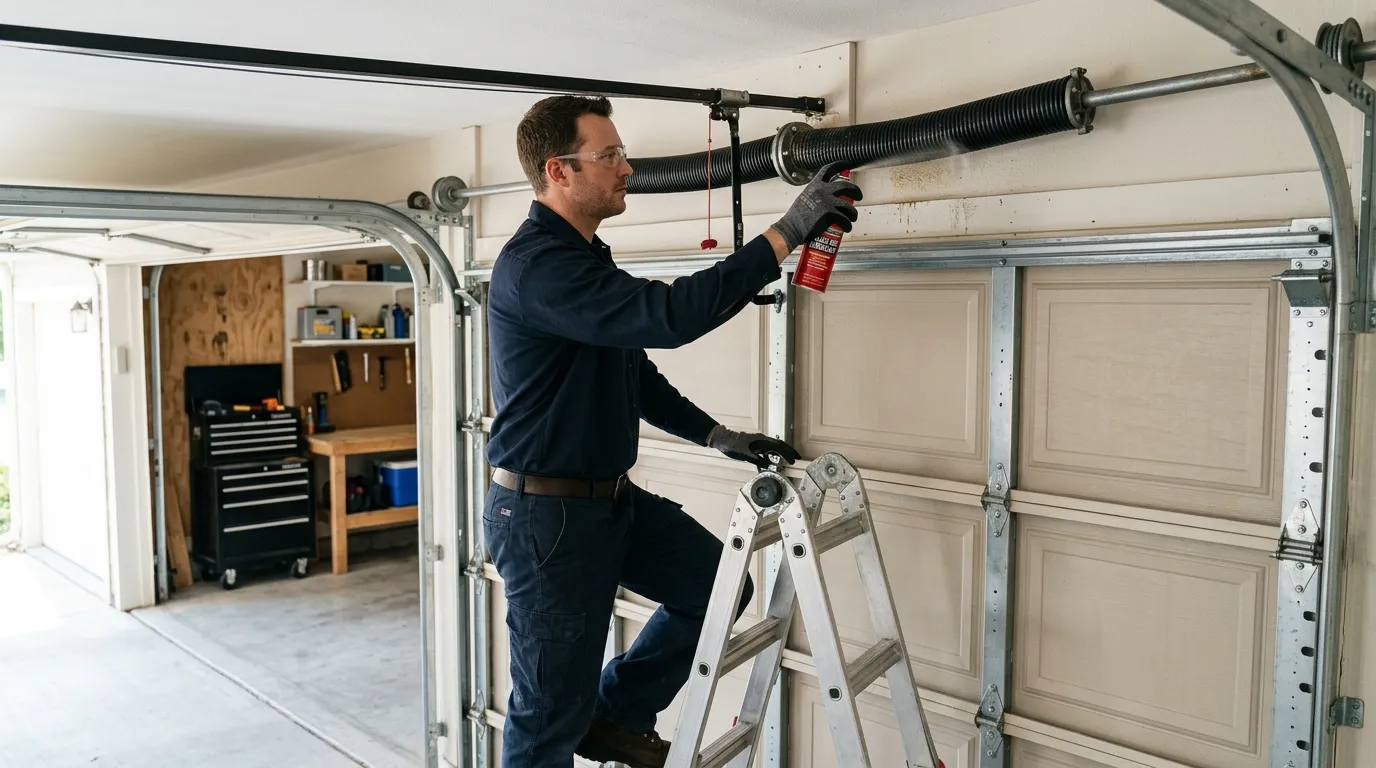
Arvada sits in a cold-severe climate band, and that matters more for garage doors than people expect. Steel panels contract in a hard freeze, and on doors from the 1970s and 80s - thinner gauge steel, no thermal break, single layer - that contraction is enough to crack old caulking at the seams and let cold air work into the track channel. Nylon rollers that have gone brittle from decades of temperature swings will chip or flat-spot faster in a Front Range winter than they would somewhere milder, and that's usually what turns a quiet door into a grinding one right around the first hard cold snap. Torsion springs also lose tension faster when they're cycling through repeated freeze-thaw, which is common here given how the season swings. None of this means every older door needs to go. It means the parts most likely to fail first - springs, rollers, weatherstrip, and seam caulking - are the parts worth checking before you decide the whole door is done.
When to Get Help
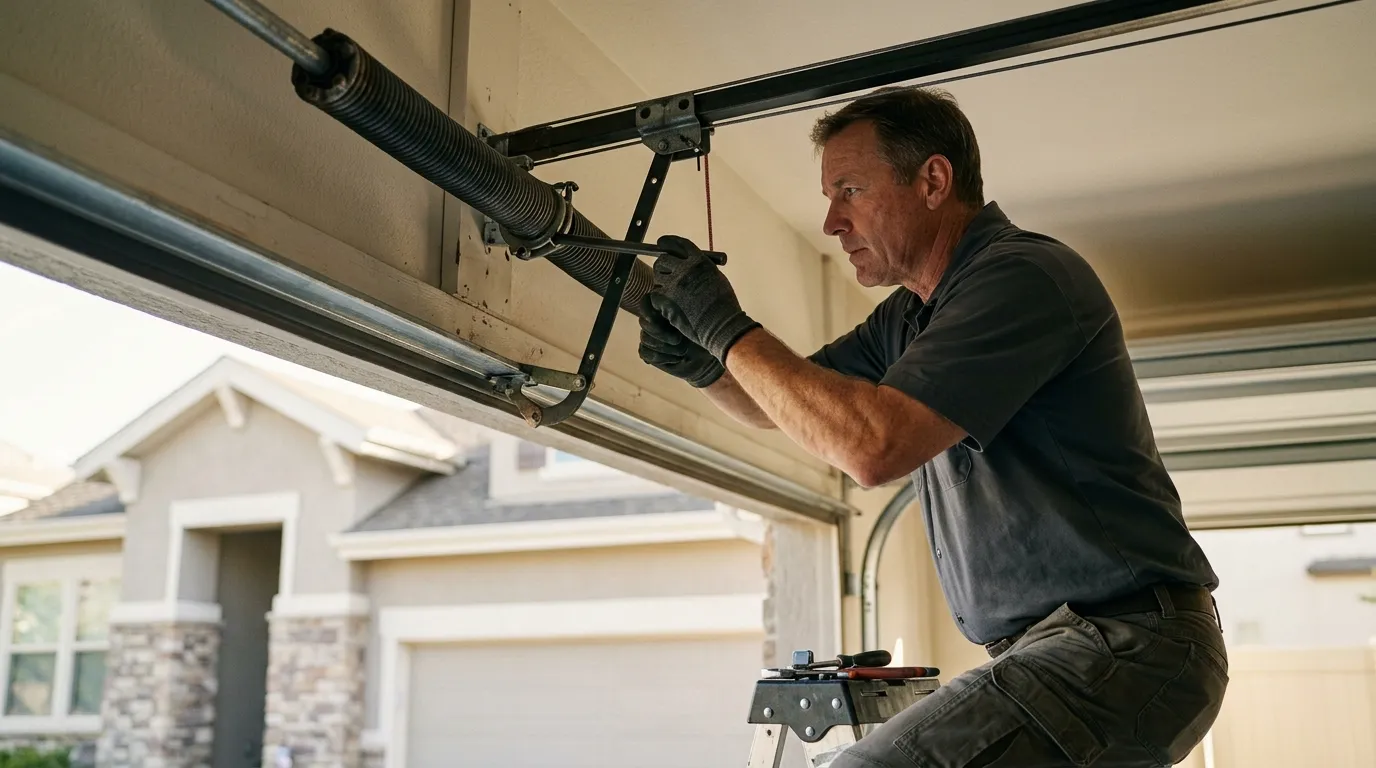
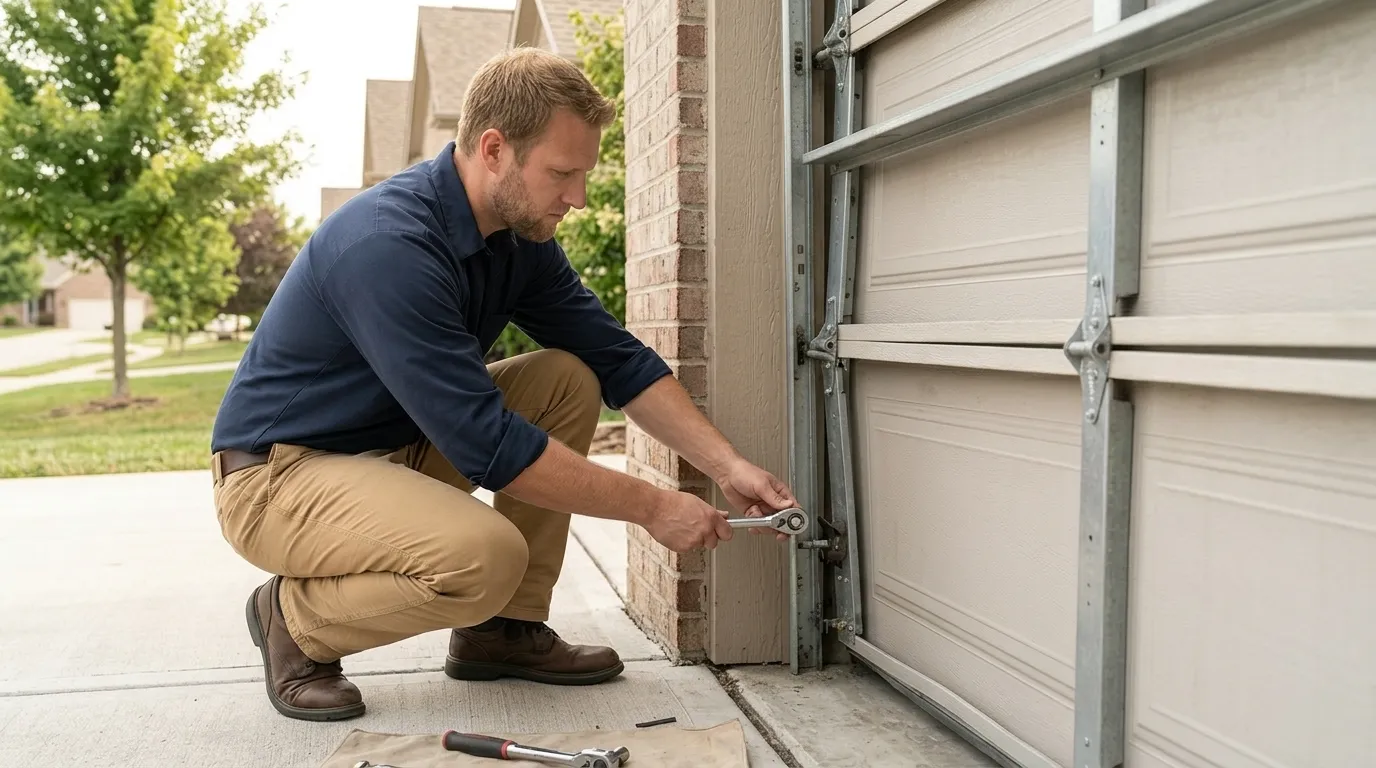
Call before the spring or cable actually lets go, not after. A door that's noticeably harder to lift by hand than it used to be is telling you the spring has lost tension, and on the older torsion setups common in Arvada's 1960s-70s stock, that's a controlled job with the right bars, not something to wing on a ladder. If the door is visibly racked in the track, or one corner drags while the other side moves free, that's the opening moving, not just the door aging, and it's worth a look before you spend money on a new panel that won't hang straight anyway. We don't rebuild header framing or do structural carpentry - if an opening's shifted enough to need that, we'll tell you straight and point you to what needs to happen first, because a new door on a bad frame is money wasted twice.
What to Look At First
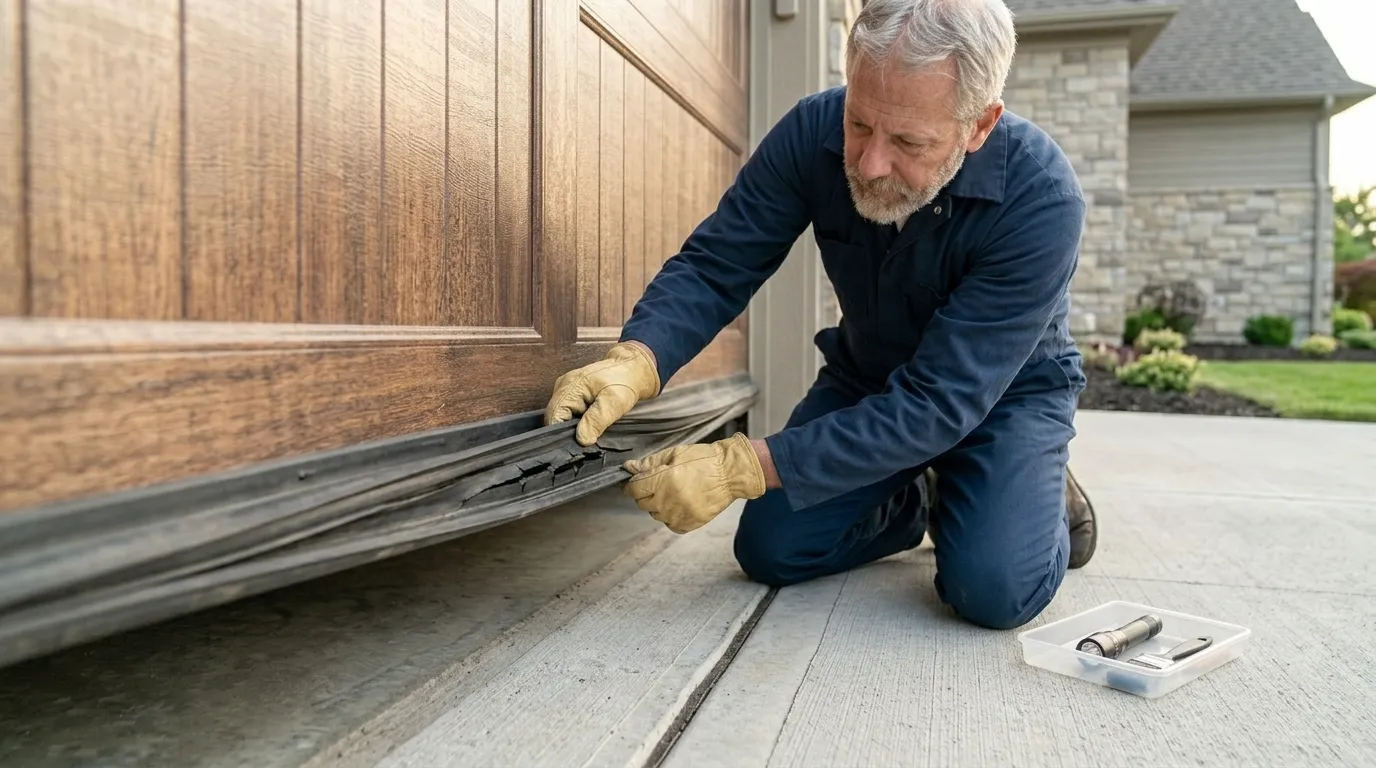
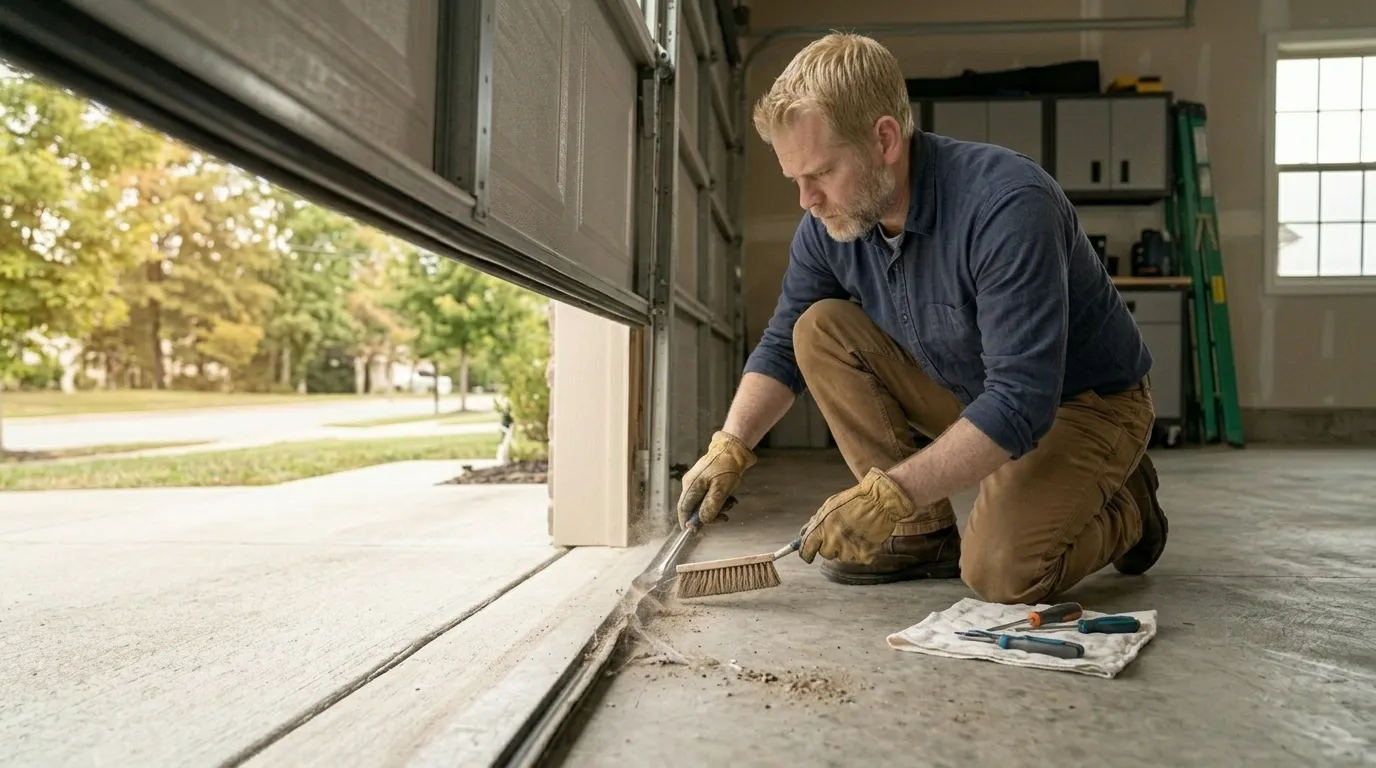
Start with the springs and the rollers, since those are what a Front Range winter wears out fastest on an older door. Look at the bottom corners of the panel for rust or flaking paint - moisture sitting there over enough winters is often the first sign the steel underneath is thinning, especially on doors from the earlier end of that 1938-2010 range. Check whether the door still sits flush against the weatherstrip at the bottom; a gap there usually means the track has shifted slightly, which is common in the older, settled housing scattered through areas like Applewood Villages and Fruitdale. If the opener is original to a house built decades ago, it's likely working harder than it should to lift a door that's picked up weight from moisture or added hardware over the years. None of this tells you to replace the whole door - it tells you where to look before anyone decides that for you.
How it works
From “it’s stuck” to “it’s fixed”
01
Tell us what’s wrong
Describe the symptom - won’t open, loud bang, opener runs but the door won’t move.
02
On-site diagnosis
A technician tests the door under power and by hand and finds what actually failed.
03
Clear, up-front plan
You get the fix that’s needed and what drives the cost - before any work starts.
04
Repaired & tested
The repair is done, the door is set true and tested, and the work area left clean.
Serving Arvada, CO - tell us what your door’s doing and we’ll take it from there.
Straight answers about garage door repair in Arvada. Still unsure? Ask us directly.
How do I know if my garage door is too old to fix?
Age alone doesn't decide it. A door from the 1970s with a straight track and sound panel can be worth keeping if the spring and rollers are serviced. What matters more is whether the opening itself has shifted, since a lot of Arvada's housing stock has settled over 50-plus years, and that changes the math.
Why does my door get harder to open in winter?
Cold contracts steel panels and stiffens old rollers, and in a cold-severe climate like ours that shows up fast on doors without a thermal break. Torsion springs also lose tension quicker cycling through freeze-thaw. It's usually a maintenance fix, not a sign the door is done.
Is it worth replacing an old door instead of repairing it?
Depends on what's actually wrong. If it's springs, rollers, or weatherstrip, repair almost always makes sense. If the opening has racked or the header framing has shifted, a new door won't hang right until that's addressed first, and that's outside what we handle.