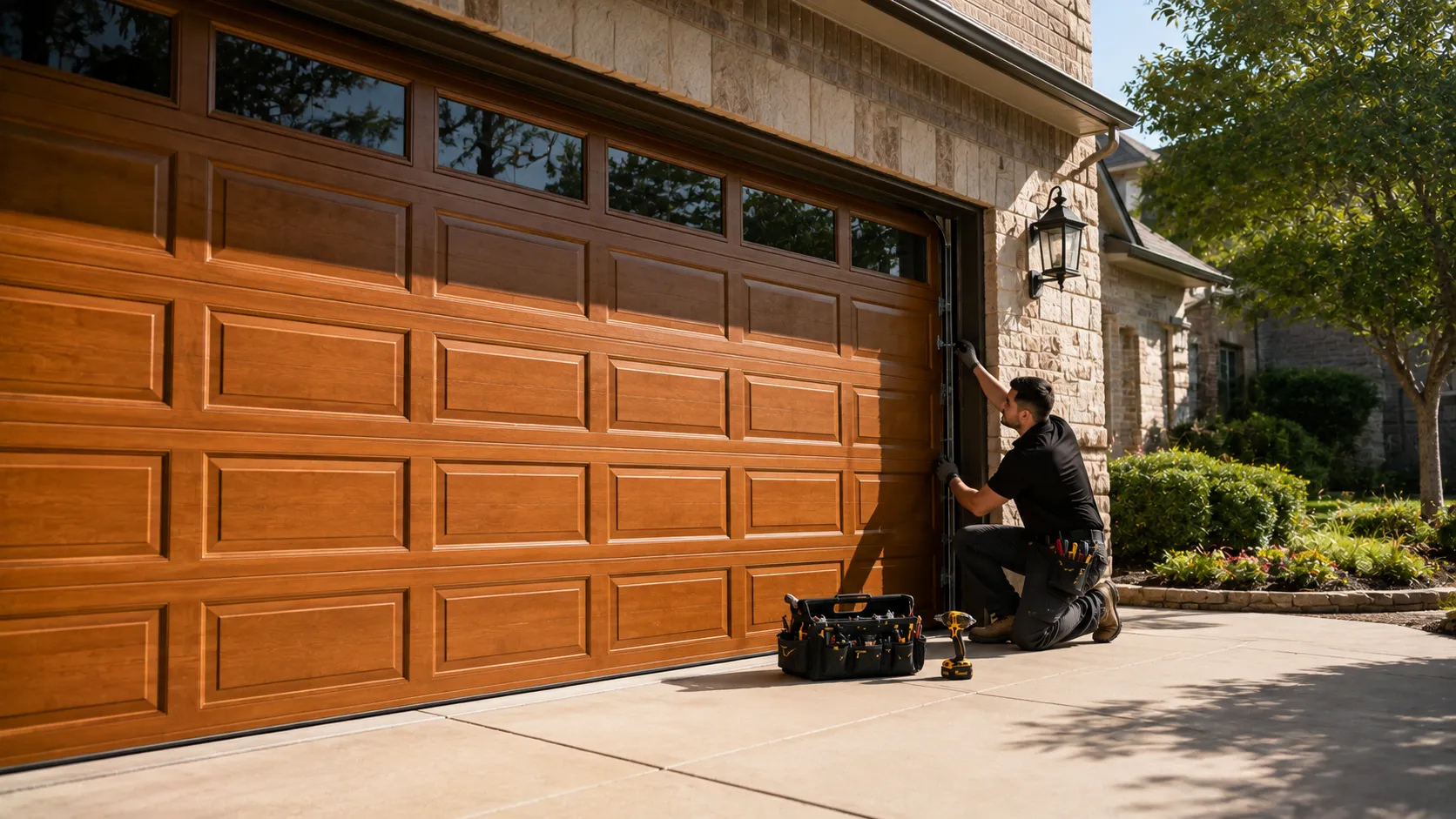
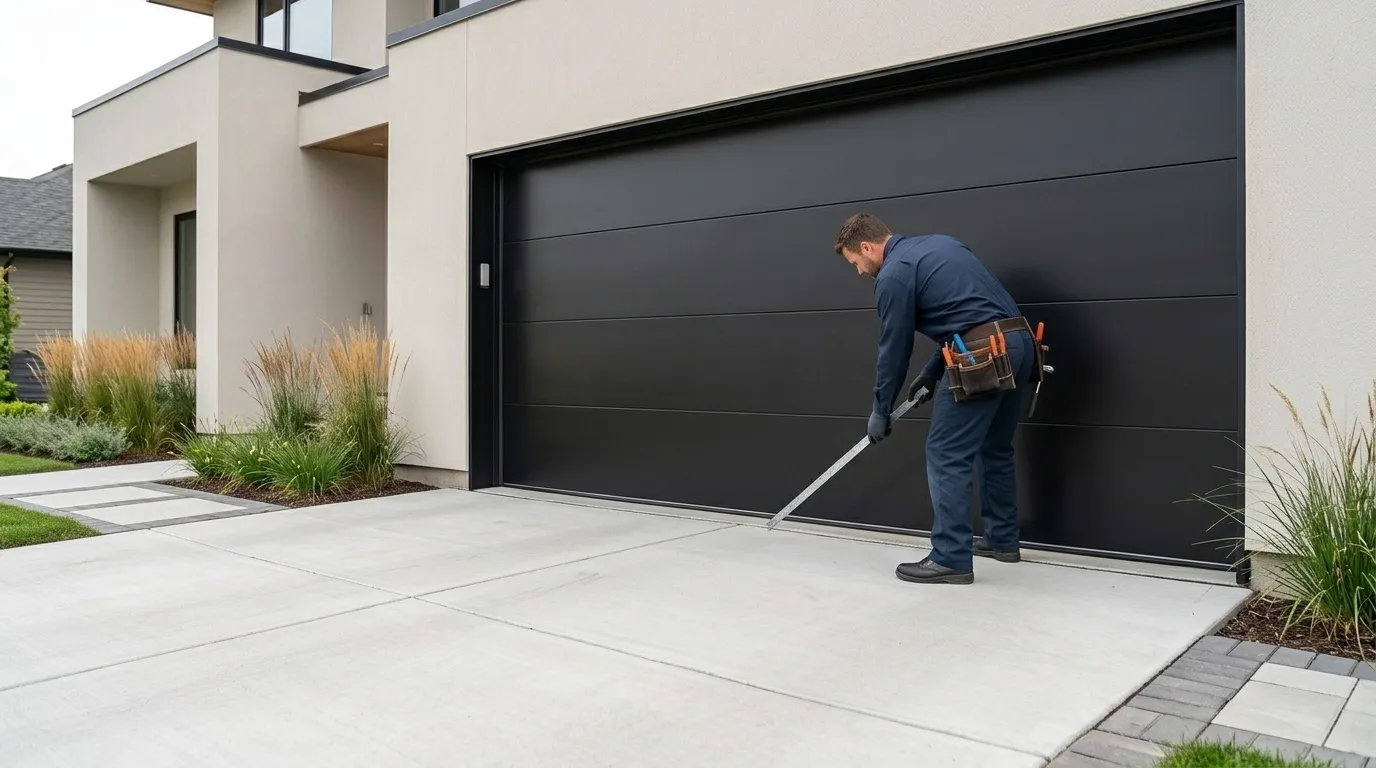
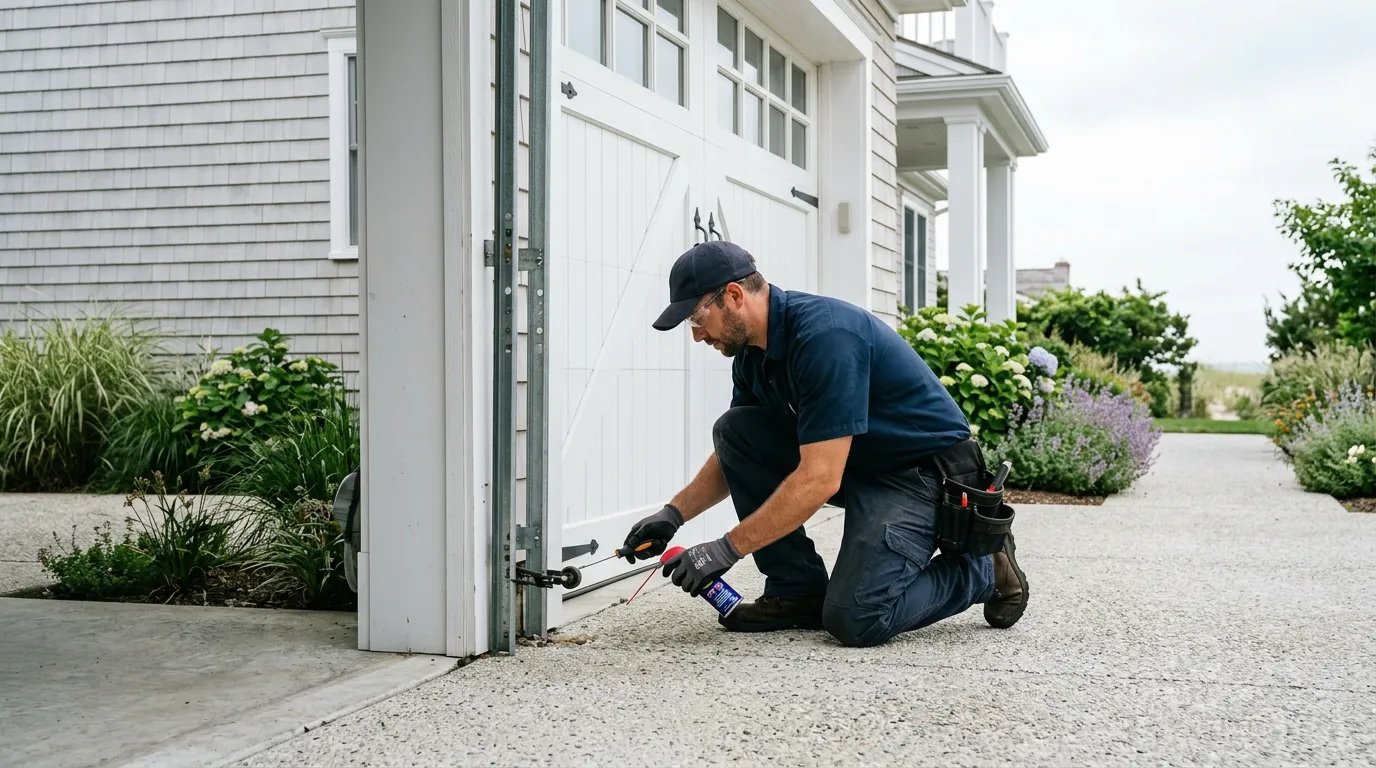
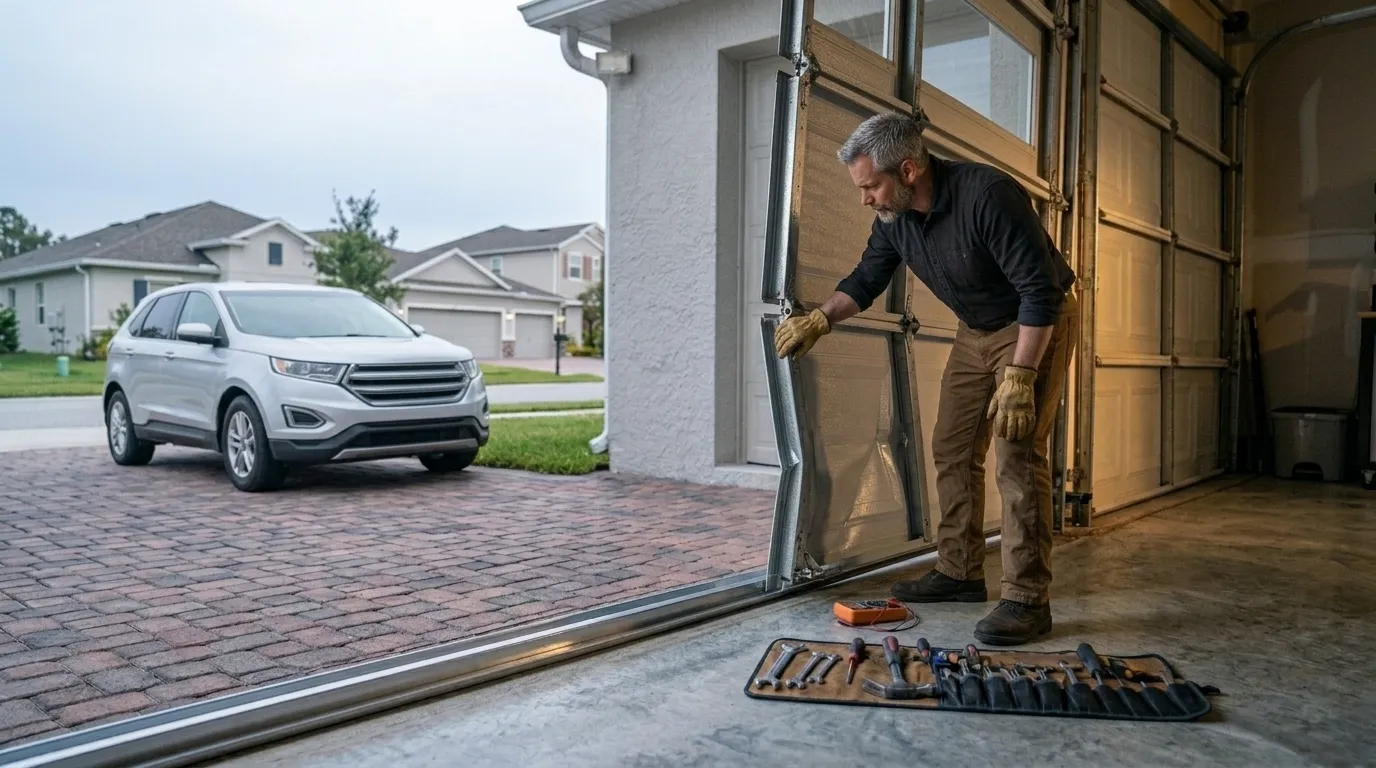
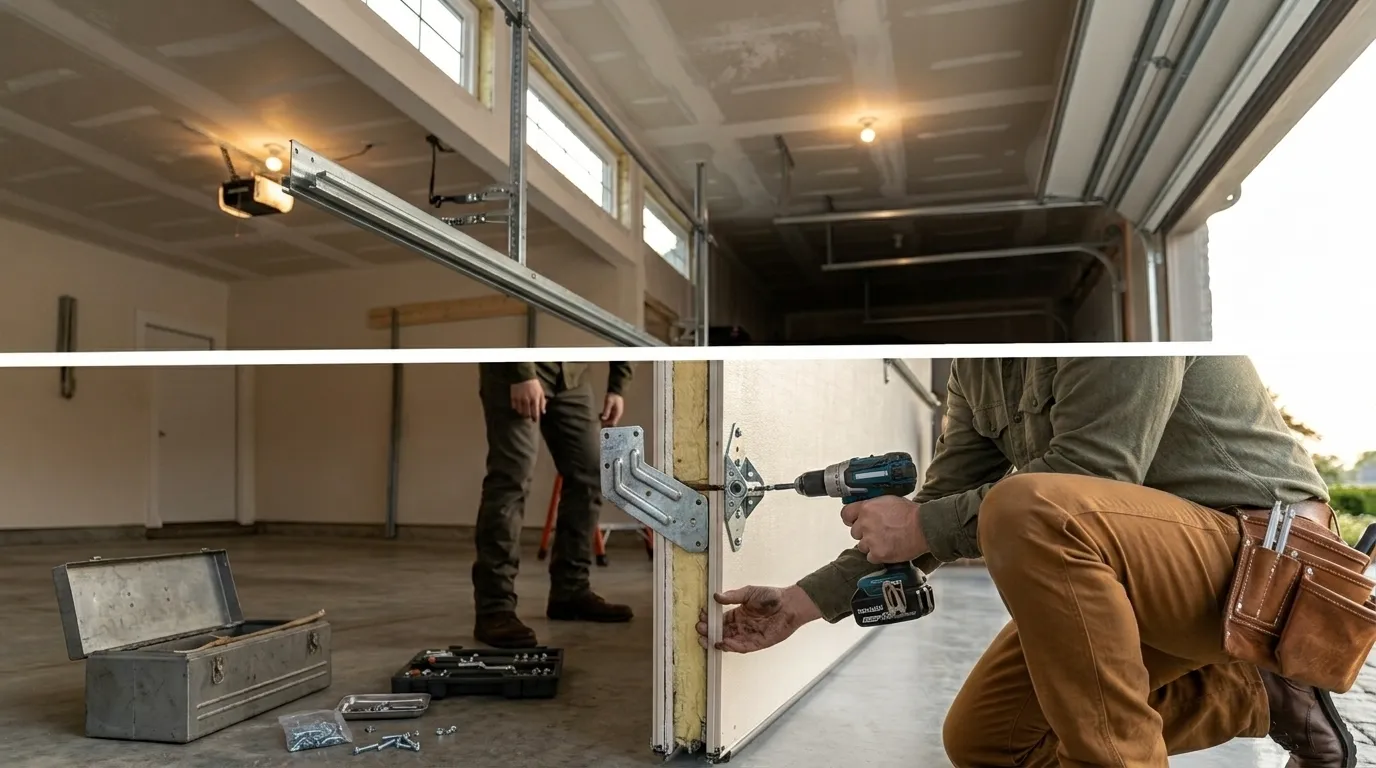
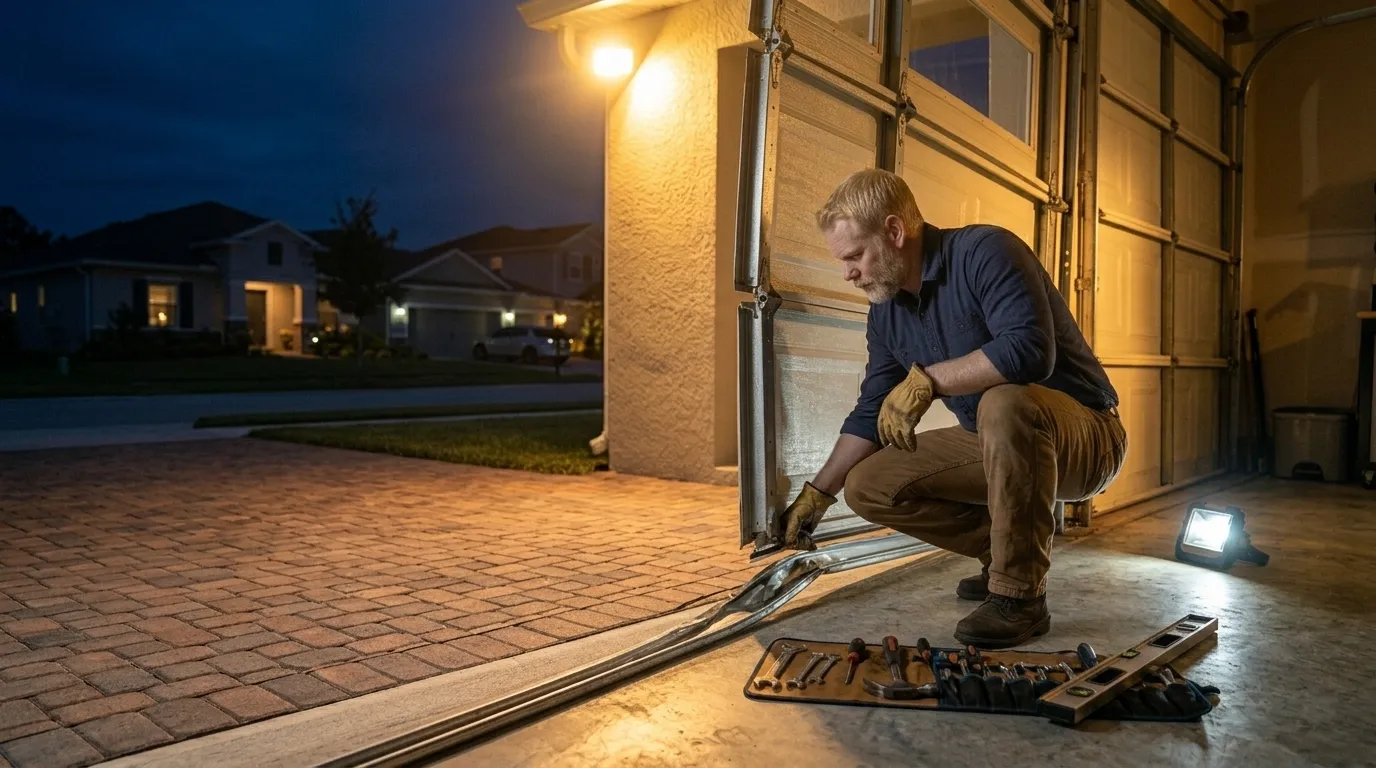
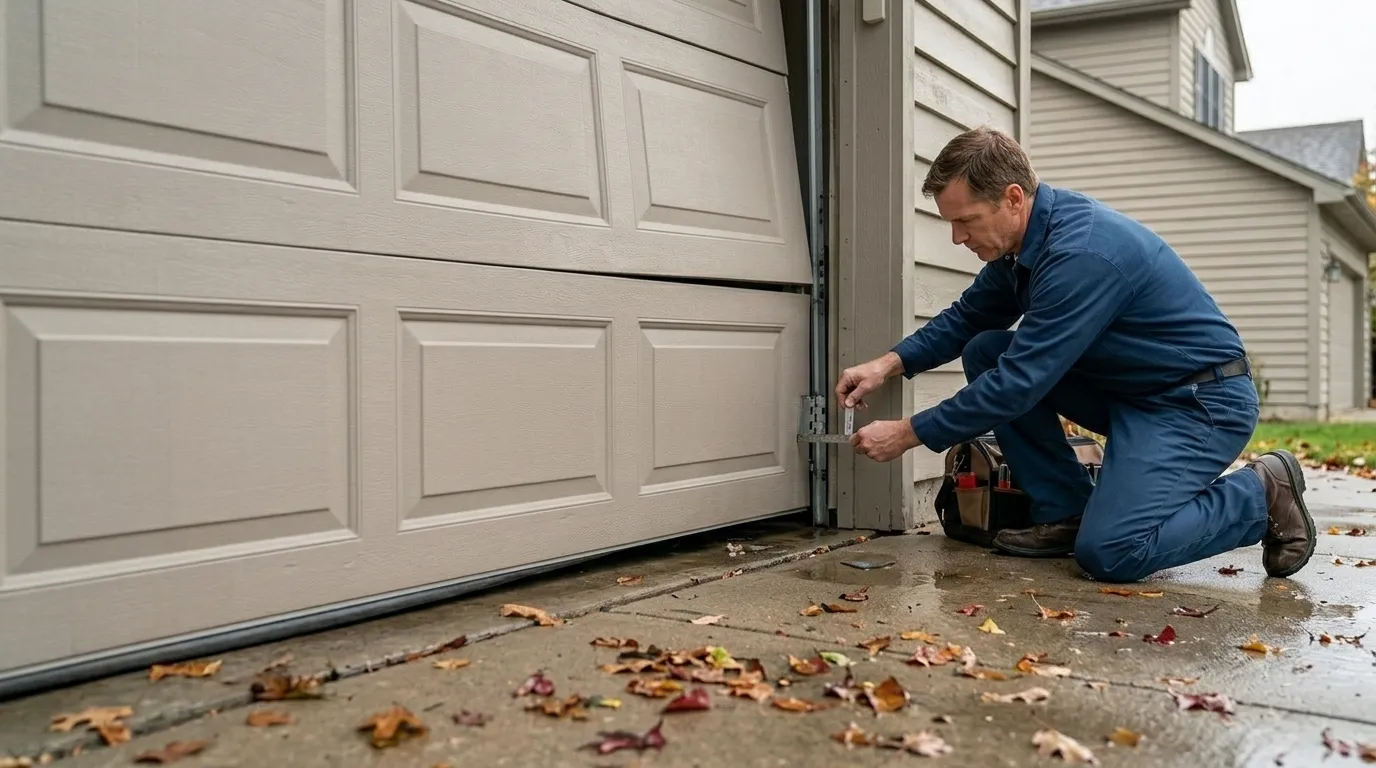
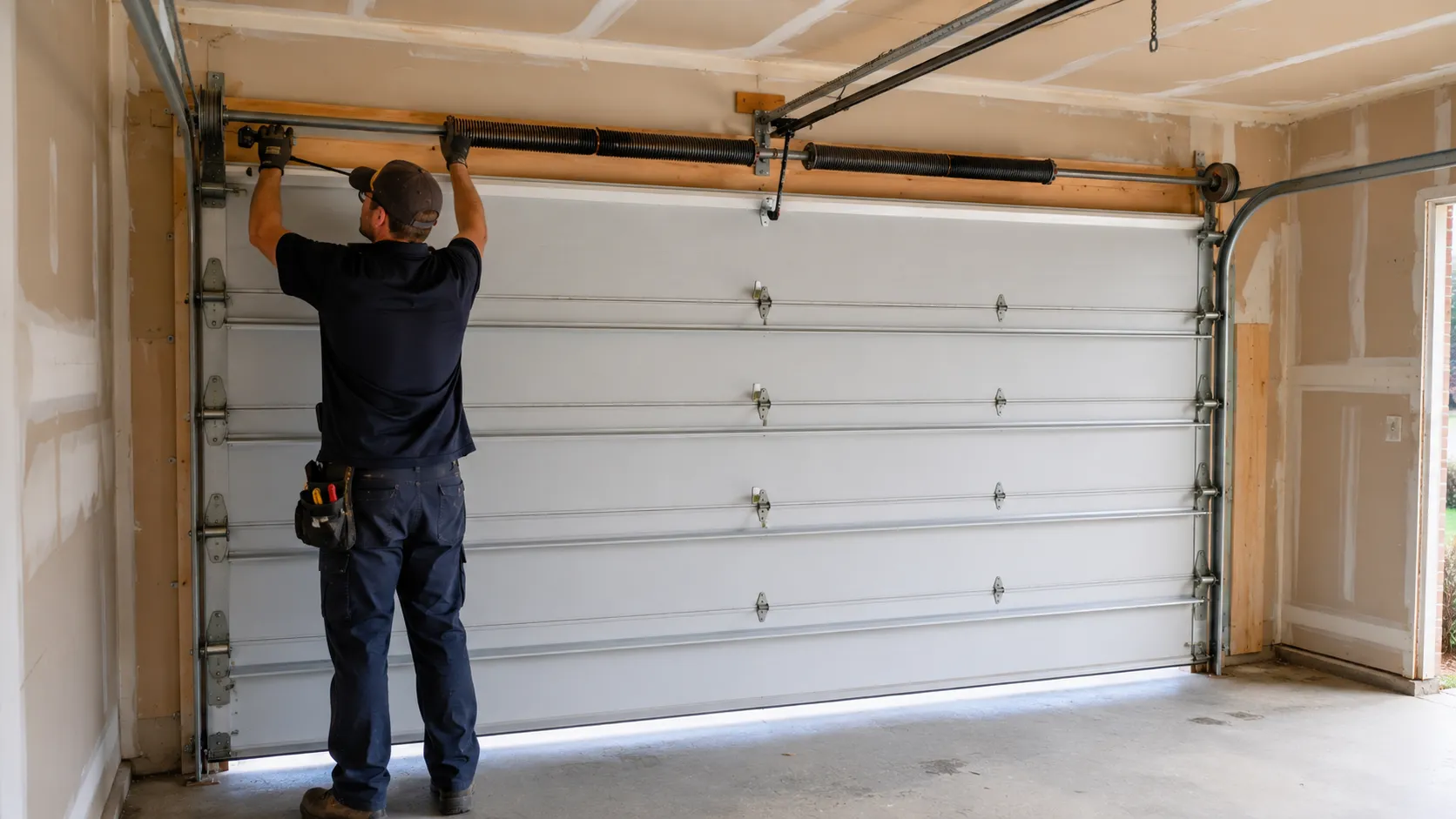
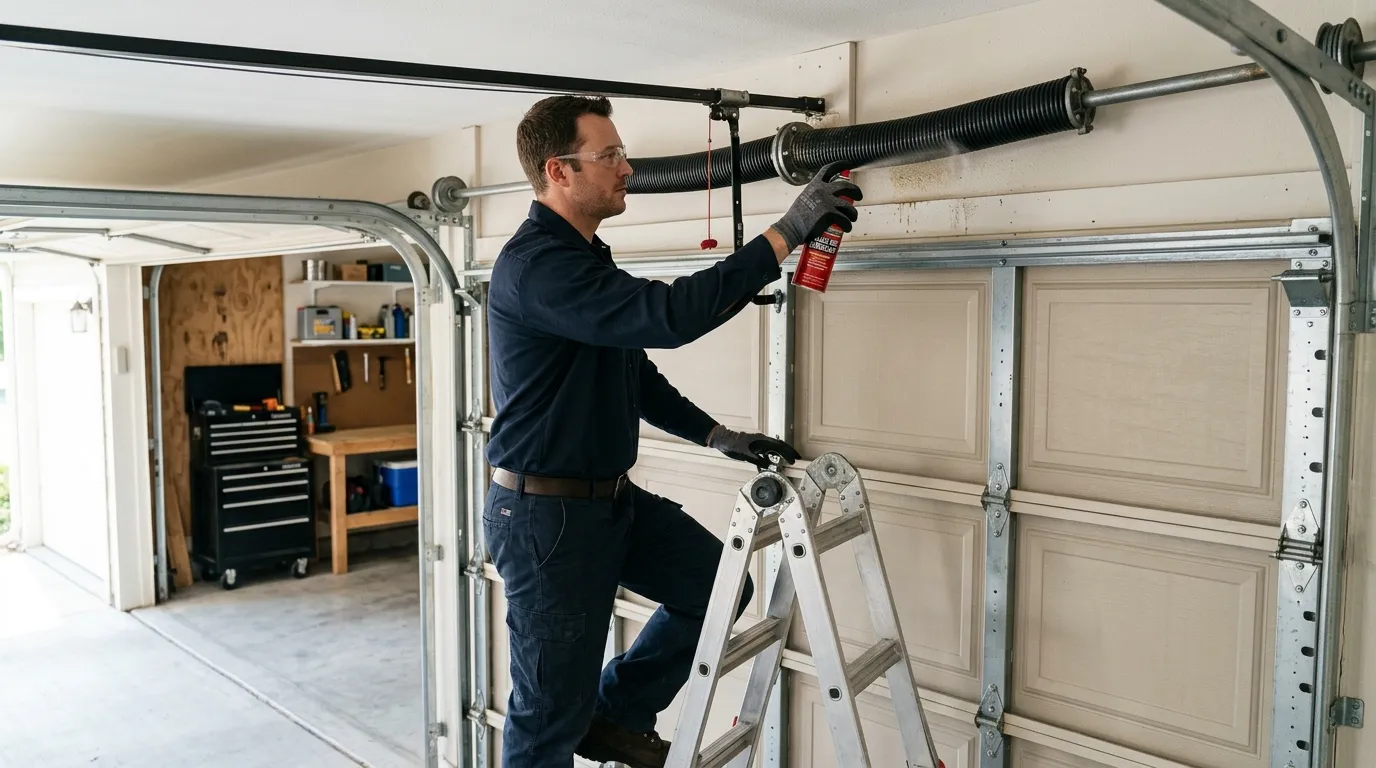
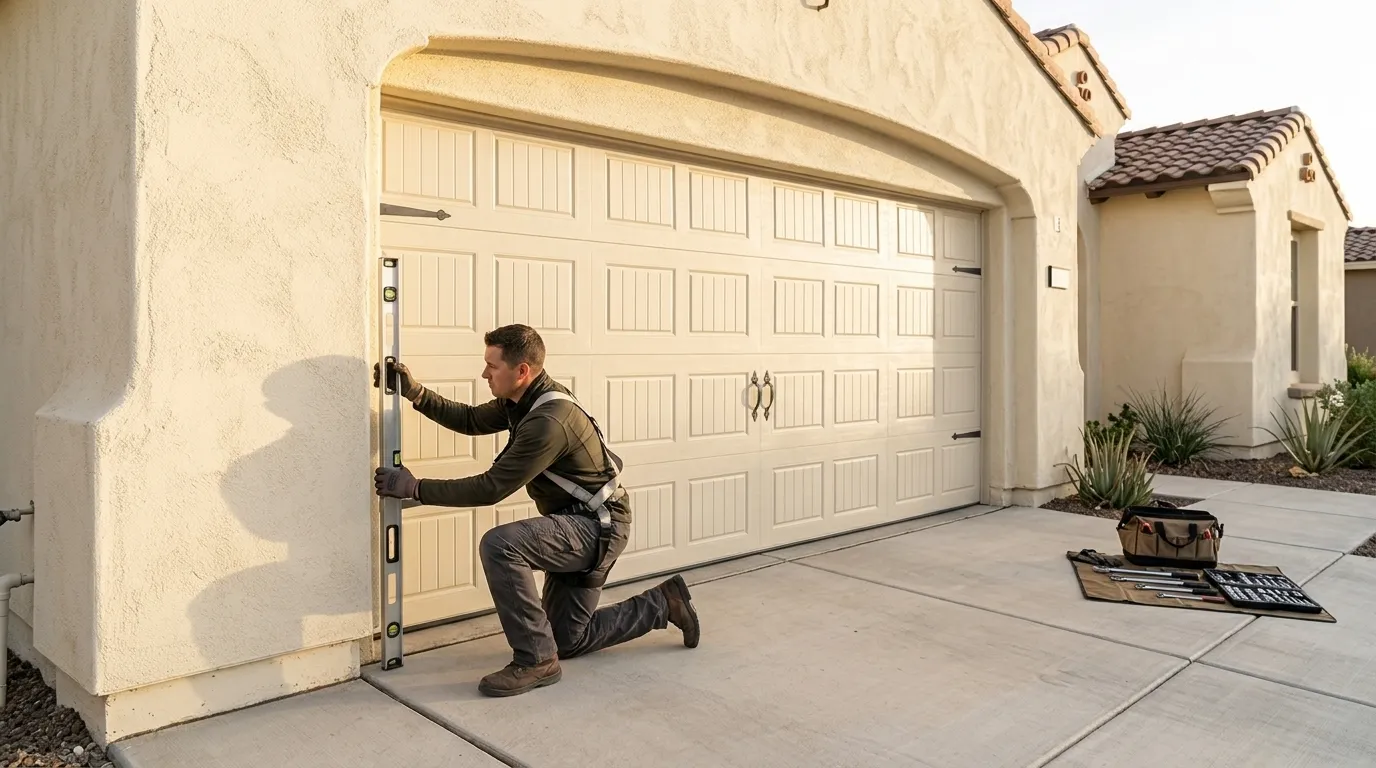
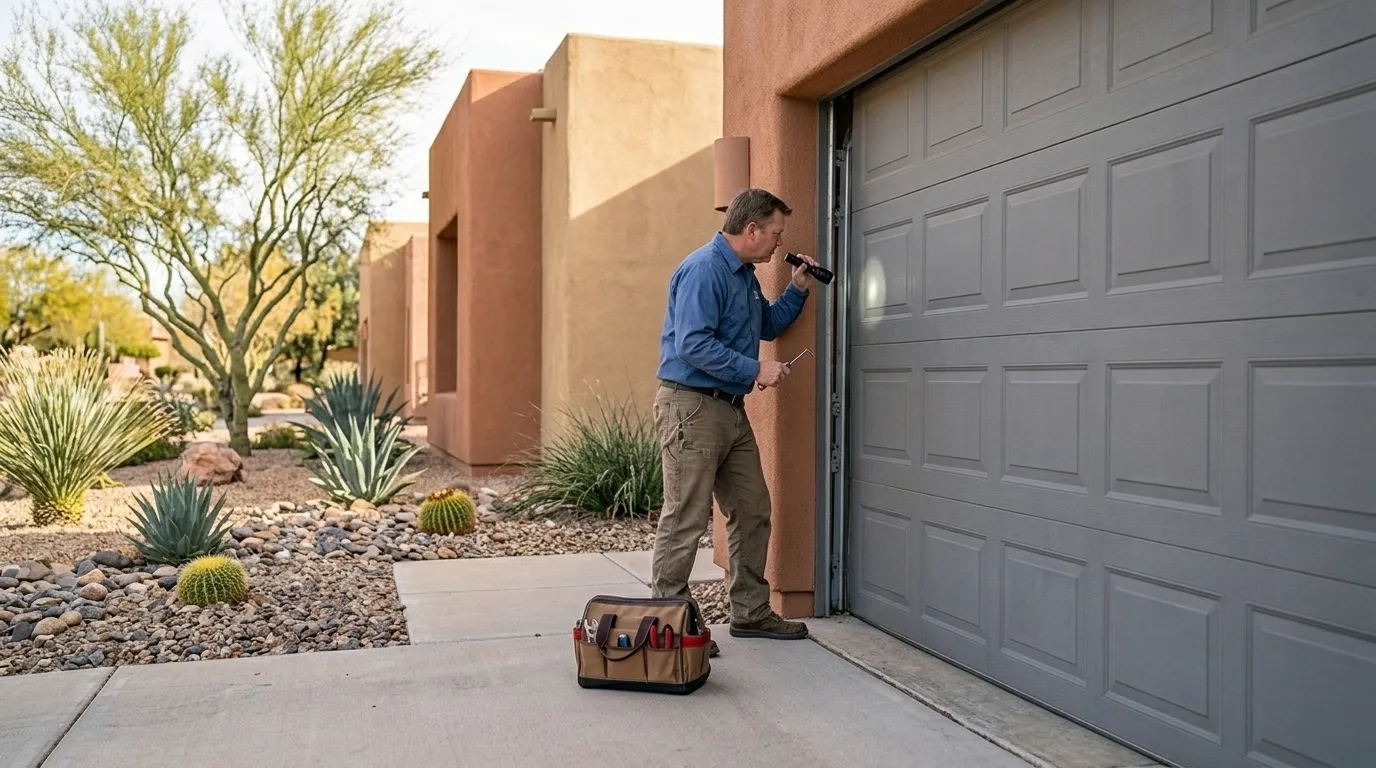
Most of the doors we see out here are original or first-replacement units on houses that went up during the 1960s-70s building wave across this part of Arvada. That means steel sectional doors on torsion springs sized for lighter panels than what's sold today, and openers that are often a second or third unit bolted onto the original bracket. On a lot of these garages the track was never resized when the door was swapped, so you get rollers binding at the curve and a door that shudders on the way up. We also see a fair number of single-car garages that were never insulated, which matters more here than in newer subdivisions because of how cold this area gets in winter. None of this is unusual for the corridor - it's just what happens when a neighborhood's garage stock is fifty-plus years old and gets patched instead of replaced. The honest limitation: if your torsion spring is original to a door from that era, we're not always going to have a matching spring on the truck, and depending on the size, it can mean a short wait on the part rather than a same-visit fix.
What Is Built Here
Housing across the wider service area was built between 1938 and 2010, with a median build year of 1977, and the I-70 Corridor sits right in the thick of the 1960s-70s stretch of that range. That era shows up in the garages as narrower door openings, lighter-gauge panels, and hardware sized to older code, not current wind and insulation standards. Where a house has had an addition or a garage conversion since then, you'll sometimes find newer opener wiring paired with the original door - a mismatch that causes more service calls than either part alone would. We work with what's actually there rather than assuming everything's been upgraded, because in this stretch of Arvada, a lot of it hasn't.
Where It Sits
The I-70 Corridor sits about 5 miles southeast of central Arvada. It's one of several named areas on this side of town, alongside spots like Ralston Valley, Northwest Arvada, and Allendale Area, and it shares the same building-stock pattern you'll find through most of that band - houses from the 1960s and 70s with garages that have aged the same way. Being close to the interstate corridor doesn't change the work itself, but it does mean we're routing through here regularly on other calls in this part of the service area, which keeps drive time down for anyone booking a visit.
Arranging a Visit
This region sits in a cold, severe winter climate band, which is the main reason we push people toward getting a slipping cable or a stiff opener looked at before the first hard freeze rather than after. Cold makes old grease seize and steel contract, and a door that was merely noisy in October can be stuck shut in January. If you're in the I-70 Corridor and want someone out to look at a torsion spring, a track that's pulling away from the jamb, or an opener that's started grinding, get in touch through our site and we'll get a truck routed your way.
How it works
From “it’s stuck” to “it’s fixed”
01
Tell us what’s wrong
Describe the symptom - won’t open, loud bang, opener runs but the door won’t move.
02
On-site diagnosis
A technician tests the door under power and by hand and finds what actually failed.
03
Clear, up-front plan
You get the fix that’s needed and what drives the cost - before any work starts.
04
Repaired & tested
The repair is done, the door is set true and tested, and the work area left clean.
Serving Arvada, CO - tell us what your door’s doing and we’ll take it from there.
Straight answers about garage door repair in Arvada. Still unsure? Ask us directly.
Why does my garage door get so much harder to open in winter?
Cold makes the grease on rollers and torsion springs stiffen, and steel track contracts slightly, which is enough to make a door that was already a little worn feel much heavier. In this climate band, that's a normal winter complaint, especially on older doors that were never serviced with cold-rated lubricant.
Do you carry parts for older torsion springs on the truck?
Not always. A lot of houses in this part of Arvada have doors from the 1960s-70s stock with spring sizes that don't match what's commonly stocked today. If yours is one of those, we may need to order the part, which can mean a short delay before the second visit.
Is it worth replacing an old single-car garage door instead of repairing it?
Depends on the door and what's wrong with it. If the panel is original from that 1960s-70s build era and uninsulated, and the track or spring is also failing, replacement often makes more sense than patching it piece by piece. We'll tell you honestly which side of that line your door is on.